Professional Development is the site’s umbrella for practical career writing: advice for doing your job better, reading the market more clearly, and handling the human side of work without losing your footing.
This series is built for readers who want more than inspiration. It focuses on tools, judgment, and perspective you can actually use: sharper conversations, better decisions, clearer positioning, and a more realistic understanding of how work is changing.
Jackson Rodriguez writes Career Mechanics, Signals & Shifts, Deep Dive, and Briefing Room. His voice is direct, practical, and built for readers who want a clear plan more than vague encouragement.
Olivia Bennett writes Workplace Clinic and Paths & People, including guest interviews and edited contributions. Her perspective is warm, grounded, and focused on sustainable leadership and healthier work habits.
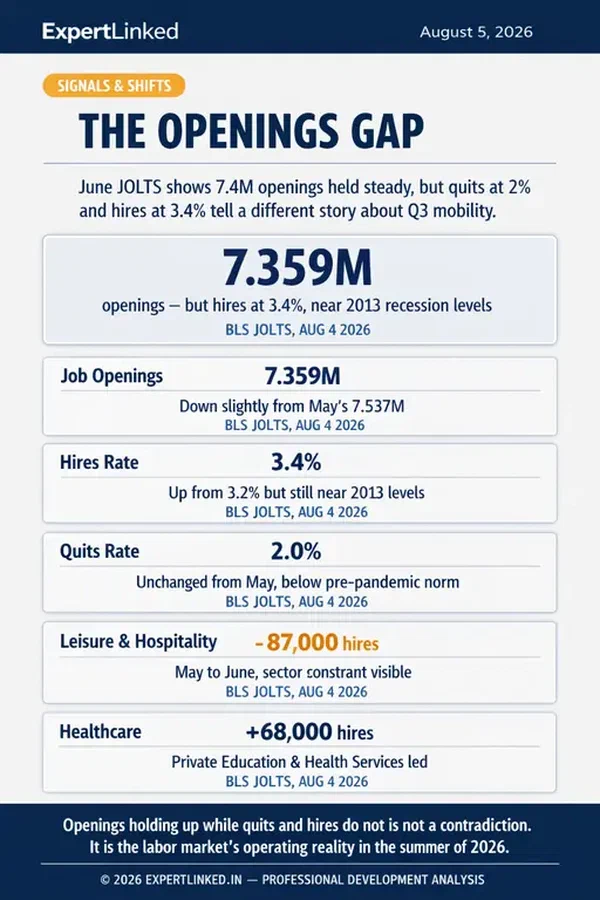
The stillness didn’t break — the ‘strong spring’ was revised down by 74,000 jobs, and June’s 57,000 payrolls confirm the hires mechanism is unchanged. Here is the precise Q3 read.
The mid-year review has changed. It’s no longer just about your output; it’s about how you orchestrate the machine that generates the output. Here is how to signal your capability before your manager scores you.
Your manager already has a metric for your AI contribution. The question is whether you control what it says — and mid-year is the last window to change the terms.
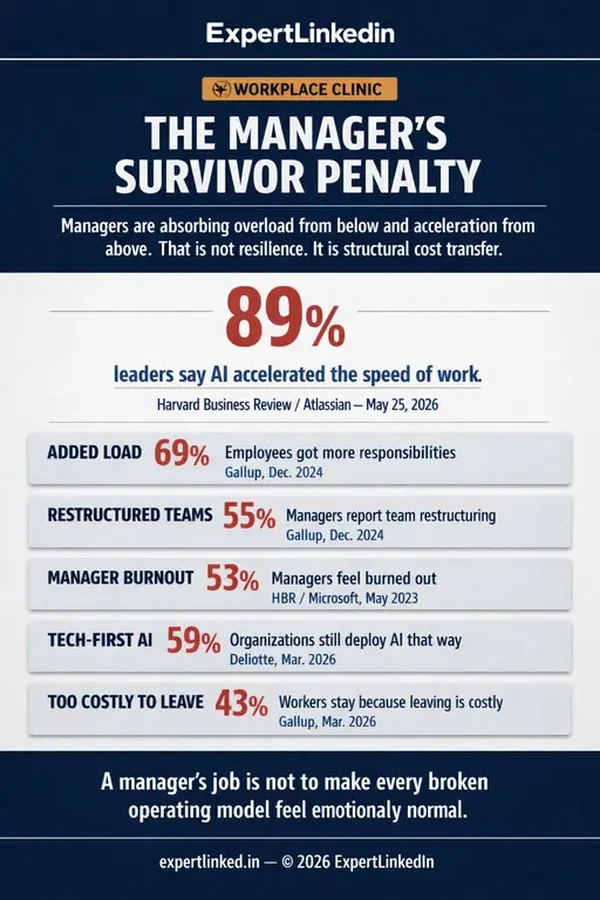
The AI efficiency dividend is being harvested by the organization, not the people who stayed. Gratitude is not a workload management strategy — here is what to do instead.
Across Ford, Anthropic, and Morgan Stanley, the same lesson emerged in one week: AI is an amplifier, and what it amplifies is the expertise already in the system — which means it also exposes what isn’t there.
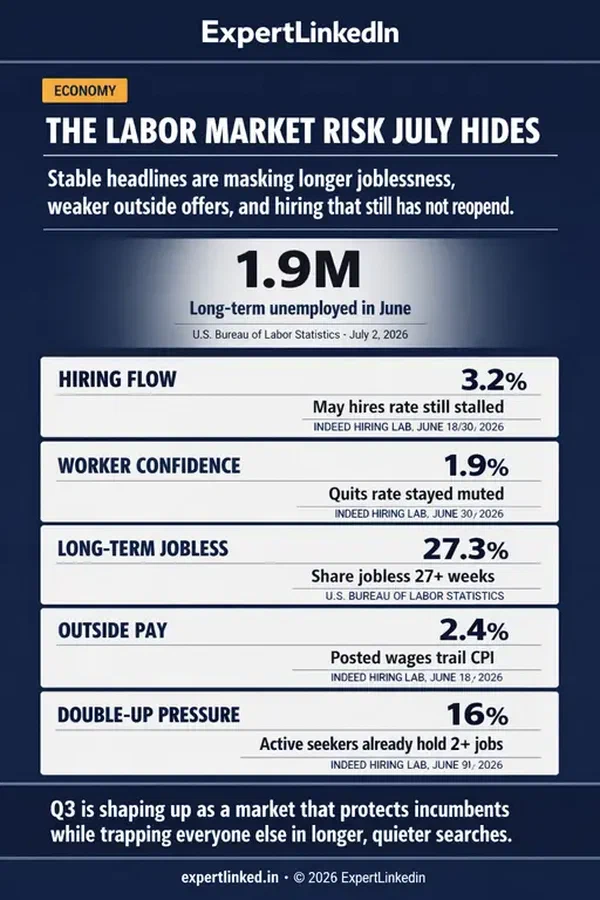
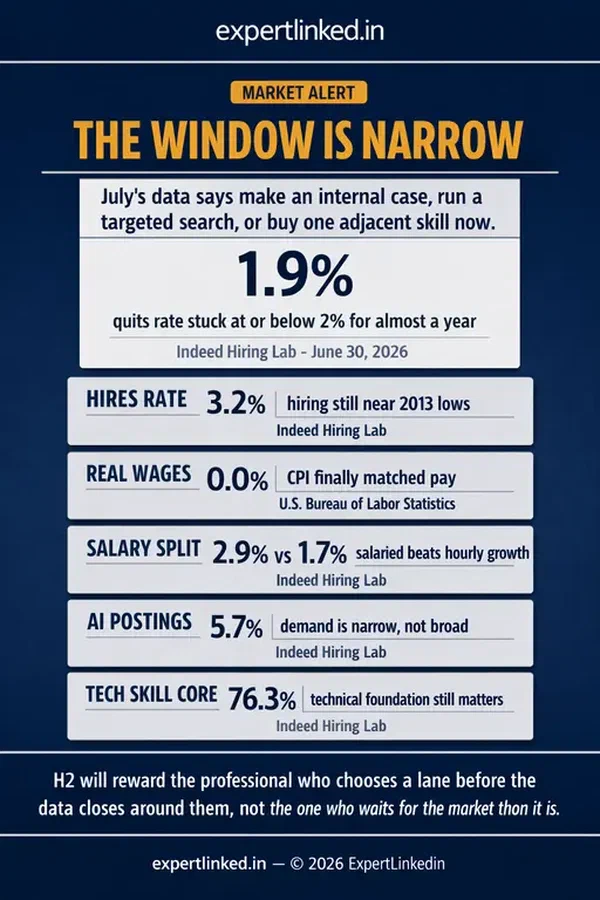
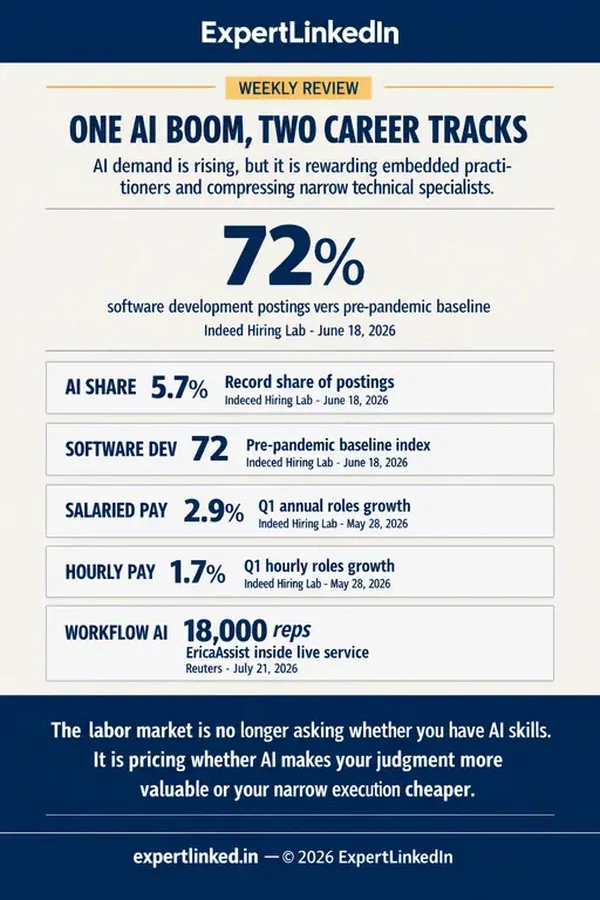
Employment is rising but hiring is not: the labor market is being held up by workers staying put, real wages just turned negative, and AI postings hit a historic high while software hiring collapsed.
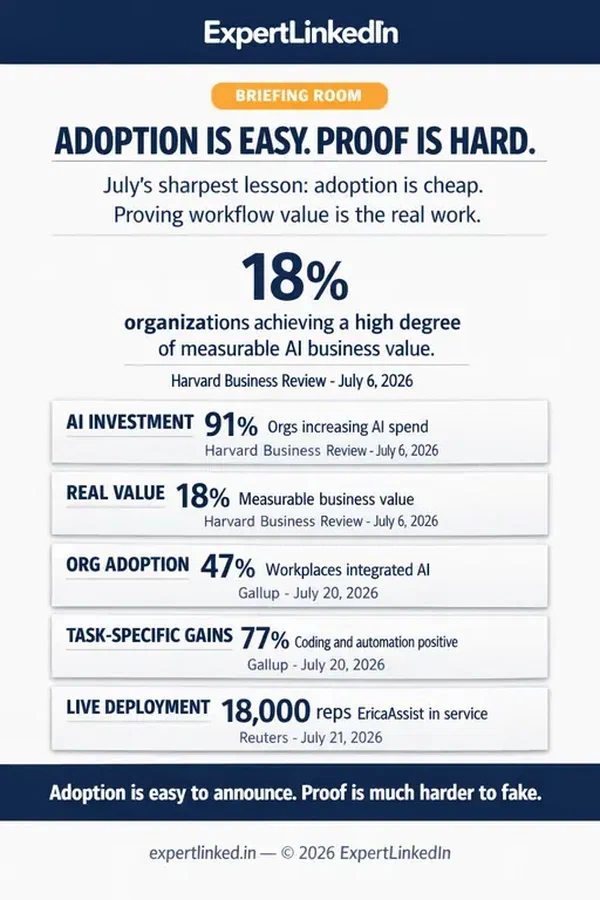
The AI career premium now goes to professionals who can redesign one real workflow and prove the result, not to those collecting tools, certificates, or prompt tricks.
As AI floods organizations with plausible output, the professionals who advance are not the most productive—they are the most calibrated. Here is the framework for building that edge.
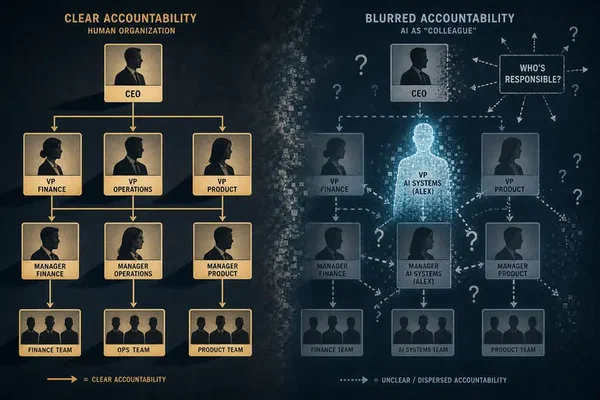
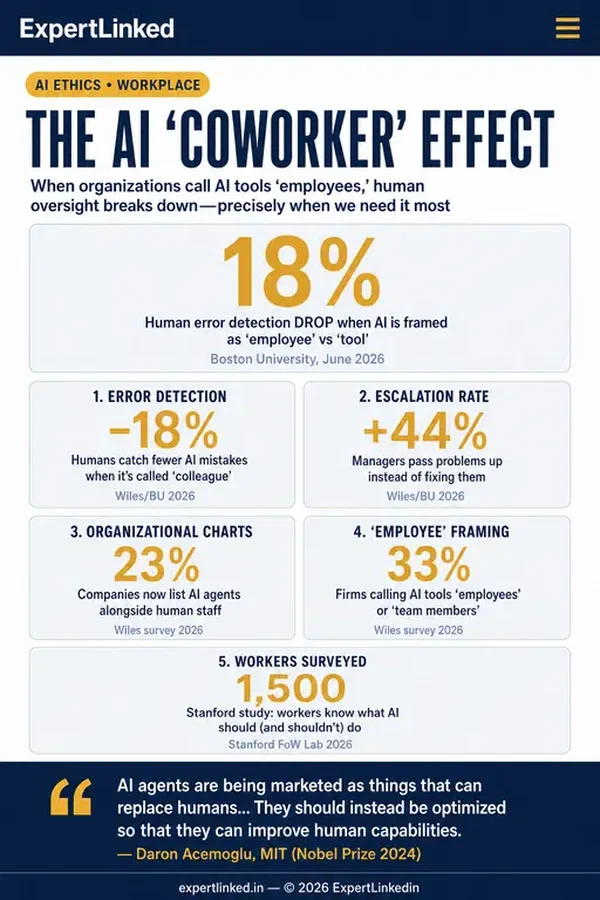
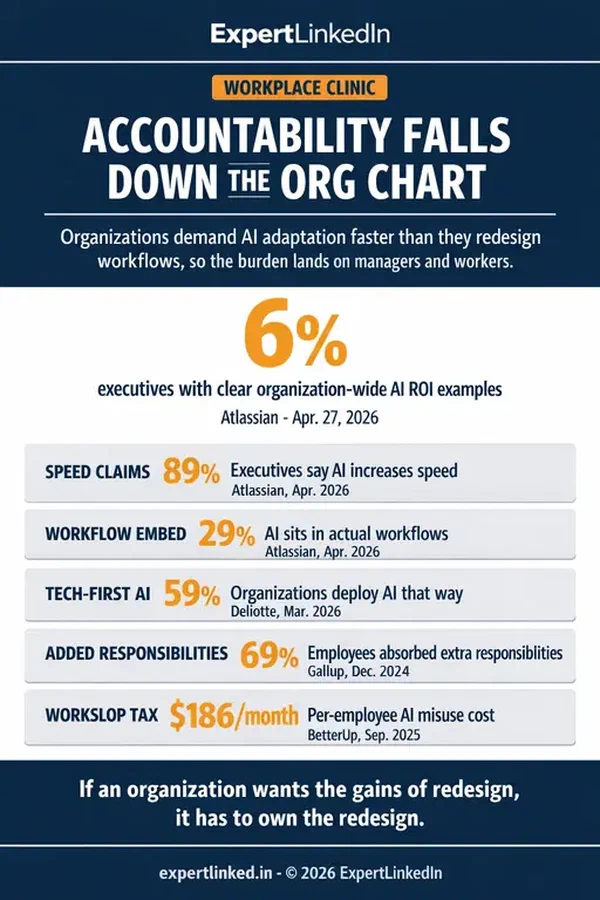
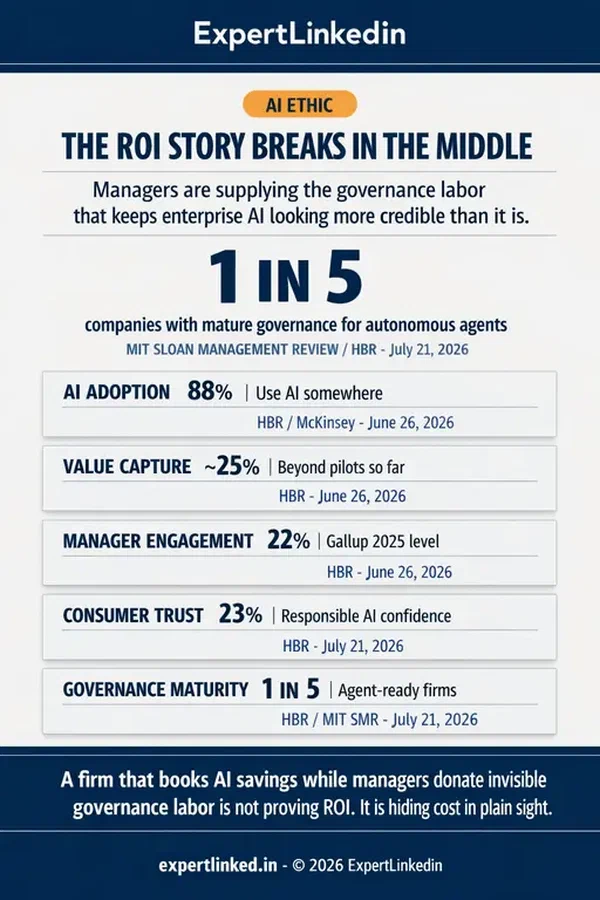
June 2026 confirmed two things at once: AI is now a governance problem, not just a productivity story, and a labor market that looks stable is actually running on workers staying put rather than employers hiring.
As AI floods organizations with plausible output, the professionals who advance are not the most productive—they are the most calibrated. Here is the framework for building that edge.
June 2026 confirmed two things at once: AI is now a governance problem, not just a productivity story, and a labor market that looks stable is actually running on workers staying put rather than employers hiring.
Being graded on how often you open an AI tool — not what you produce with it — is the wrong metric. Here is how to navigate it without becoming a compliance actor.
A former investment banking VP on the identity crisis that made her walk away from a 12-year career — and why the hardest part wasn’t the financial risk.
In a slowing labor market, the real career premium is shifting toward employers and sectors that actively train, sponsor, and route workers through change rather than leaving them to navigate it alone.
87% of knowledge workers say AI-speed output has destroyed their capacity to coordinate. The professionals who advance are not the ones producing the most — they are the ones whose work actually lands.
New data from Indeed and the BLS reveals that the labor market is now producing three distinct experiences — skill-concentrated insiders, structurally locked-out outsiders, and a growing patching class — each demanding a different career playbook.
A practical Career Mechanics framework for knowing which decisions to trust to AI and which to own yourself — because in 2026, that calibration is what your career depends on.
The 40s have become the most structurally dangerous decade in a modern career — and the system that put you there has no plan for getting you through it.
The headline numbers are the strongest in months, but the data beneath them describe two different labor markets running in parallel — and which one you are in determines your career risk profile this quarter.
LinkedIn’s newest updates reward teams that can operationalize trust through structure and proof, while penalizing those still relying on spontaneous posting and vanity reach.
The market still looks stable in aggregate, but hiring power is concentrating into shortage-heavy sectors and professionals who reallocate early will have the clearest advantage.
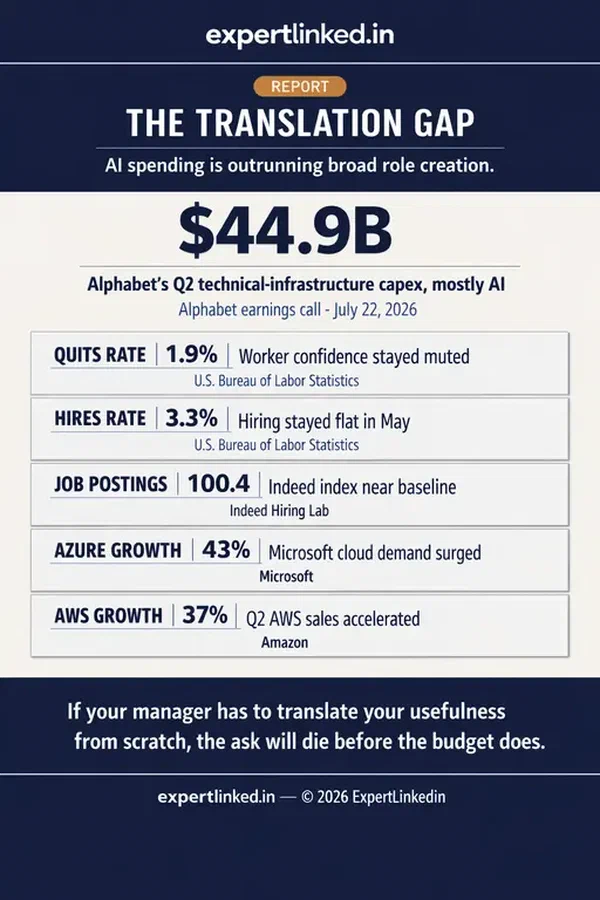
The central future-of-work risk in 2026 is a trust gap where firms cut entry-level pathways on AI promises that are measured faster than they are validated.