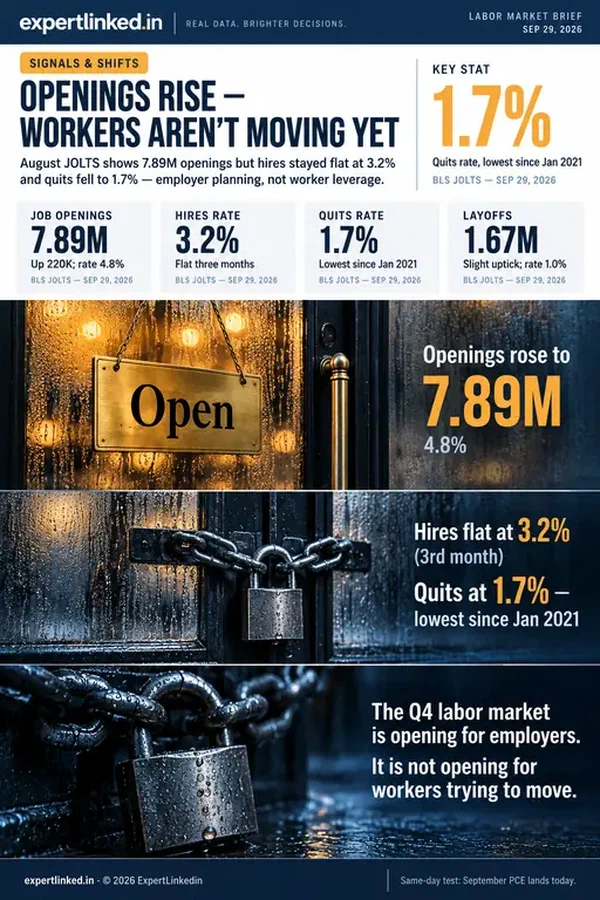
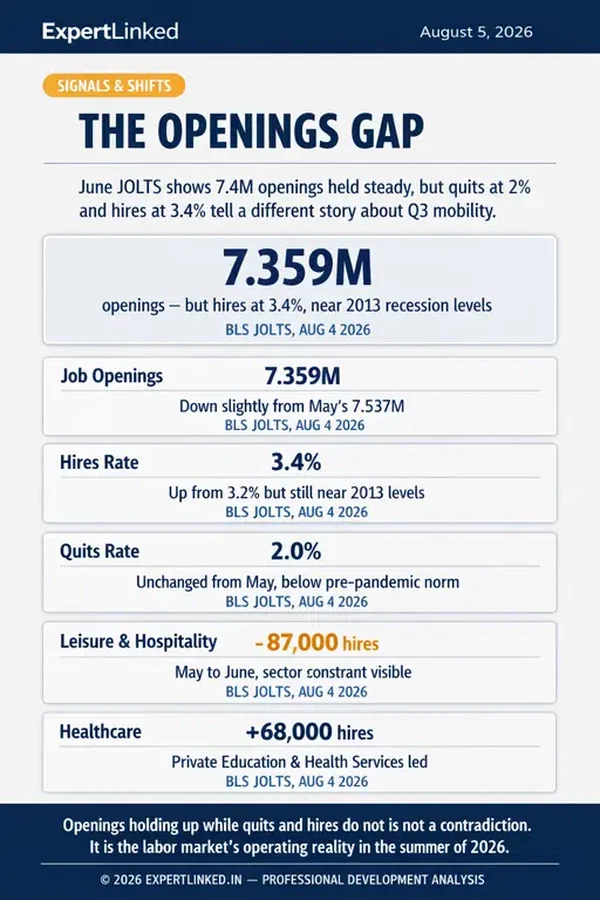
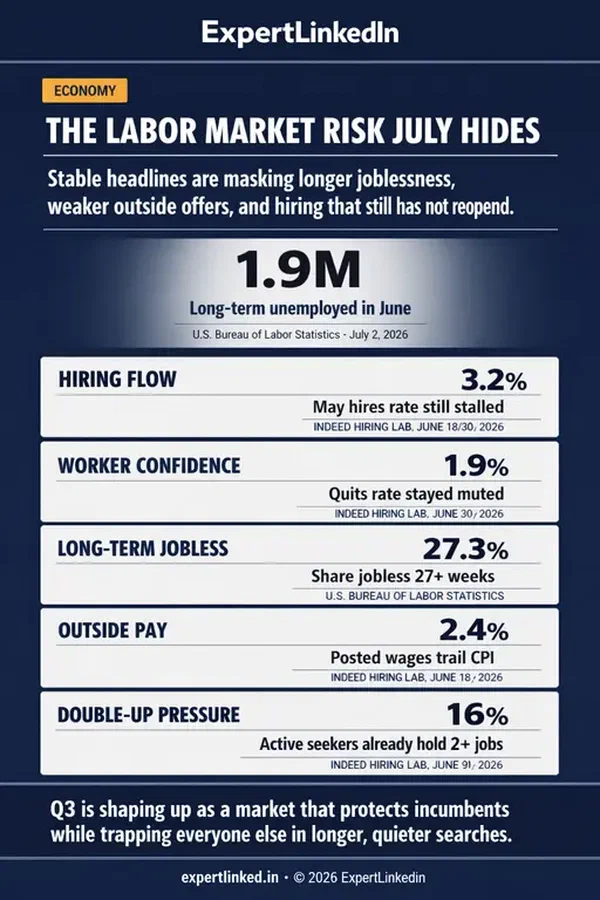
August JOLTS showed openings rising to 7.89M. But hires stayed flat at 3.2% for a third month and quits collapsed to 1.7% — the lowest since January 2021. October optimism should be read as employer planning energy, not worker bargaining power.
Three-panel infographic showing the triple-divergence: openings up, hires flat, quits collapsing. The Q4 labor market is opening for employers, not for workers trying to move.
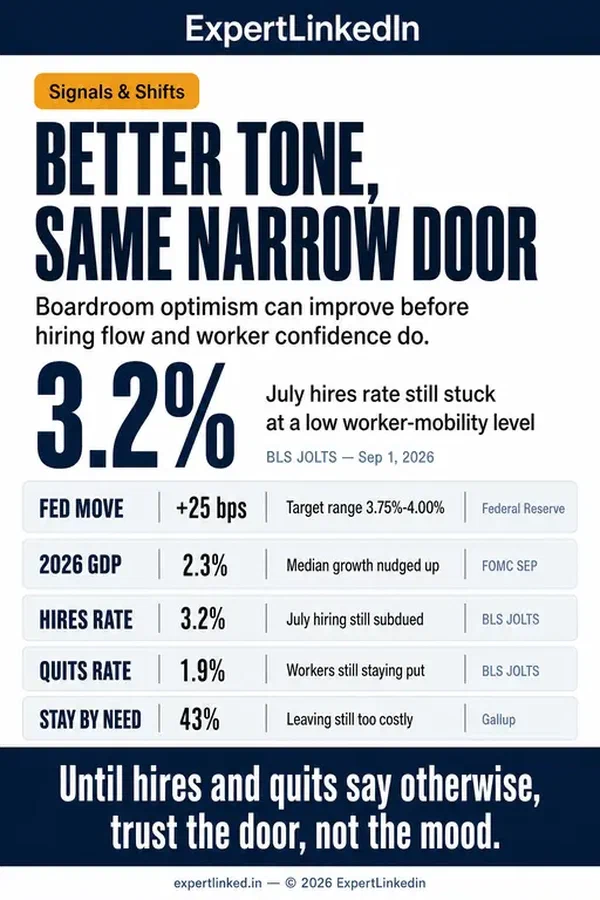
The Fed’s September 2026 decision may improve CEO tone before it improves worker mobility. For anyone trying to read Q4 hiring honestly, the signals that matter more are still the hires rate and quits behavior.
The Fed’s September 2026 decision may improve CEO tone before it improves worker mobility. For anyone trying to read Q4 hiring honestly, the signals that matter more are still the hires rate and quits behavior.
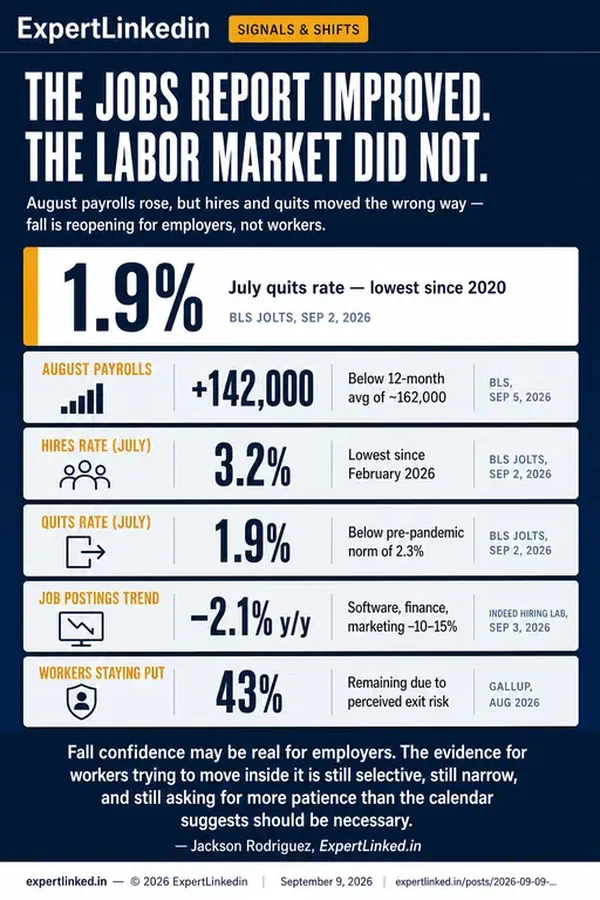
The August jobs report sounded better. The July JOLTS data did not. Together, they describe a market that is stable for employers and still frozen for workers — fall optimism that is real for one side and mostly theoretical for the other.
The August jobs report sounded better. The July JOLTS data did not. Together, they describe a market that is stable for employers and still frozen for workers — fall optimism that is real for one side and mostly theoretical for the other.
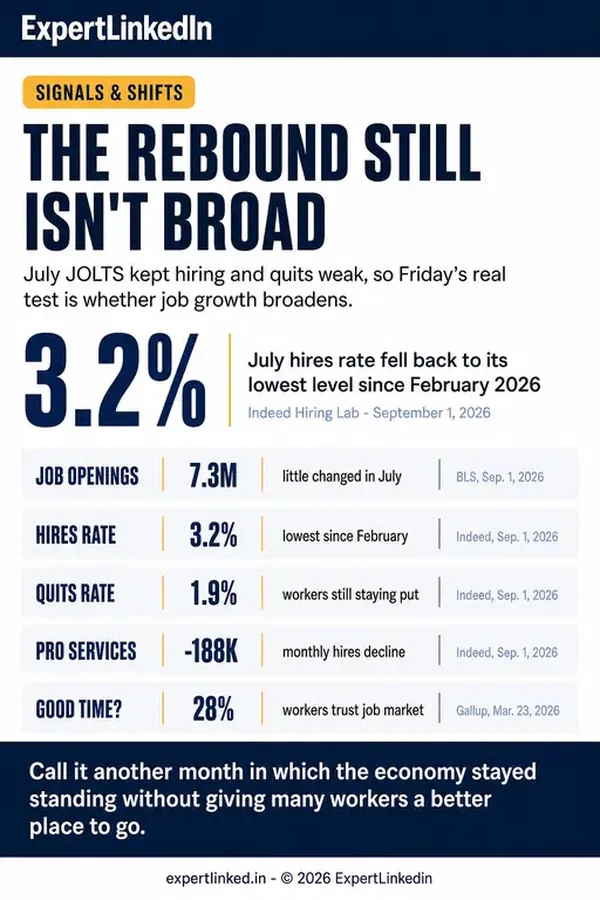
July JOLTS kept the labor market in low-hire, low-fire mode. The number to ignore is the headline; the signal to watch on Friday is whether job growth broadens beyond the same narrow pockets.
July JOLTS kept the labor market in low-hire, low-fire mode. The number to ignore is the headline; the signal to watch on Friday is whether job growth broadens beyond the same narrow pockets.