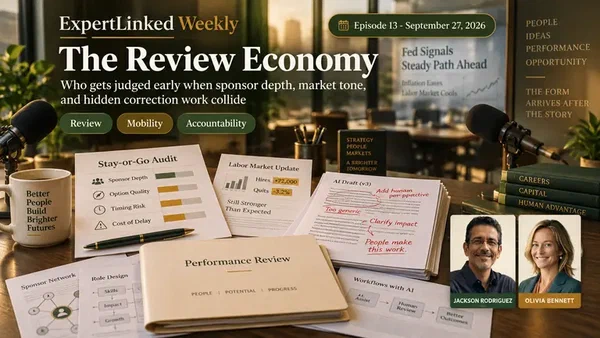
Episode fifteen asks what happens when September’s private planning documents become usable artifacts other people can repeat, rank, or quietly ignore.
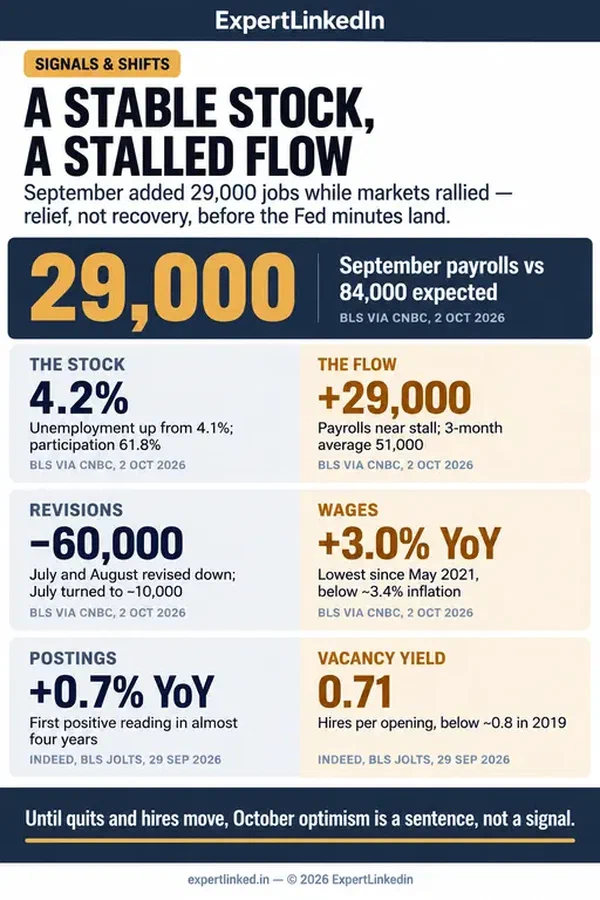
September added just 29,000 jobs — and stocks rallied. The report looked stable in the stock and stalled in the flow, with a 4-year-low wage print and 60,000 jobs revised away. Before the Fed minutes land today, here is how to tell whether Q4 hiring is real movement or just better management language.
September added just 29,000 jobs — and stocks rallied. The report looked stable in the stock and stalled in the flow, with a 4-year-low wage print and 60,000 jobs revised away. Before the Fed minutes land today, here is how to tell whether Q4 hiring is real movement or just better management language.
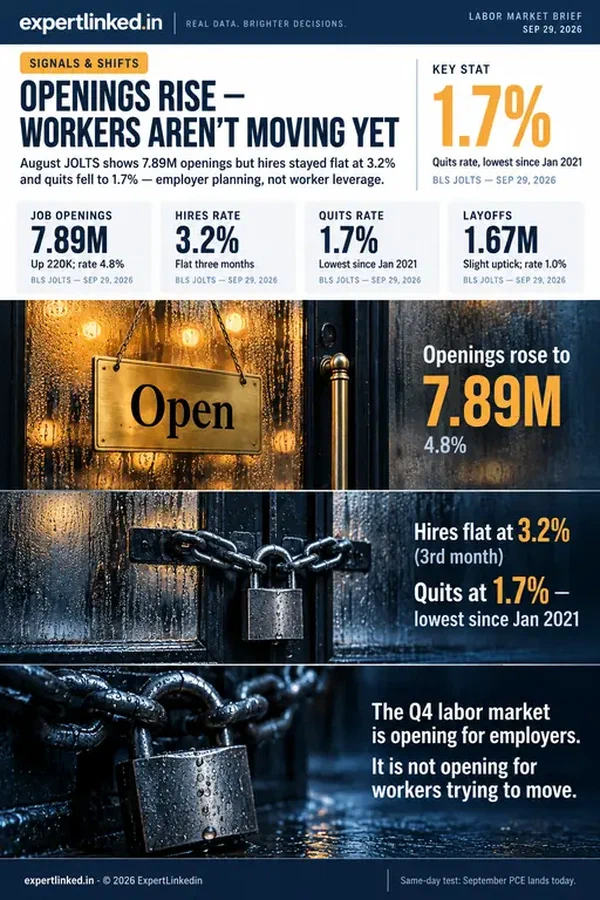
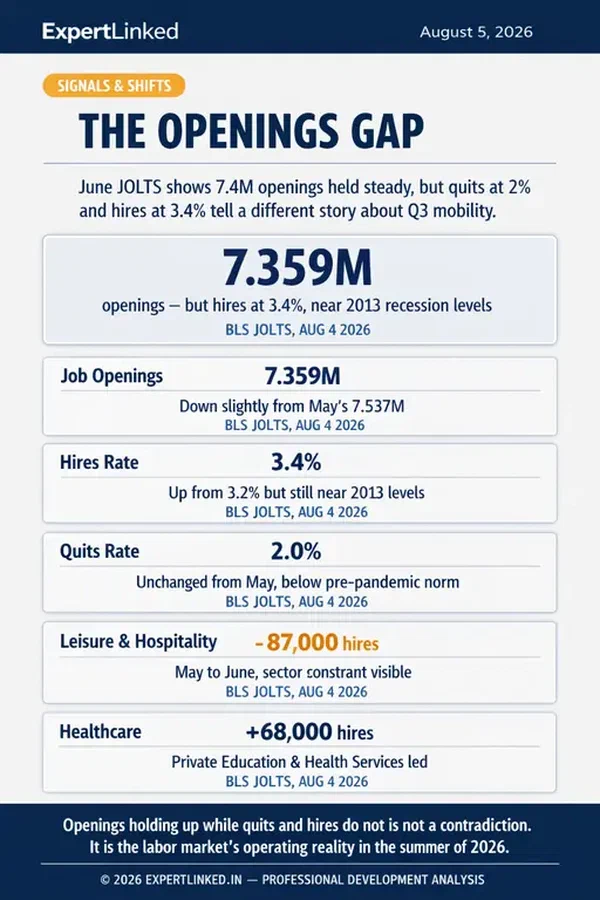
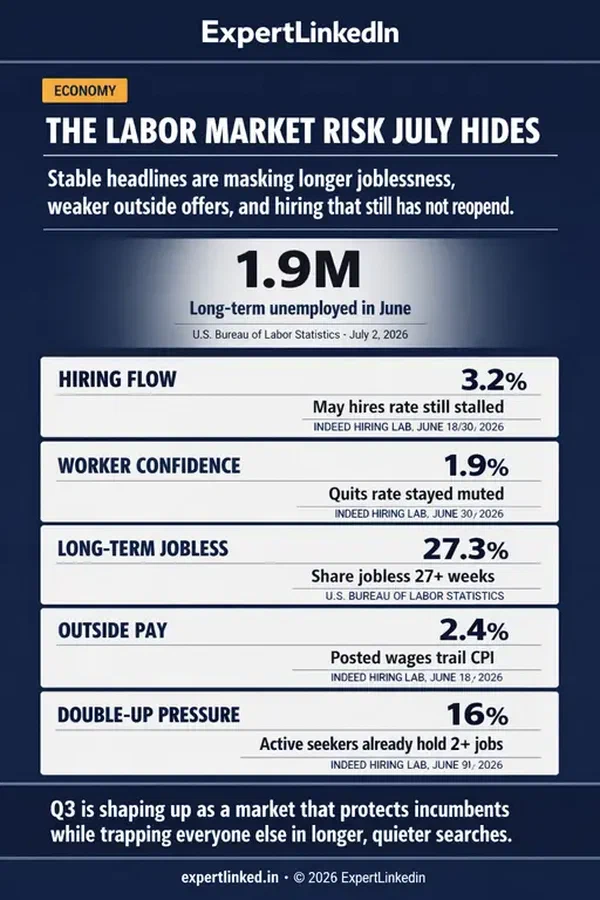
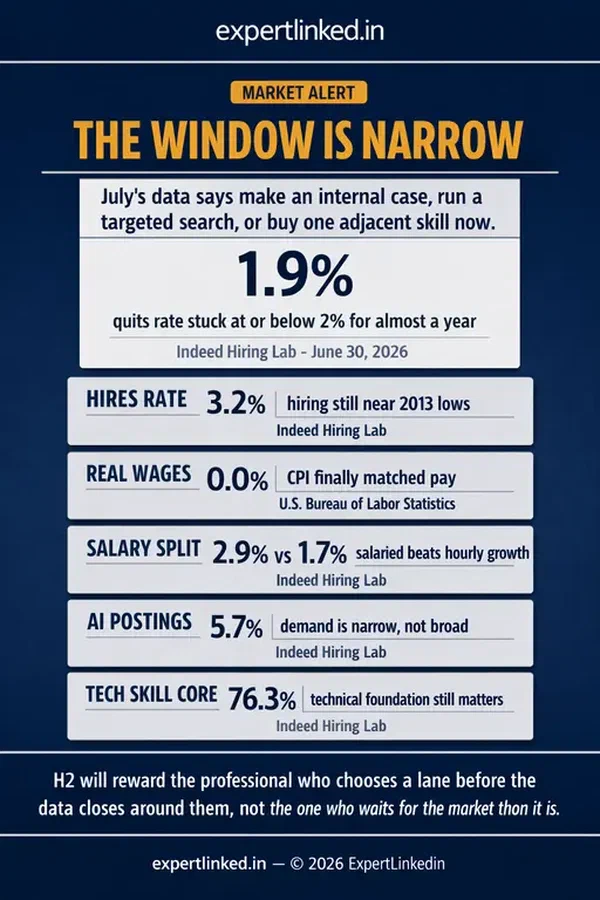
August JOLTS showed openings rising to 7.89M. But hires stayed flat at 3.2% for a third month and quits collapsed to 1.7% — the lowest since January 2021. October optimism should be read as employer planning energy, not worker bargaining power.
Three-panel infographic showing the triple-divergence: openings up, hires flat, quits collapsing. The Q4 labor market is opening for employers, not for workers trying to move.
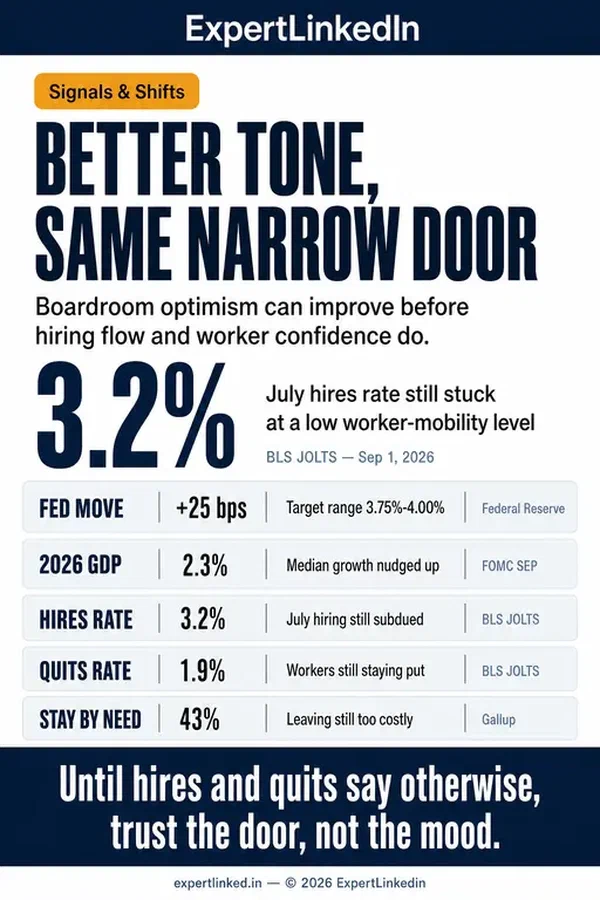
The Fed’s September 2026 decision may improve CEO tone before it improves worker mobility. For anyone trying to read Q4 hiring honestly, the signals that matter more are still the hires rate and quits behavior.
The Fed’s September 2026 decision may improve CEO tone before it improves worker mobility. For anyone trying to read Q4 hiring honestly, the signals that matter more are still the hires rate and quits behavior.
Episode twelve argues that evidence only matters if it can travel - upward, outward, and into the rooms where scope, pay, and protection are actually decided.
Softer inflation is real. So is the gap between macro relief and the hiring freeze workers are still navigating. The September Fed decision won’t close that gap.
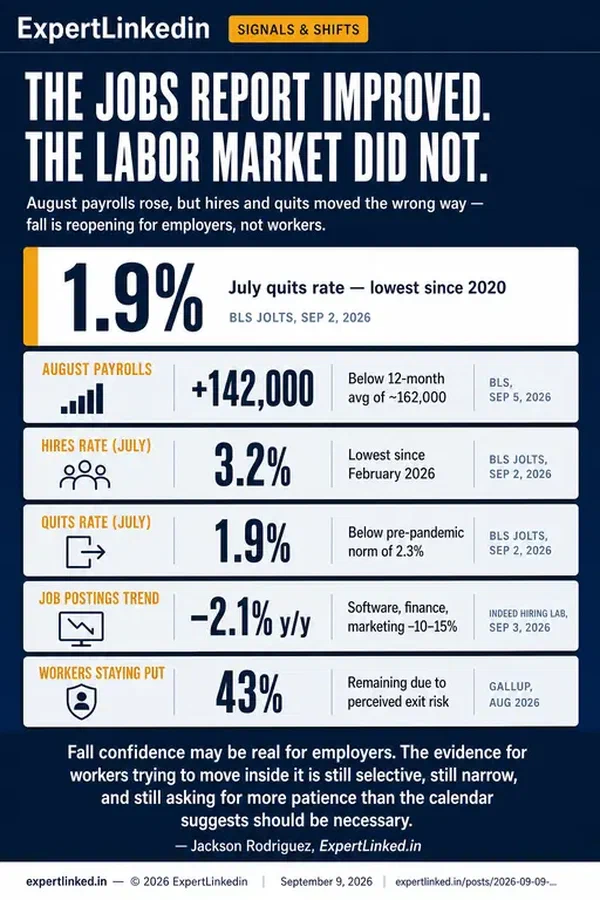
The August jobs report sounded better. The July JOLTS data did not. Together, they describe a market that is stable for employers and still frozen for workers — fall optimism that is real for one side and mostly theoretical for the other.
The August jobs report sounded better. The July JOLTS data did not. Together, they describe a market that is stable for employers and still frozen for workers — fall optimism that is real for one side and mostly theoretical for the other.
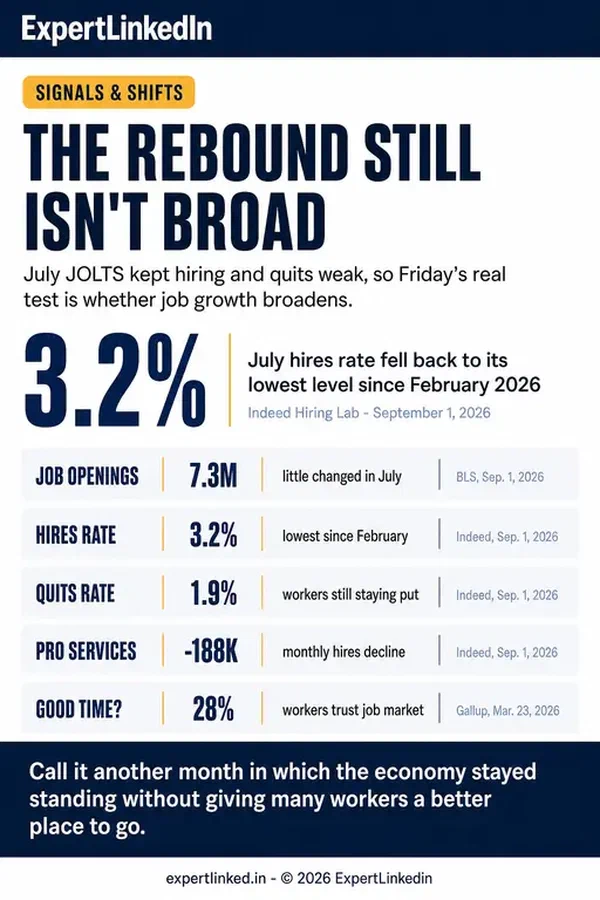
July JOLTS kept the labor market in low-hire, low-fire mode. The number to ignore is the headline; the signal to watch on Friday is whether job growth broadens beyond the same narrow pockets.
July JOLTS kept the labor market in low-hire, low-fire mode. The number to ignore is the headline; the signal to watch on Friday is whether job growth broadens beyond the same narrow pockets.
Episode eight follows Jackson’s budget-ask and hiring-risk pieces plus Olivia’s clinic on delegated exposure, then uses From the Notes to name the design debt hiding underneath all three.
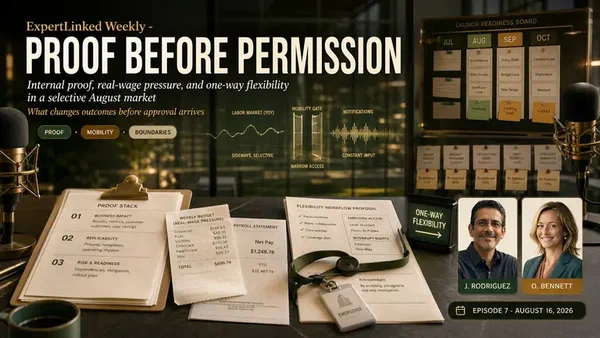
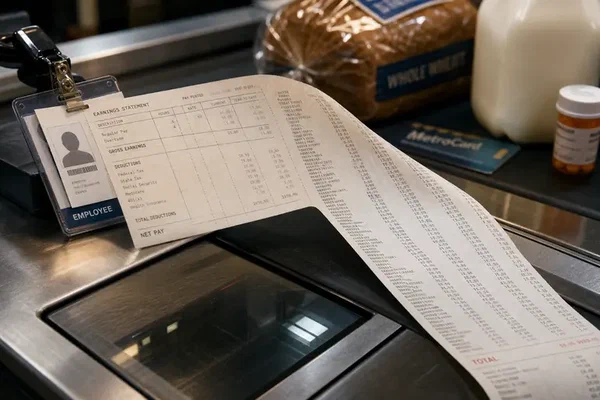
Episode seven connects Jackson’s proof stack and real-wage squeeze with Olivia’s clinical read on always-on flexibility and her composite story of a role built in the workflow before it existed on paper.
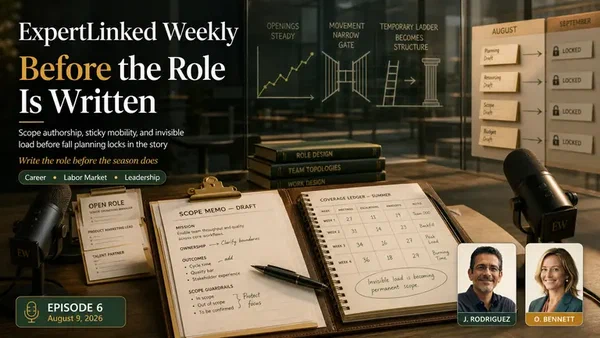
Episode six turns August’s quiet surface into a read on scope authorship, stalled movement, temporary coverage that can harden into permanent design, and the cross-border case for progress before perfection.
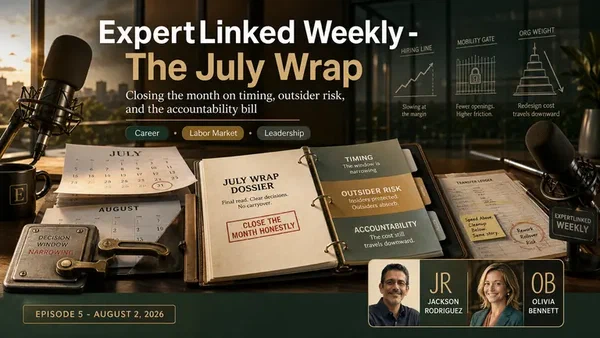
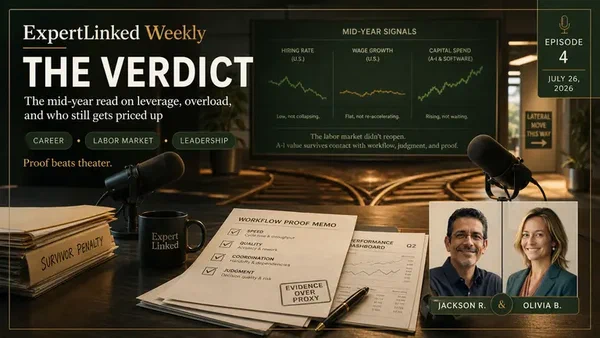
Jackson and Olivia use the week’s six published pieces to deliver a mid-year verdict on work: one proof memo is not enough, the labor market floor held without reopening, managers are absorbing invisible structural cost, and the AI labor market is splitting around workflow judgment.