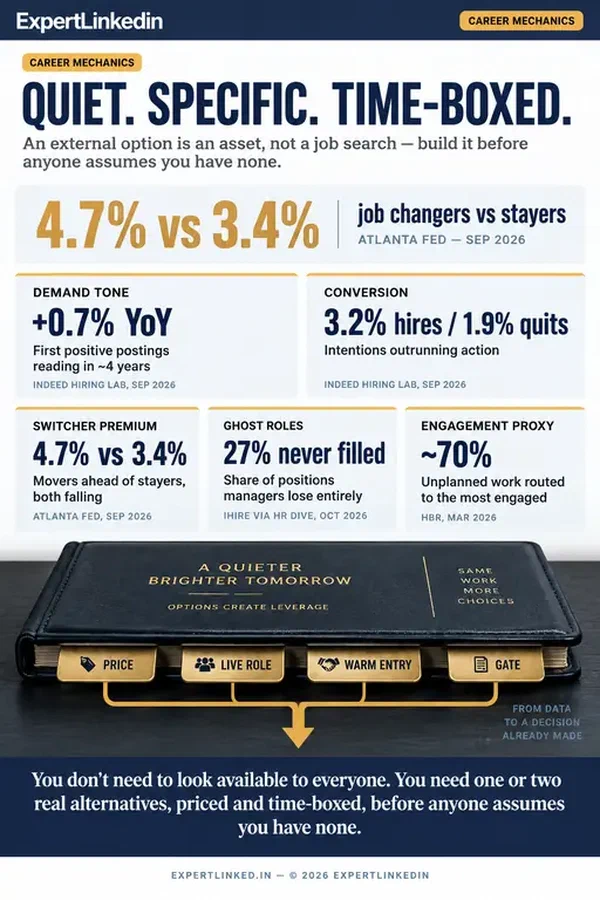
The real Q4 risk isn’t being seen looking for a job — it’s quietly reducing your availability until your manager rewrites the story about you. Here’s the 30-day plan: four assets, five rules, and the honest math on what a move is worth in this market.
The real Q4 risk isn’t being seen looking for a job — it’s quietly reducing your availability until your manager rewrites the story about you. Here’s the 30-day plan: four assets, five rules, and the honest math on what a move is worth in this market.
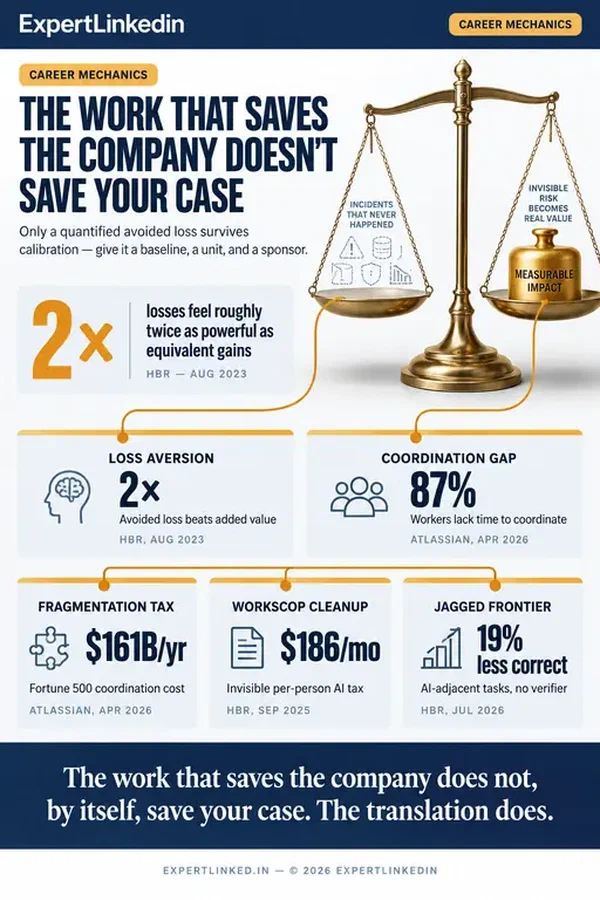
The most valuable work you did this quarter is probably not in your self-evaluation — it’s the disaster that didn’t happen. Here is how to convert avoided error, avoided delay, and avoided political drag into a promotion case before Q4 budgets freeze.
The most valuable work you did this quarter is probably not in your self-evaluation — it’s the disaster that didn’t happen. Here is how to convert avoided error, avoided delay, and avoided political drag into a promotion case before Q4 budgets freeze.
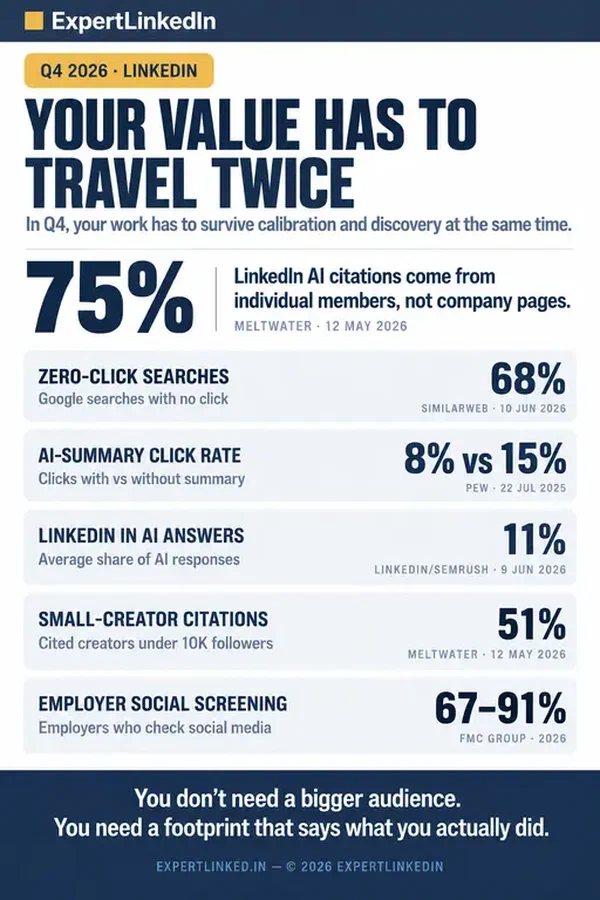
Your self-evaluation tells the calibration room one story; your public LinkedIn footprint may be telling another. In Q4 2026, your value has to travel twice. Here is the two-sided visibility audit to run before the review hardens.
Your self-evaluation tells the calibration room one story; your public LinkedIn footprint may be telling another. In Q4 2026, your value has to travel twice. Here is the two-sided visibility audit to run before the review hardens.
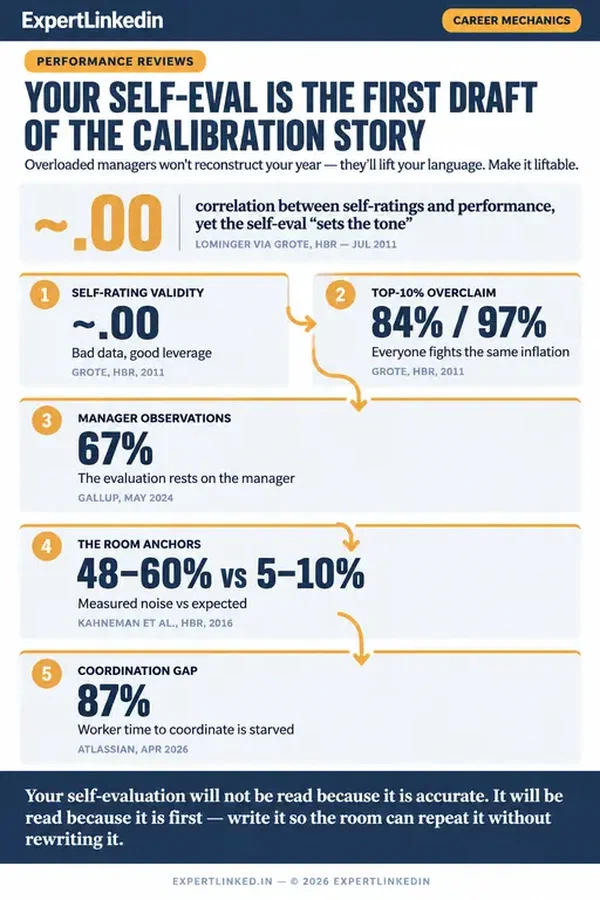
Self-ratings barely correlate with performance, yet the self-evaluation still sets the tone for calibration. Here is how to write a Q4 2026 self-eval that a sponsor or calibration room can repeat without rewriting it — before your manager writes the story first.
Self-ratings barely correlate with performance, yet the self-evaluation still sets the tone for calibration. Here is how to write a Q4 2026 self-eval that a sponsor or calibration room can repeat without rewriting it — before your manager writes the story first.
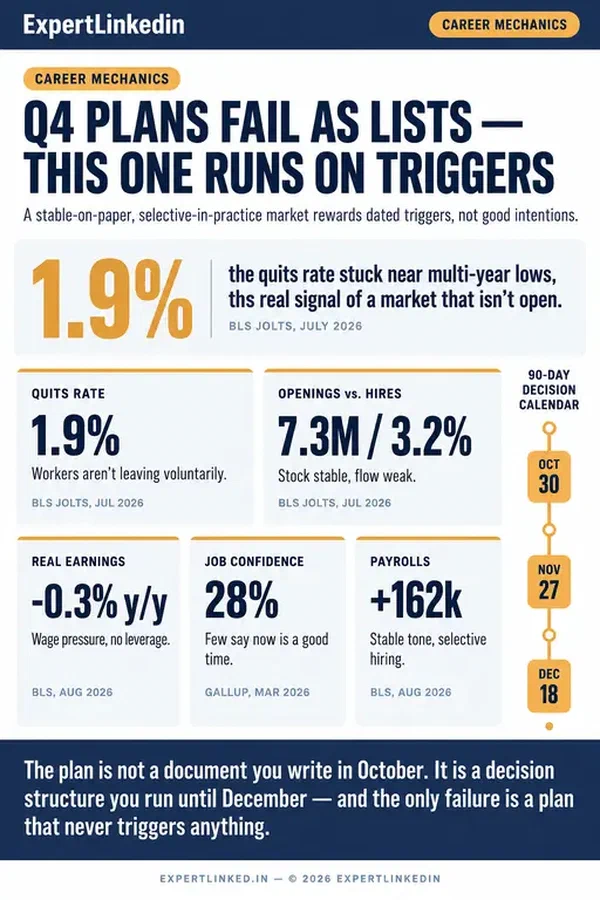
Most Q4 plans fail because they are lists, not decisions. This 90-day plan turns September’s sponsor, evidence, and stay-or-go framework into trigger-based moves tied to sponsor behavior, workload drift, hiring signals, and evidence deadlines.
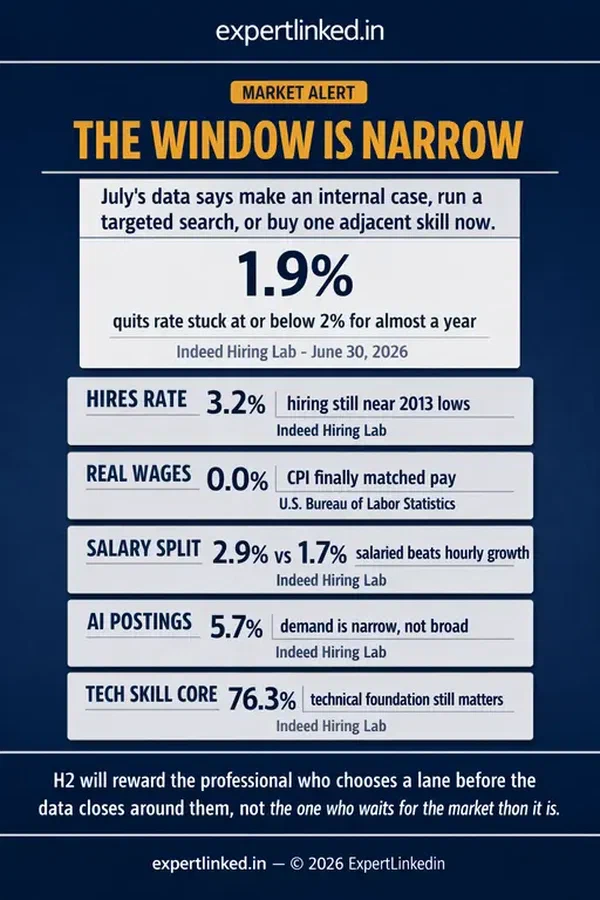
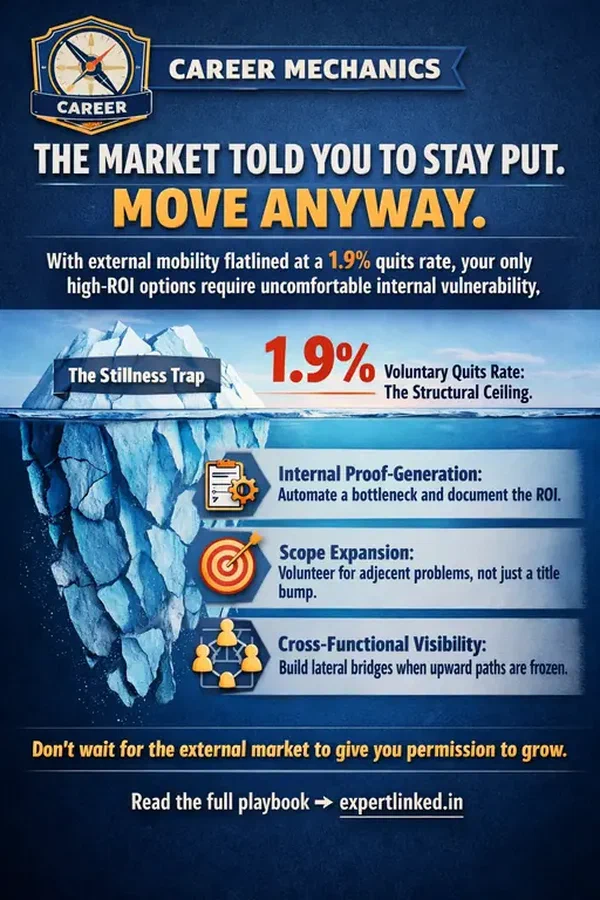
September 2026 still has a hires rate near 3.2% and a quits rate near 1.9%. The 90-day Q4 plan that works is the one built on triggers and decision gates, not on a wish list.
The real stay-or-go question is not whether you are satisfied. It is whether the next quarter will compound your leverage or merely compound your exposure while better options keep narrowing. Here is the four-dimension audit to run before Q4 closes the window.
Most review packets fail because they show effort and force a sponsor to rewrite the case. This four-page Q4 2026 evidence packet helps you prove consequence, compare scope, and make promotion or pay conversations easier to carry upward.
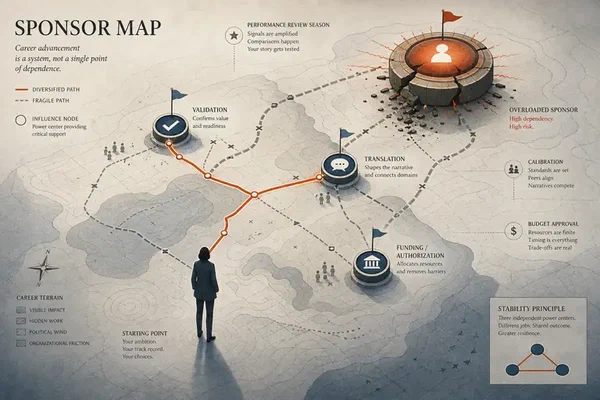
One supportive manager is rarely enough. Before Q4 review season, map who can validate your work, translate your case across the organization, and fund the move so your next step is not trapped in one relationship.
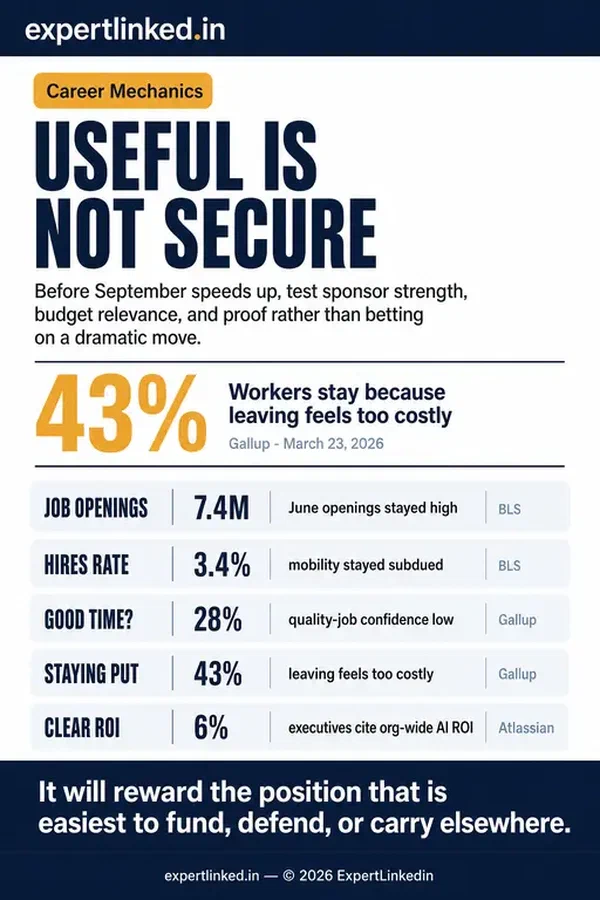
Most readers do not need to panic or quit. They need to pressure-test whether their current role has real sponsor strength, Q4 budget relevance, and portable proof before September accelerates.
Most readers do not need to panic or quit. They need to pressure-test whether their current role has real sponsor strength, Q4 budget relevance, and portable proof before September accelerates.
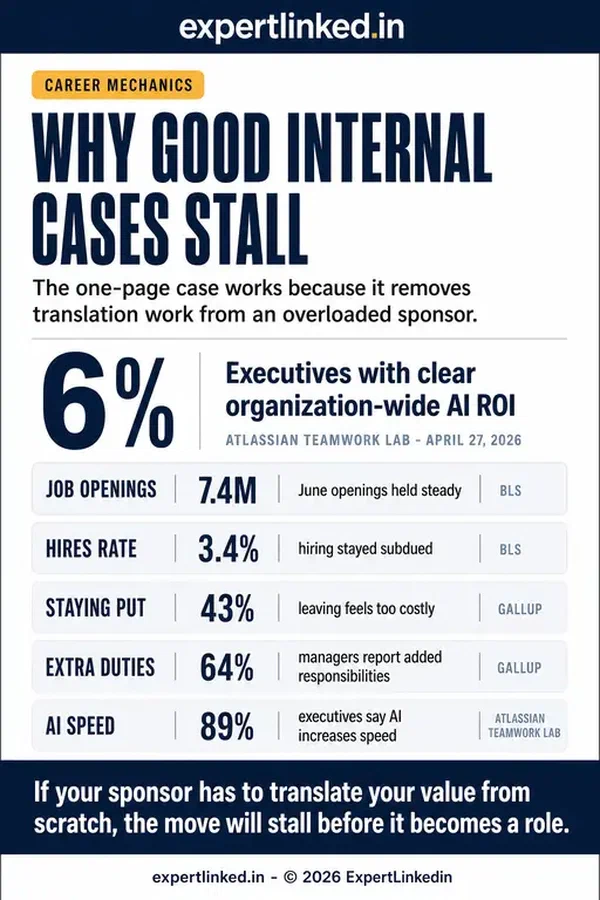
Most internal moves stall on sponsor friction, not talent. A one-page business case turns proof, scope, and timing into a manager-carryable Q4 decision.
Most internal moves stall on sponsor friction, not talent. A one-page business case turns proof, scope, and timing into a manager-carryable Q4 decision.
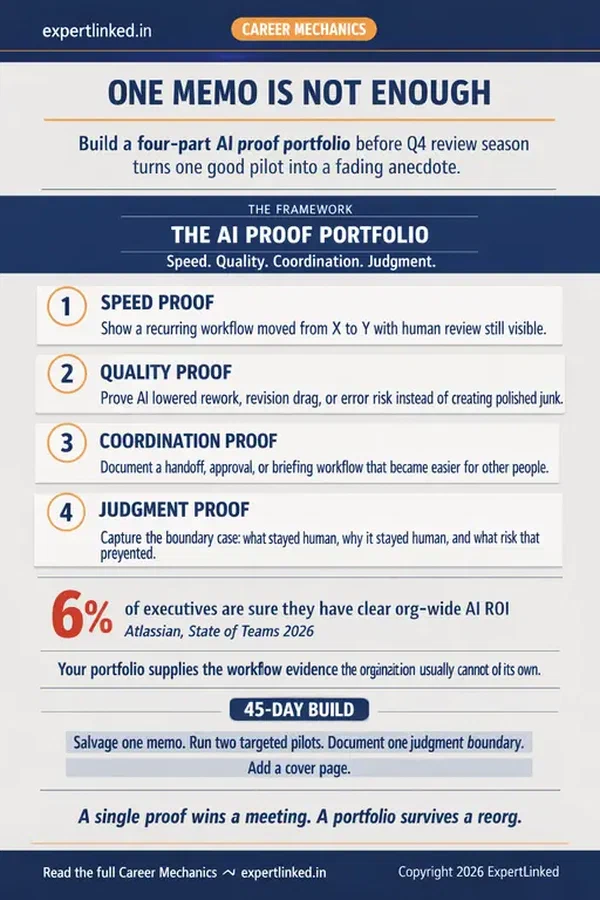
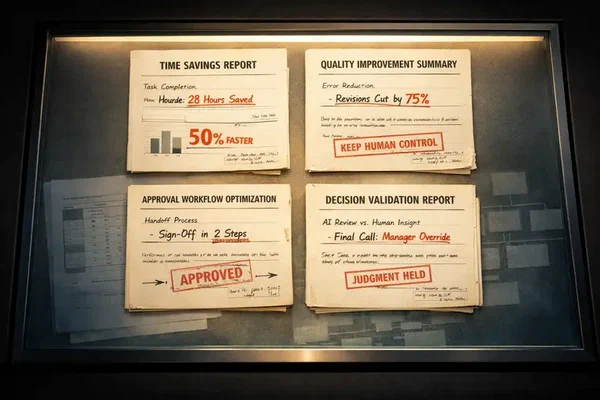
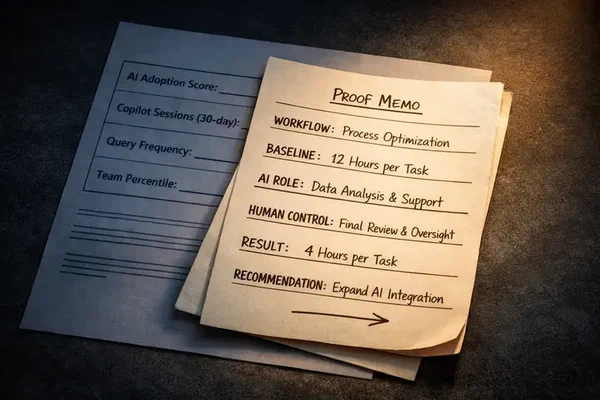
One proof memo is a data point; a portfolio of three to four across different workflows is the career artifact that survives Q4 review season and organizational change.
One proof memo is a data point; a portfolio of three to four across different workflows is the career artifact that survives Q4 review season and organizational change.
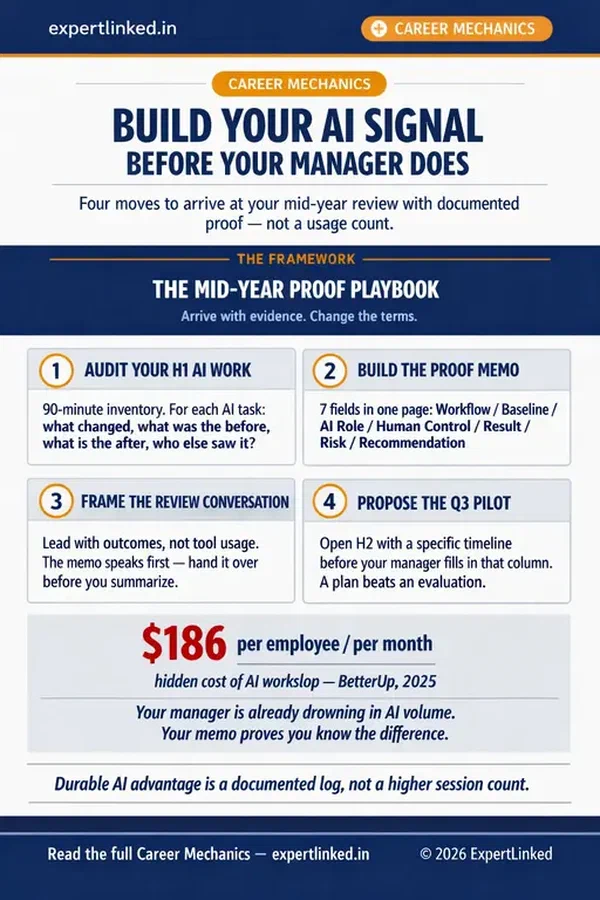
The mid-year review has changed. It’s no longer just about your output; it’s about how you orchestrate the machine that generates the output. Here is how to signal your capability before your manager scores you.
Your manager already has a metric for your AI contribution. The question is whether you control what it says — and mid-year is the last window to change the terms.