- Home/
- Tags/
- Leadership/
Leadership
2026

Career Mechanics: The Player-Coach Manager Playbook – Why Coordination-Only Leadership Is Losing Value
·1552 words·8 mins
The managers gaining leverage in 2026 are not the ones supervising more status updates; they are the ones who can still do the work, redesign the workflow, and improve decisions.

AI Promised to Fix Burnout. Instead, It Invented a New Kind.
·1781 words·9 mins
The new AI-era burnout doesn’t show up in your old metrics — and that’s exactly why it’s dangerous.

Quiet Cracking: The Silent Workplace Crisis That's Already Inside Your Team
·1138 words·6 mins
Quiet cracking is the hidden erosion of workplace satisfaction affecting more than half of employees—and most leaders can’t see it coming.

The Burnout-Engagement Paradox: Why Your Most Productive Employees Are Quietly Cracking
·1506 words·8 mins
82% of employees report burnout while engagement metrics hold steady—revealing a dangerous leadership blind spot that threatens retention and organizational health.
2025

"They Are Supposed To": The Quiet Paradox Undermining Accountability
·984 words·5 mins
A culture of saying ’they are supposed to’ diffuses ownership, erodes trust, and quietly breaks systems designed for transparency.
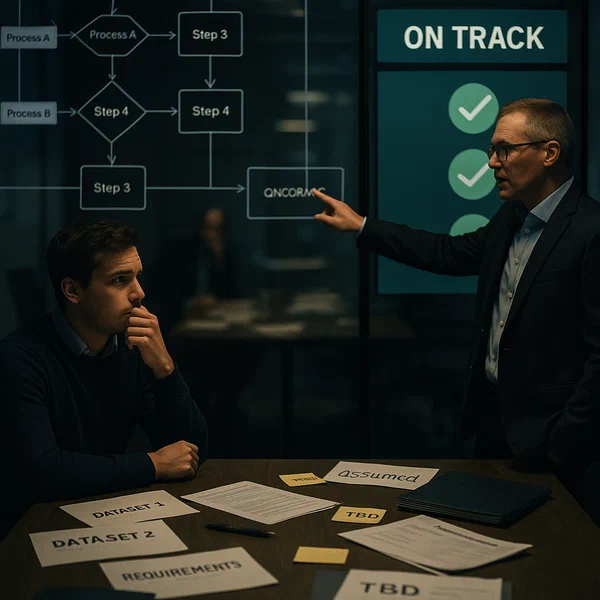
Garbage In, Garbage Out — But Hey, We Followed Process
·603 words·3 mins
When inputs are flawed and dissent is muted, process compliance manufactures the illusion of progress while compounding risk.

I Subscribe to the Company's Vision but I Can't Stand My Boss
·622 words·3 mins
Exploring the complex dynamics when employees feel connected to organizational purpose but struggle with direct management relationships.
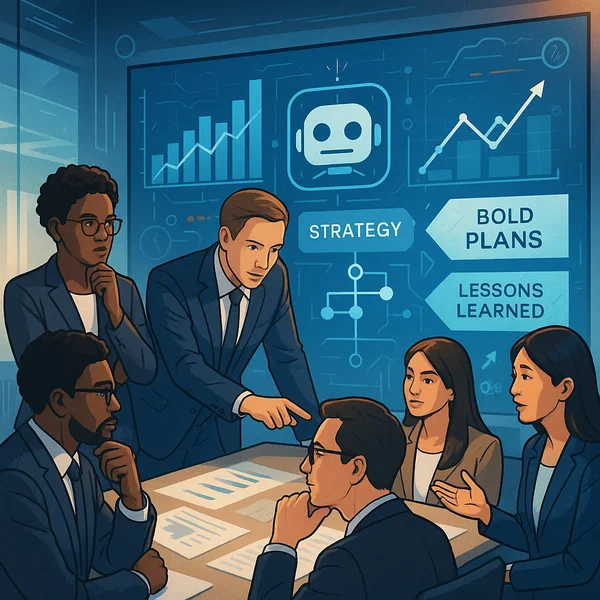
Mid-Year AI Strategy Assessment: Key Lessons and Q3-Q4 Planning for Business Leaders
·1255 words·6 mins
Mid-2025 analysis reveals that only 20% of AI initiatives launched in Q1 achieved production scale, but those delivering 3x projected returns. Success factors include data quality over model sophistication, seamless business process integration, and strategic focus on measurable outcomes rather than technological novelty.

Microsoft's 9,000 Layoffs: What Leaders Can Learn About Making Impossible Decisions
·1630 words·8 mins
When tech giants make layoff decisions affecting thousands, it’s not just about numbers on a spreadsheet—it’s about leadership, culture, and the profound human impact of corporate restructuring.
Building High-Performance Remote Teams: Leadership Strategies for 2025
·544 words·3 mins
Modern leadership strategies for driving organizational success and team performance.
Leading with Empathy: The Cornerstone of Modern Leadership
·318 words·2 mins
The critical role of empathetic leadership in building high-performing, engaged teams.
Strategic Unlearning: The Leadership Capability Organizations Overlook
·417 words·2 mins
Modern leadership strategies for driving organizational success and team performance.
Leading Through Uncertainty: Decision-Making Frameworks for Complex Environments
·413 words·2 mins
Innovative AI applications transforming patient care and healthcare delivery systems.
2024
Building High-Performance Teams in Hybrid Work Environments
·264 words·2 mins
Build high-performance hybrid teams by designing intentional togetherness, mastering asynchronous communication, evolving performance metrics, and creating new frameworks that optimize both in-person collaboration and remote productivity.
Leading Through Change: Lessons from Organizational Transformation
·274 words·2 mins
Lead successful organizational transformation through transparent communication, participatory change design, and reframing disruption as opportunity while balancing urgency with patience and maintaining psychological safety during uncertainty.
Leading with Empathy in High-Pressure Environments
·171 words·1 min
Maintain empathy in high-pressure environments through active listening, transparent communication, and modeling self-care to achieve higher job satisfaction, lower turnover, and strategic advantage in challenging conditions.
Sustainable Leadership Practices for Remote Teams
·163 words·1 min
Implement sustainable remote leadership through structured disconnection policies, asynchronous documentation replacing synchronous meetings, and outcome-based evaluation that focuses on deliverables rather than activity monitoring.
The Poetic Journey of Leadership
·374 words·2 mins
Leadership emerges as a poetic journey of growth, resilience, and love that conducts orchestras of diverse minds, transforming culture through collaboration and inspiring teams to reach beyond conventional boundaries toward extraordinary achievement.
AI in the Boardroom: How Artificial Intelligence is Transforming Business Strategy
·596 words·3 mins
AI is transforming business strategy by replacing intuition-based decisions with augmented intelligence, enabling unprecedented scenario planning, and reducing cognitive bias through data-driven strategic analysis at the executive level.
The Quiet Leaders: How Introverts Can Leverage Their Strengths to Lead Effectively
·563 words·3 mins
Introverted leaders can excel by leveraging preparation advantages, deep listening skills, written communication strengths, strategic socialization, and thoughtful pauses rather than mimicking extroverted leadership styles.
Leadership Lessons from Unlikely Places
·128 words·1 min
Develop essential leadership capabilities through practical insights, real-world examples, and proven frameworks that inspire teams and drive results.