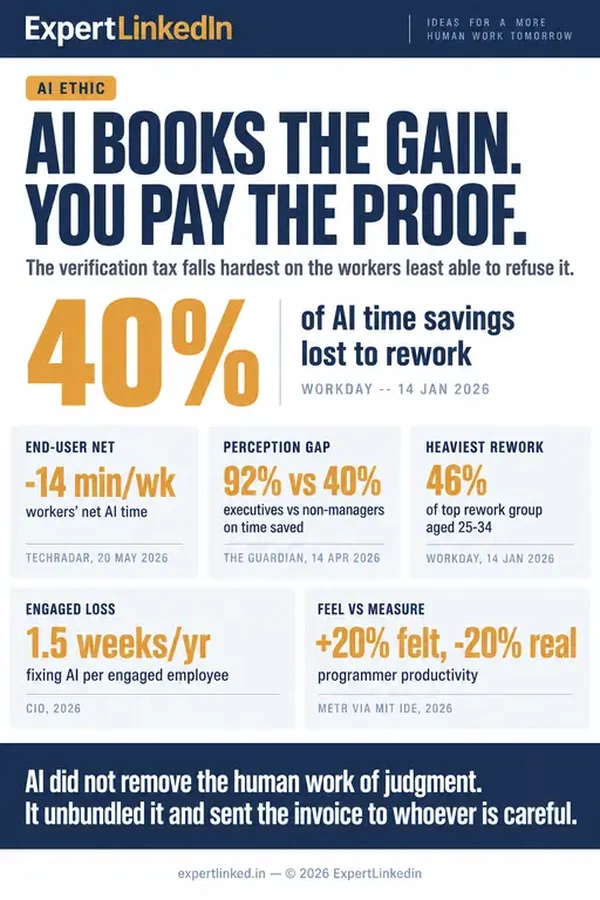
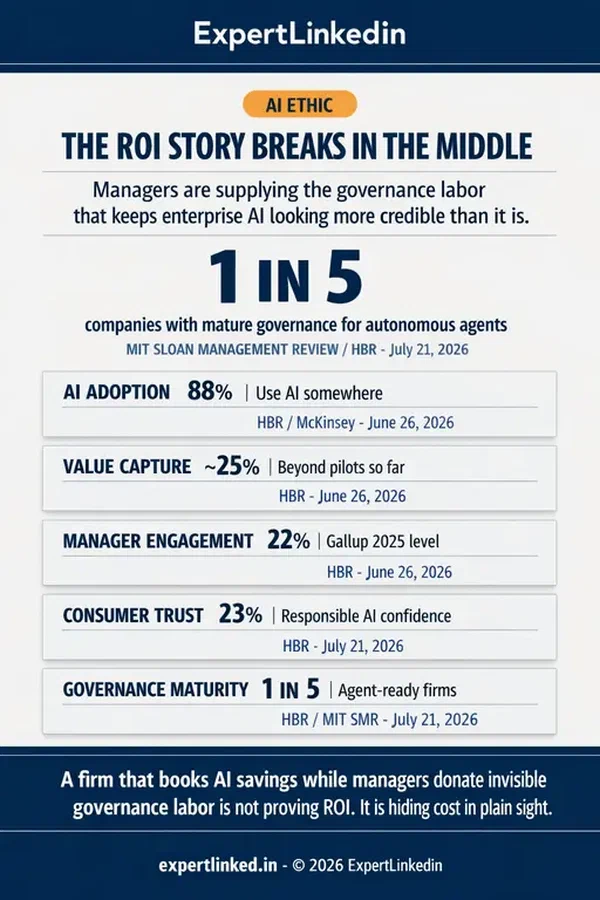
AI booked the productivity gain. Somebody still has to check, correct, and defend the output — and the evidence says that bill is landing on the most careful and most junior workers. Here is who really pays for AI speed, and why October’s calibration systems are set up to reward the wrong person.
AI booked the productivity gain. Somebody still has to check, correct, and defend the output — and the evidence says that bill is landing on the most careful and most junior workers. Here is who really pays for AI speed, and why October’s calibration systems are set up to reward the wrong person.
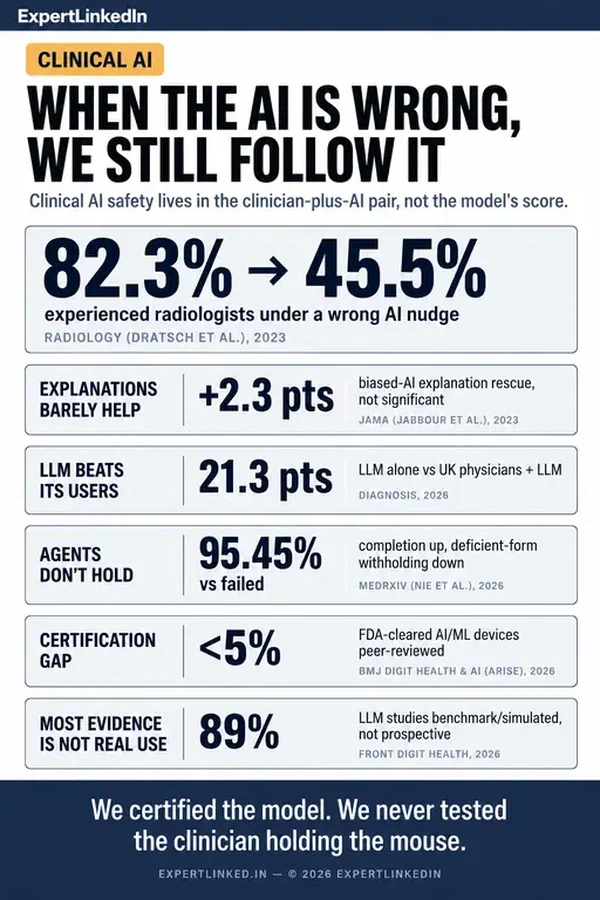
We keep certifying clinical AI on model accuracy scores, but the 2026 evidence shows the real safety problem lives in the clinician-plus-AI pair. Doctors follow confident AI advice even when it is wrong, and explanations do not protect them.
We keep certifying clinical AI on model accuracy scores, but the 2026 evidence shows the real safety problem lives in the clinician-plus-AI pair. Doctors follow confident AI advice even when it is wrong, and explanations do not protect them.
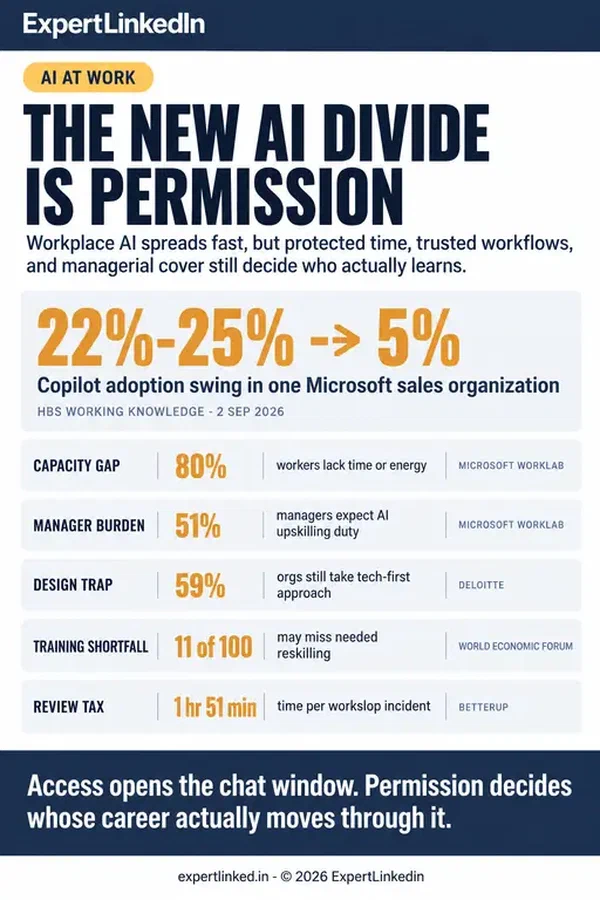
Almost everyone can open a chatbot at work. Far fewer workers have the protected time, trusted workflows, and managerial cover needed to turn AI into real leverage. The next workplace divide is not tool access. It is permission.
Almost everyone can open a chatbot at work. Far fewer workers have the protected time, trusted workflows, and managerial cover needed to turn AI into real leverage. The next workplace divide is not tool access. It is permission.
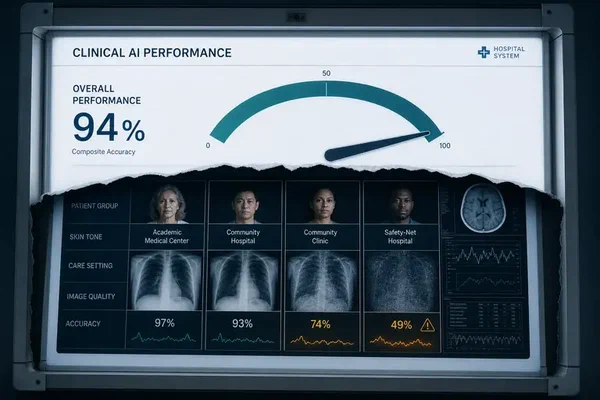
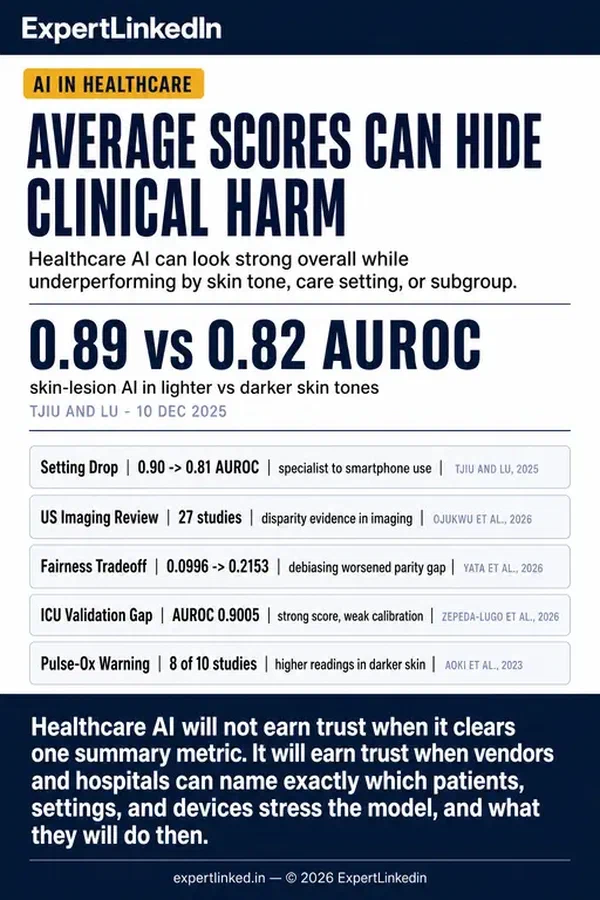
A strong average score can hide the patients and care settings where healthcare AI breaks. Skin-tone gaps, validation shortcuts, and weak postmarket monitoring make subgroup evidence more important than another headline AUROC.
A strong average score can hide the patients and care settings where healthcare AI breaks. Skin-tone gaps, validation shortcuts, and weak postmarket monitoring make subgroup evidence more important than another headline AUROC.
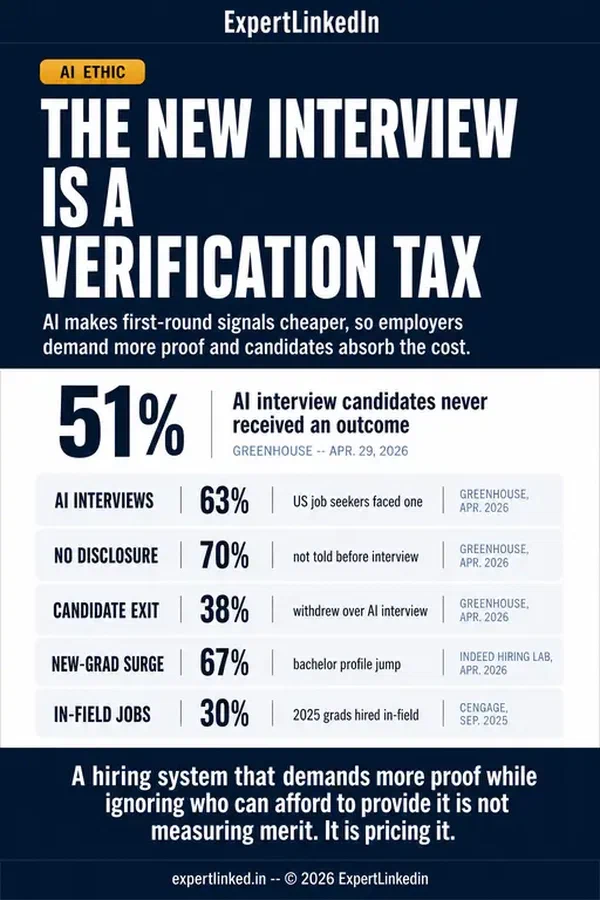
AI did not remove friction from hiring. It moved the cost of trust onto candidates through AI interviews, work samples, and verification loops that reward time, money, and calm as much as merit.
AI did not remove friction from hiring. It moved the cost of trust onto candidates through AI interviews, work samples, and verification loops that reward time, money, and calm as much as merit.
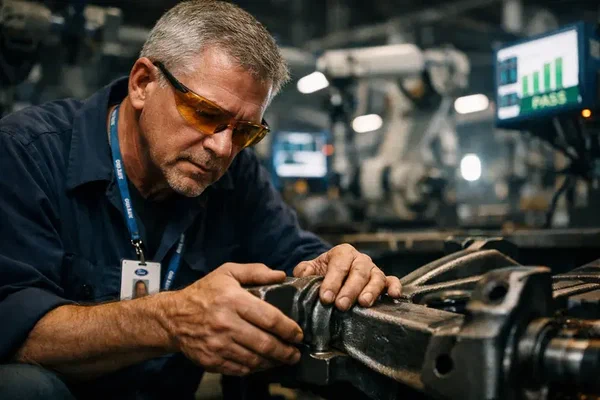
The jobs that hold up best in the AI era will not be the ones furthest from AI, but the ones where human judgment, trust and physical context stay load-bearing and are finally paid like it.
Across Ford, Anthropic, and Morgan Stanley, the same lesson emerged in one week: AI is an amplifier, and what it amplifies is the expertise already in the system — which means it also exposes what isn’t there.
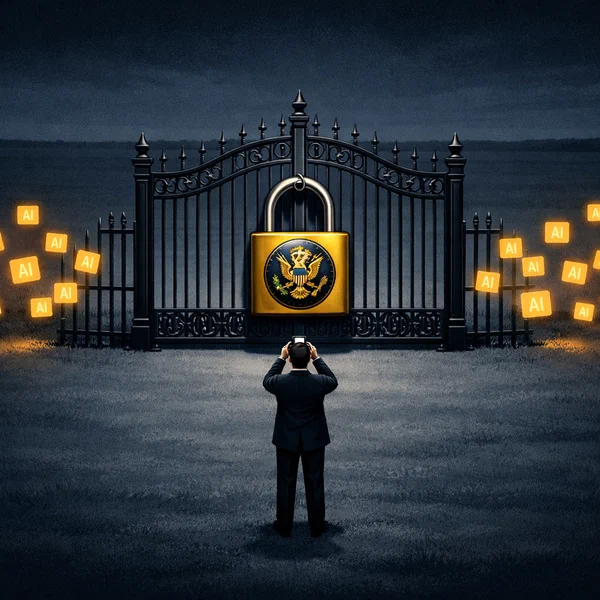
America’s first major AI governance act was not bias rules or transparency requirements. It was a competitor-triggered export control that the security community says makes defenders worse off — and the AI ethics movement needs to treat that as a problem, not a win.
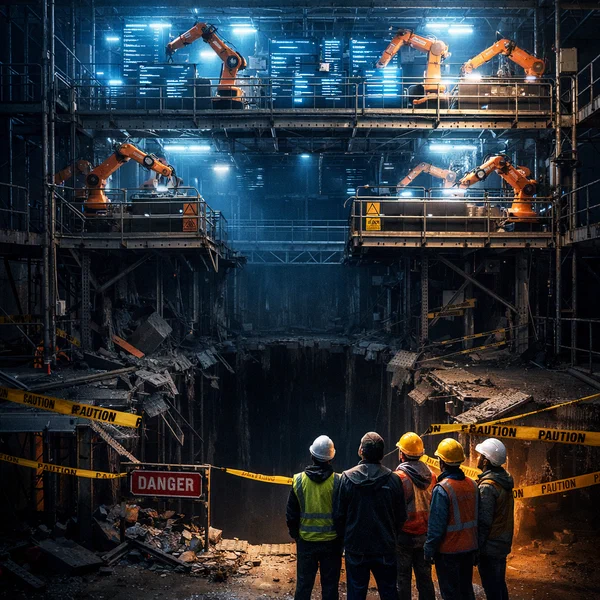
The central future-of-work risk in 2026 is a trust gap where firms cut entry-level pathways on AI promises that are measured faster than they are validated.
This week’s layoffs-and-capex cycle reveals that AI workforce risk is less about automation magic and more about who gets to convert labor budgets into infrastructure bets.
The Musk v. OpenAI trial produced in one week what three years of voluntary governance frameworks could not: forced disclosure of training practices, private beliefs about AGI, and the structural arms-race dynamic that makes individual restraint impossible.
The next phase of workplace AI is not just automation—it is a surveillance bargain that converts how people work into the raw material for both productivity gains and tighter managerial control.
Anthropic’s triple-incident week wasn’t just embarrassing—it opened a window into the most underexamined assumption in AI governance: that ’trust us’ is a safety framework.
Anthropic was blacklisted by the Pentagon for holding two ethical redlines. What that tells us about the future of responsible AI is more alarming than the dispute itself.
Three signals from one week: Vietnam becomes SEA’s first country with a binding AI law, Money20/20’s APAC report declares the region has moved from pilots to production, and the UBS OneASEAN Summit puts 4.9% GDP growth on the record.
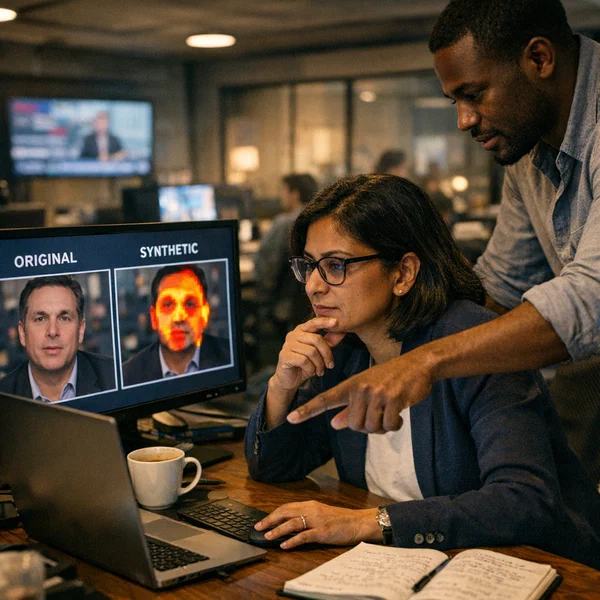
The world crossed a regulatory threshold yesterday: mandatory AI content labeling and three-hour takedowns are now law in India, signaling a global governance shift that every AI practitioner must understand.
Organizations are deploying decision-making AI agents faster than they’re building accountability frameworks—and the gap is creating unprecedented risks.
Slingshot AI’s UK withdrawal reveals the urgent need for clear regulatory frameworks governing AI mental health tools operating in the gray zone between wellness apps and medical devices.
The January 2026 launches of ChatGPT Health and Claude for Healthcare represent both tremendous promise and serious peril for the future of AI in medicine.