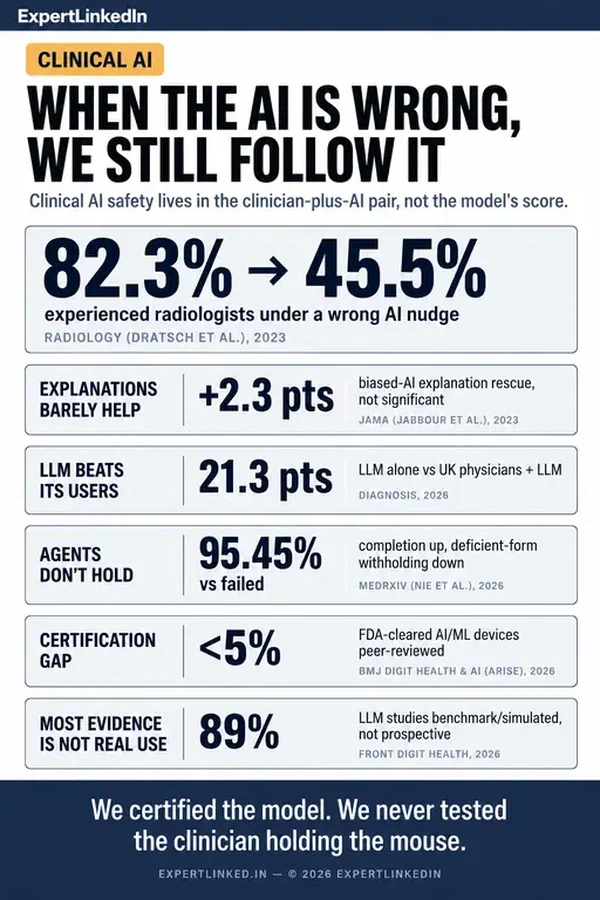
We keep certifying clinical AI on model accuracy scores, but the 2026 evidence shows the real safety problem lives in the clinician-plus-AI pair. Doctors follow confident AI advice even when it is wrong, and explanations do not protect them.
We keep certifying clinical AI on model accuracy scores, but the 2026 evidence shows the real safety problem lives in the clinician-plus-AI pair. Doctors follow confident AI advice even when it is wrong, and explanations do not protect them.
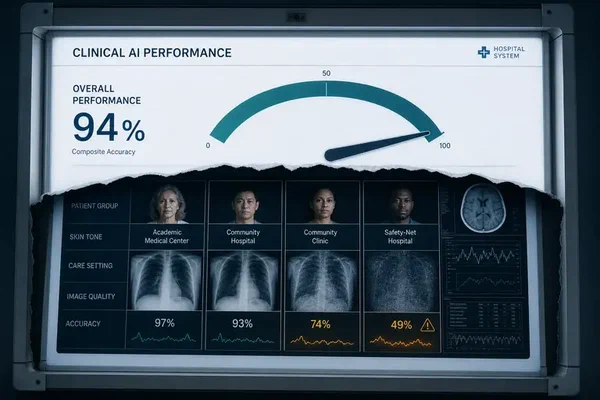
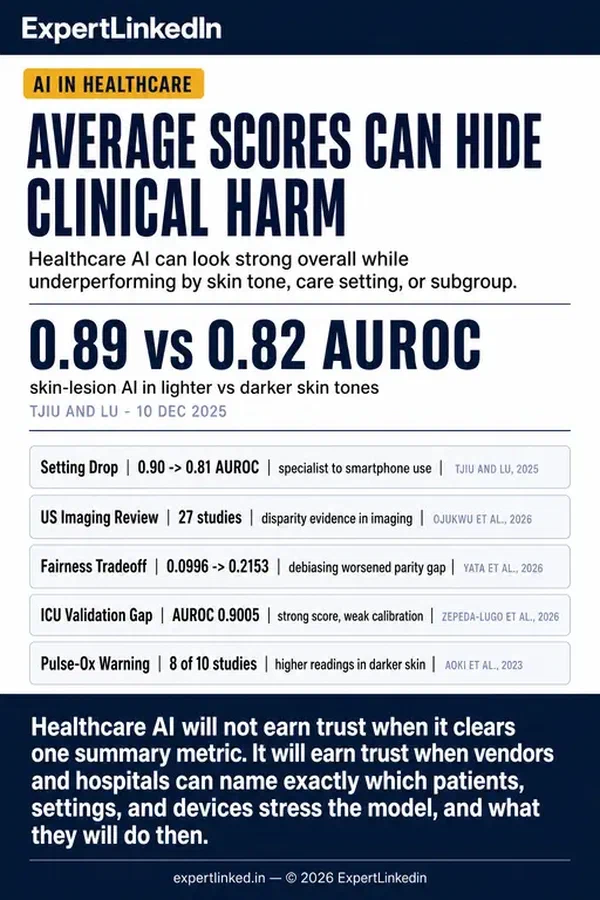
A strong average score can hide the patients and care settings where healthcare AI breaks. Skin-tone gaps, validation shortcuts, and weak postmarket monitoring make subgroup evidence more important than another headline AUROC.
A strong average score can hide the patients and care settings where healthcare AI breaks. Skin-tone gaps, validation shortcuts, and weak postmarket monitoring make subgroup evidence more important than another headline AUROC.
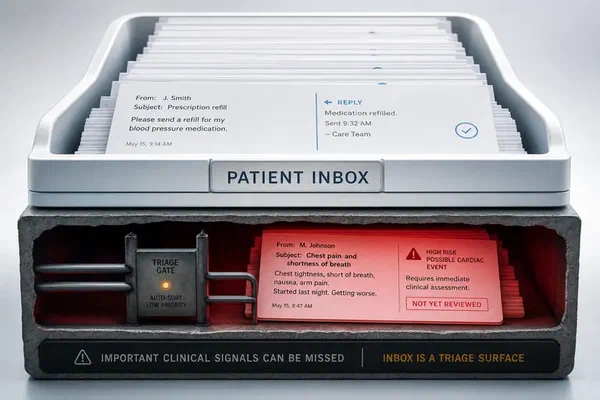
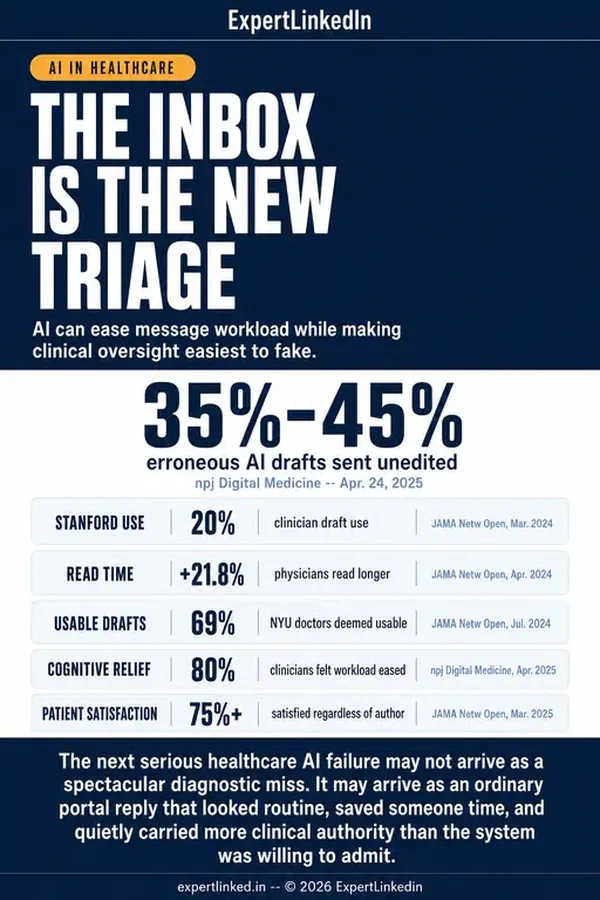
Health systems are using AI to draft patient-inbox replies to ease physician burnout. The harder 2026 question is whether the inbox is quietly becoming a clinical triage surface with too much trust and too little supervision.
Health systems are using AI to draft patient-inbox replies to ease physician burnout. The harder 2026 question is whether the inbox is quietly becoming a clinical triage surface with too much trust and too little supervision.
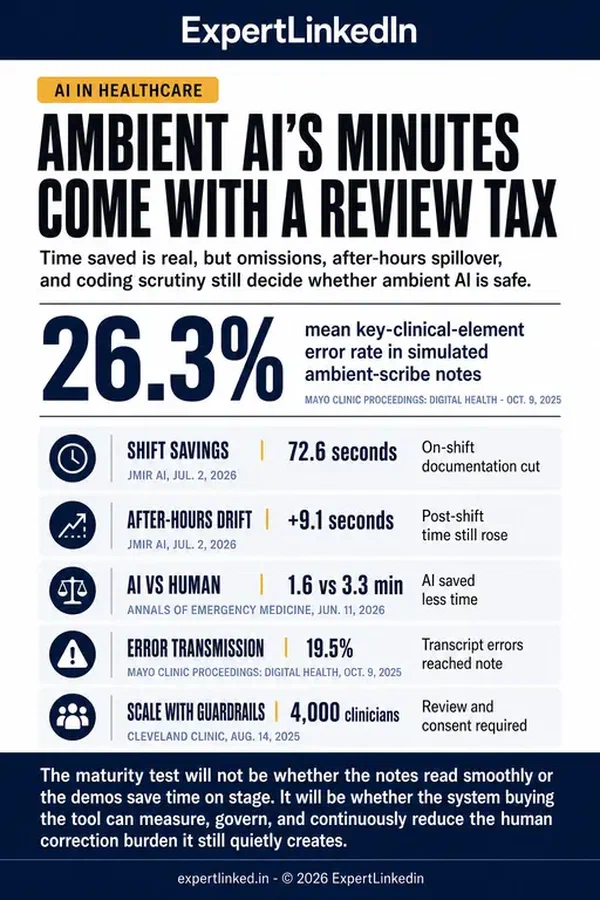
Ambient AI scribes are saving clinicians time, but the harder 2026 question is how much review, correction, and coding scrutiny their notes still demand.
Ambient AI scribes are saving clinicians time, but the harder 2026 question is how much review, correction, and coding scrutiny their notes still demand.
UpDoc’s historic FDA clearance for a patient-facing LLM in diabetes care reveals a structural accountability gap that will define clinical AI governance for the next decade.
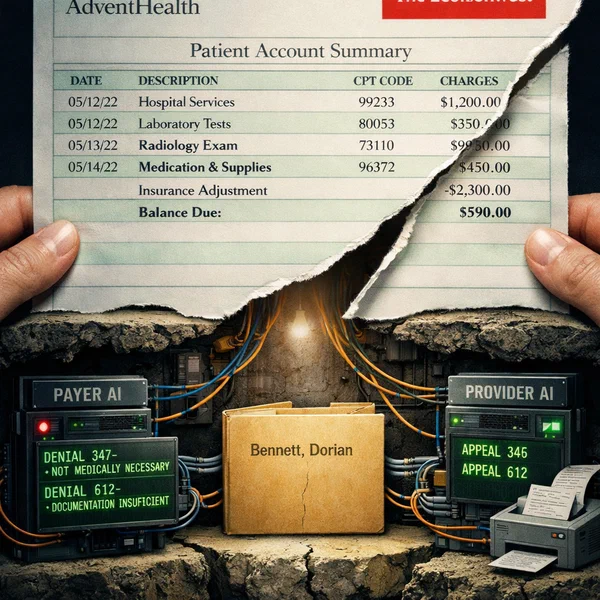
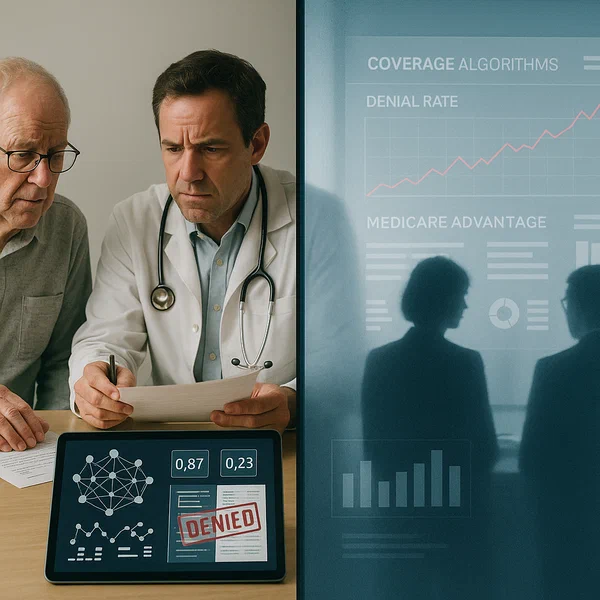
While the public debate fixates on diagnostic AI, the most consequential deployment of artificial intelligence in American medicine is happening in the billing department — where algorithms are fighting each other over payment, and trust is the casualty.
This week’s clinical AI milestones reveal a structural fault line: the capability to transform global healthcare now exists, but the market will not deploy it where the need is greatest.
Ambient AI scribes are not creating a winner-take-all model race in healthcare; they are creating a governance-and-infrastructure race that most systems still underestimate.
The AACR 2026 AI pathology revolution promises to turn penny-cheap H&E slides into precision oncology tools for the whole world. The problem: the models were built on data from the world’s wealthiest hospitals.
AI drug discovery’s 80-90% Phase I success rate is real. But Phase I mostly measures toxicity. The industry is betting billions on a revolution whose hardest proof is still outstanding.
AI agents are proliferating across clinical settings faster than any validation framework can track — and a new BCBS study showing $663 million in AI-inflated billing is just the opening act.
As major AI companies race into healthcare with sophisticated tools, the critical question isn’t just capability—it’s whether innovation can coexist with the human touch that defines quality care.
Horizon 1000’s ambitious plan to bring AI to 1,000 African clinics by 2028 forces us to confront both AI’s potential and the structural inequities that threaten its success.
Slingshot AI’s UK withdrawal reveals the urgent need for clear regulatory frameworks governing AI mental health tools operating in the gray zone between wellness apps and medical devices.
The January 2026 launches of ChatGPT Health and Claude for Healthcare represent both tremendous promise and serious peril for the future of AI in medicine.
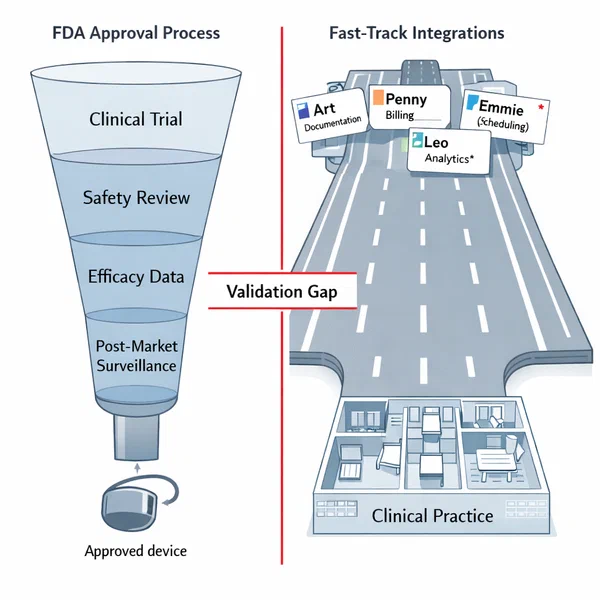
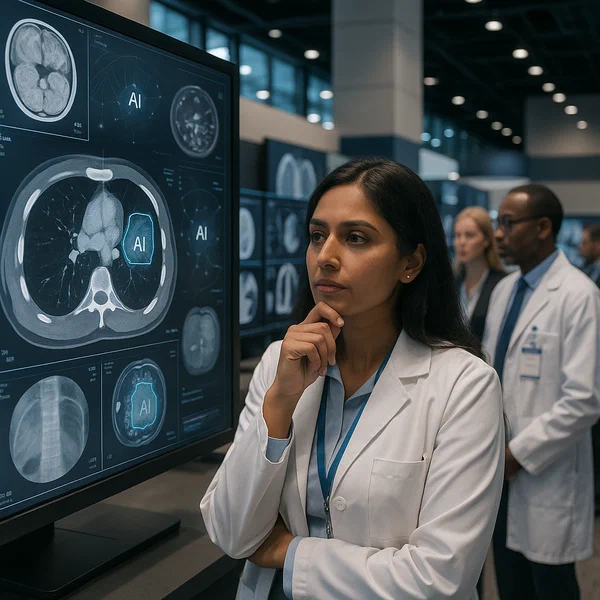
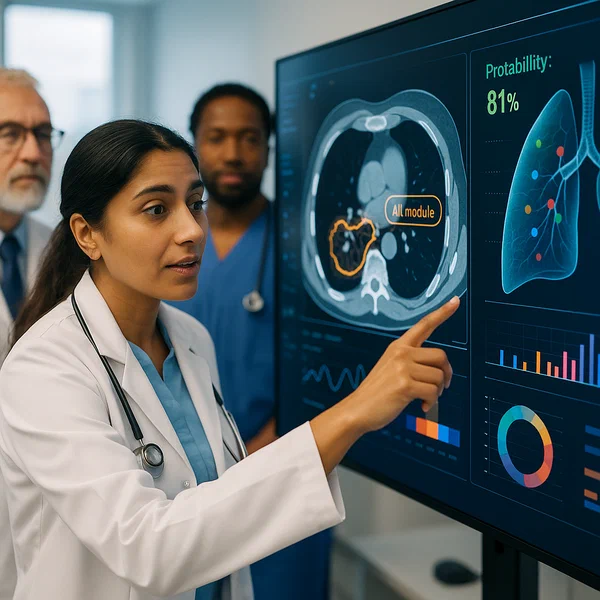
The explosion of AI tools in medical imaging reveals a critical validation gap—innovation velocity is outpacing clinical evidence, creating challenges for patient care and radiologist workflows.
Brain organoids are evolving from research tools to computational platforms, creating both unprecedented opportunities and urgent ethical dilemmas in healthcare AI.
AI-powered early disease detection systems are revolutionizing preventive healthcare by identifying diseases years before traditional methods, but successful implementation requires addressing algorithmic bias, clinical integration challenges, and maintaining the essential human element in medical care.
AI models are revolutionizing heart attack risk prediction, but responsible deployment and regulatory oversight are essential to ensure equitable, safe, and effective care.
Senator demands AI disclosure from Medicare insurers as Coalition for Health AI faces political attack, exposing dangerous accountability vacuum in clinical automation.
Epic’s AI agents and foundational models represent a pivotal moment in healthcare technology, potentially revolutionizing clinical workflows while raising critical questions about AI governance and patient care standards.
Nobel laureate David Baker’s team develops AI breakthrough for targeting ‘undruggable’ intrinsically disordered proteins, opening paths to treat cancers, neurodegenerative disorders, and metabolic conditions. Despite technological promise, implementation raises critical questions about AI diagnostic reliability and healthcare trust.
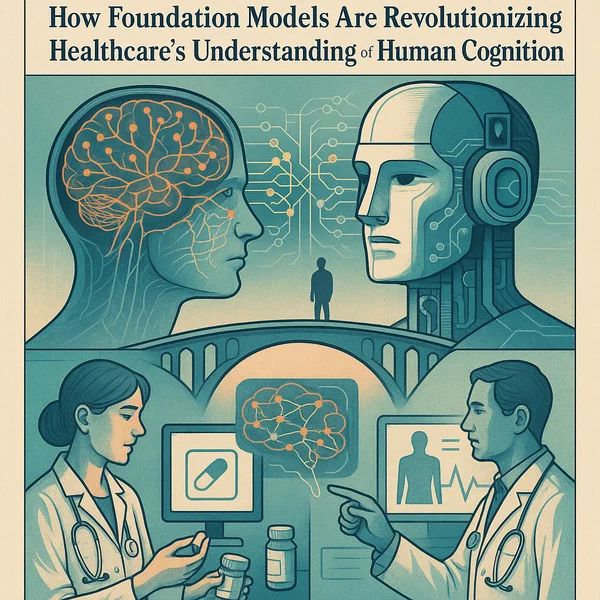
Meta’s Llama 3.1 transforms into ‘Centaur’—an AI foundation model predicting human behavior across 160 psychological experiments with unprecedented accuracy. This breakthrough opens doors to personalized healthcare systems that adapt to how patients actually think and behave, not just what they report.
Discover how AI medical scribes are revolutionizing healthcare with $5.3 billion in funding. Learn how this technology reduces physician burnout, improves patient care, and transforms clinical documentation through innovative physician-AI collaboration.