Professional Development is the site’s umbrella for practical career writing: advice for doing your job better, reading the market more clearly, and handling the human side of work without losing your footing.
This series is built for readers who want more than inspiration. It focuses on tools, judgment, and perspective you can actually use: sharper conversations, better decisions, clearer positioning, and a more realistic understanding of how work is changing.
Jackson Rodriguez writes Career Mechanics, Signals & Shifts, Deep Dive, and Briefing Room. His voice is direct, practical, and built for readers who want a clear plan more than vague encouragement.
Olivia Bennett writes Workplace Clinic and Paths & People, including guest interviews and edited contributions. Her perspective is warm, grounded, and focused on sustainable leadership and healthier work habits.
New data from Indeed and the BLS reveals that the labor market is now producing three distinct experiences — skill-concentrated insiders, structurally locked-out outsiders, and a growing patching class — each demanding a different career playbook.
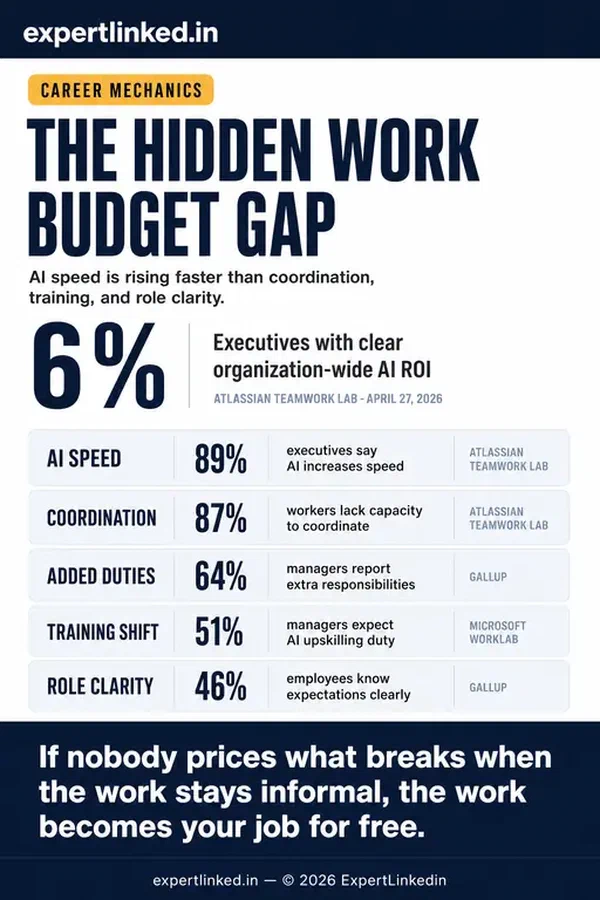
A practical Career Mechanics framework for knowing which decisions to trust to AI and which to own yourself — because in 2026, that calibration is what your career depends on.
The 40s have become the most structurally dangerous decade in a modern career — and the system that put you there has no plan for getting you through it.
The headline numbers are the strongest in months, but the data beneath them describe two different labor markets running in parallel — and which one you are in determines your career risk profile this quarter.
LinkedIn’s newest updates reward teams that can operationalize trust through structure and proof, while penalizing those still relying on spontaneous posting and vanity reach.
The market still looks stable in aggregate, but hiring power is concentrating into shortage-heavy sectors and professionals who reallocate early will have the clearest advantage.
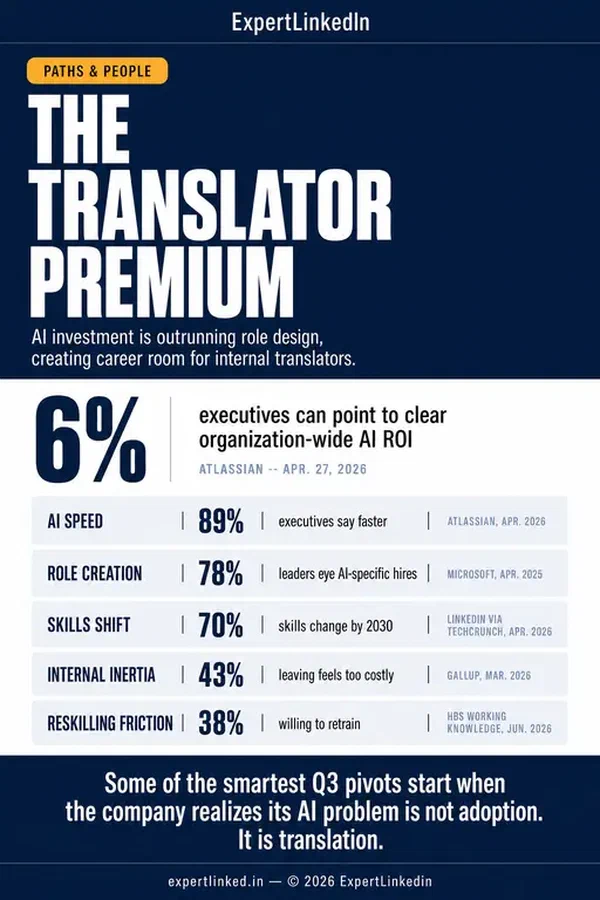
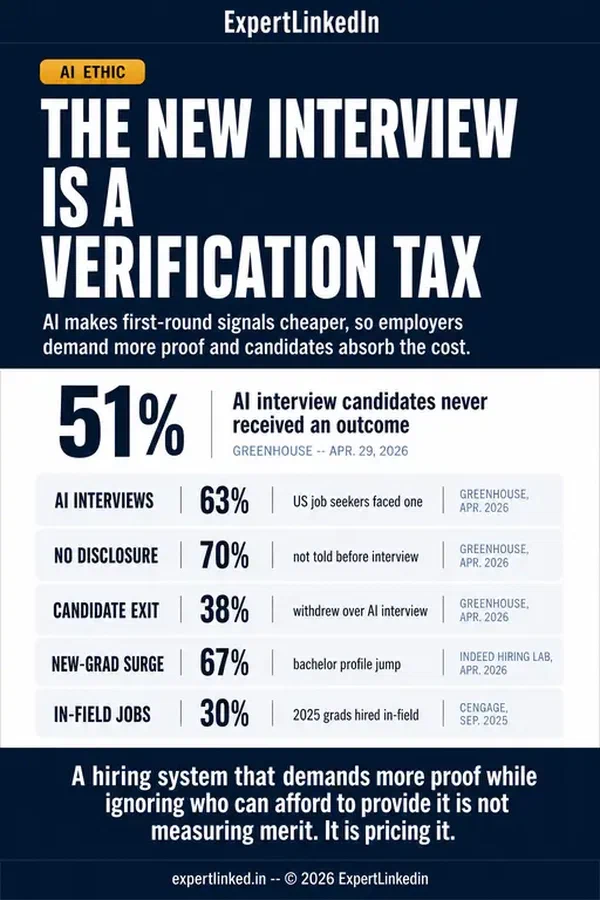
The central future-of-work risk in 2026 is a trust gap where firms cut entry-level pathways on AI promises that are measured faster than they are validated.
Nearly 1 in 4 CEOs say half their workforce needs AI retraining, but the problem isn’t adoption — it’s that most professionals can’t tell when AI is getting things wrong, and that gap is now a career liability.
When AI removes routine entry-level work faster than companies redesign learning pathways, the real risk is not fewer junior jobs today but fewer qualified senior professionals tomorrow.
For a growing share of professionals, the smartest career move is no longer upward by title, but sideways into high-impact work that protects energy and deepens craft.
May 2026 confirmed what the data has been building toward for months — AI is pulling up the bottom rungs of the career ladder while demographics and immigration are simultaneously constructing a supply wall at the other end.
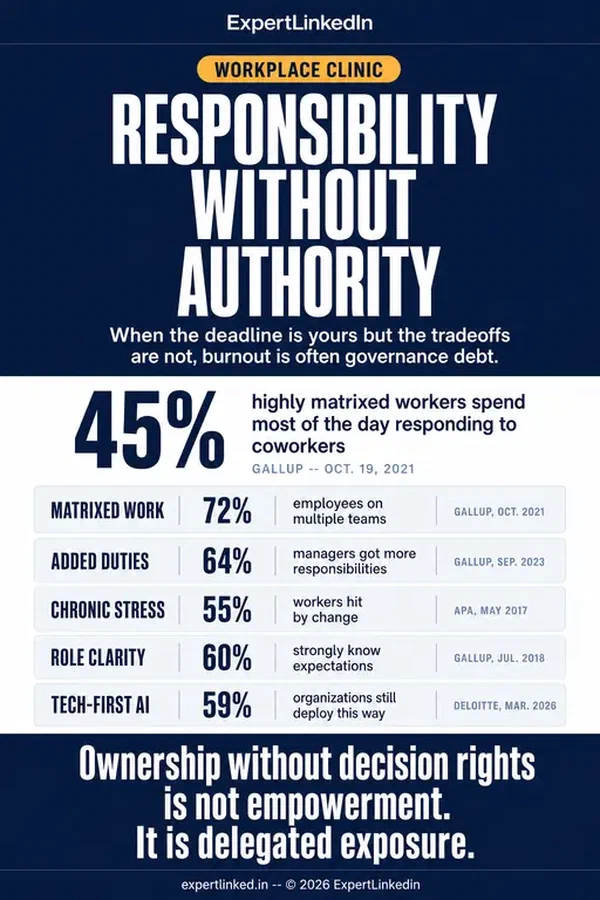
If people keep cutting you off, the issue is not just courtesy—it is a visibility system problem you can redesign with scripts, structure, and follow-through.
Foreign talent interest in the US has collapsed to a six-year low while employers triple their visa sponsorship offers, Baby Boomer retirements are set to pull 5.9 million workers from the market by 2032, and AI is disrupting the wrong sectors — together these three forces are constructing a supply wall that demands new career positioning now.
LinkedIn’s real 2026 shift is that trust has moved from a soft brand idea into an operational system that rewards teams who can prove capability, not just publish content.
Management transitions are accelerating across every level of the org chart, and the professionals who treat each one as a strategic reset — rather than a waiting game — are building the career capital that internally-promoted C-suite leaders have always held.
When your manager takes credit for your work, the real threat isn’t the stolen praise — it’s the growing invisibility that quietly derails your career trajectory.
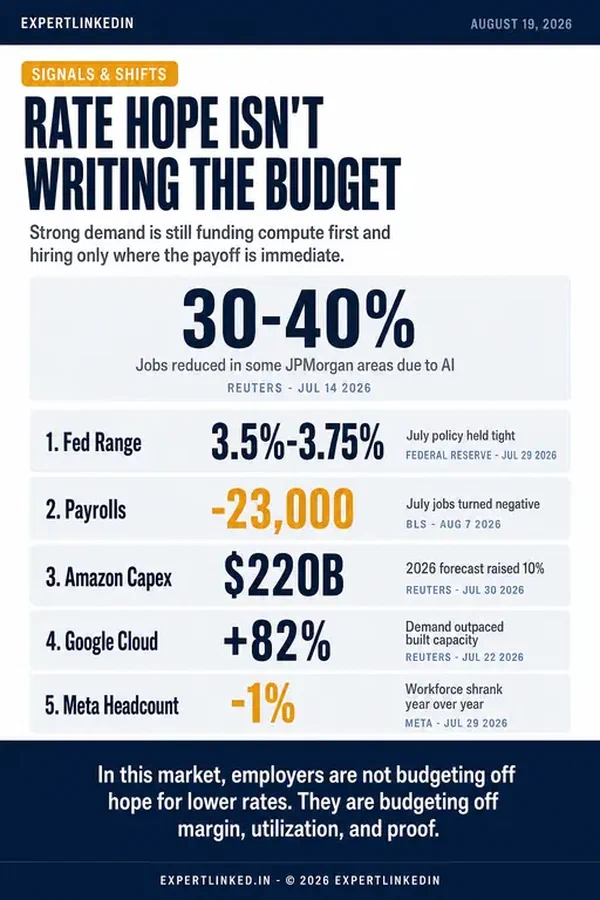
This week’s layoffs-and-capex cycle reveals that AI workforce risk is less about automation magic and more about who gets to convert labor budgets into infrastructure bets.
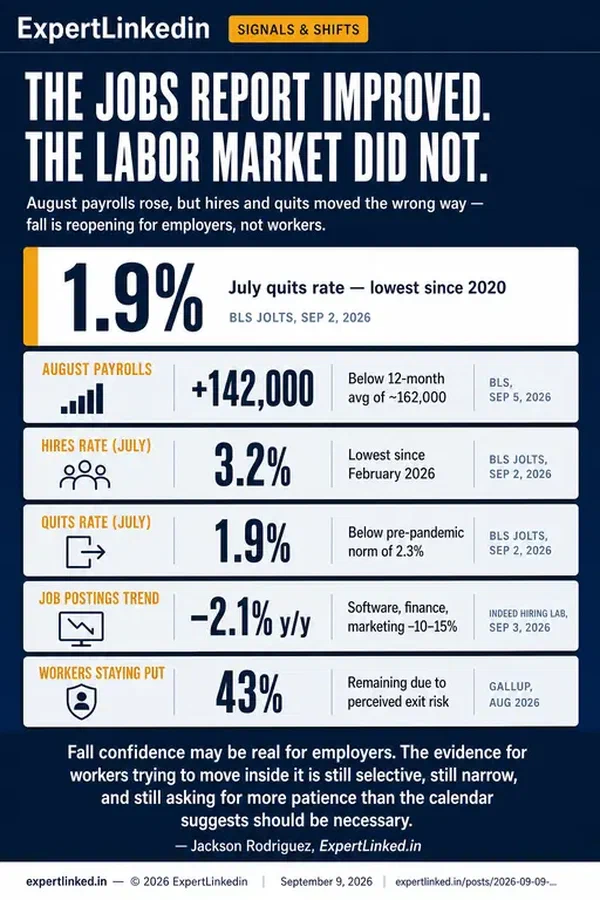
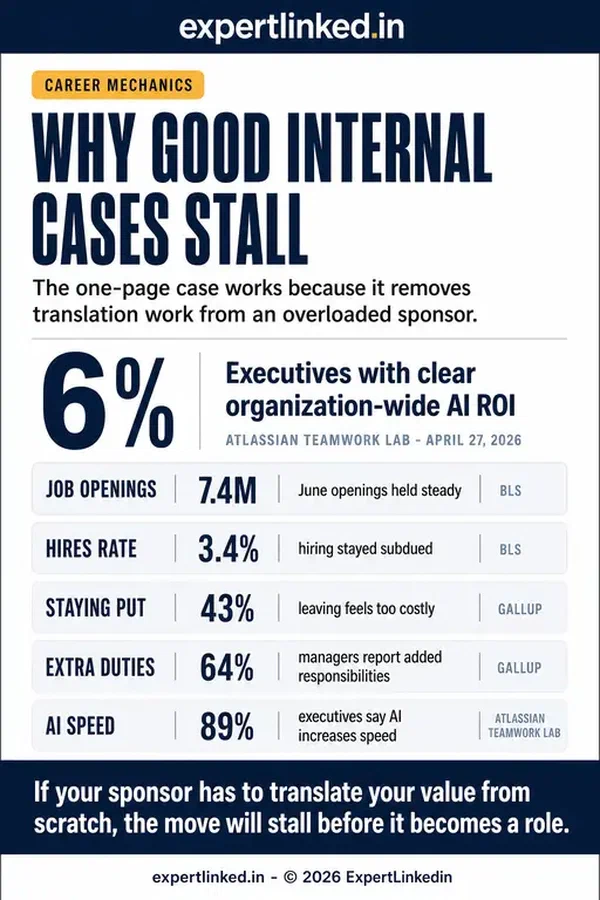
This week’s labor data shows a quiet freeze—headline stability with uneven opportunity—making role-specific market mapping and AI-visible proof work the highest-leverage moves right now.
New research shows that 92% of executives fail the one behavioral test most likely to determine whether they get promoted — and most of them have no idea they’re failing it.
LinkedIn’s newest agency credential matters less as a badge and more as a signal that trust on the platform is being formalized, scored, and monetized end to end.
This week’s labor data points to a three-speed market where healthcare concentration, worker-share compression, and AI-skill demand gaps require different career moves.
The managers gaining leverage in 2026 are not the ones supervising more status updates; they are the ones who can still do the work, redesign the workflow, and improve decisions.
The career break is the most misunderstood credential in modern work — and a growing movement of employers, organisations, and relaunchers are finally correcting that.
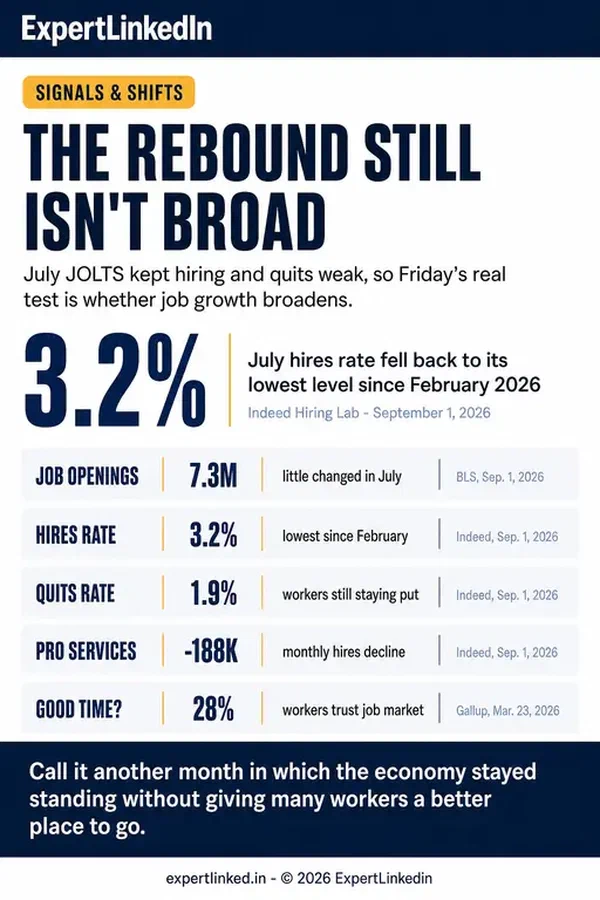
March 2026’s JOLTS numbers look flat at the headline, but sector-level and experience-level data reveal a three-way fracture splitting by industry, career stage, and AI-skill possession.