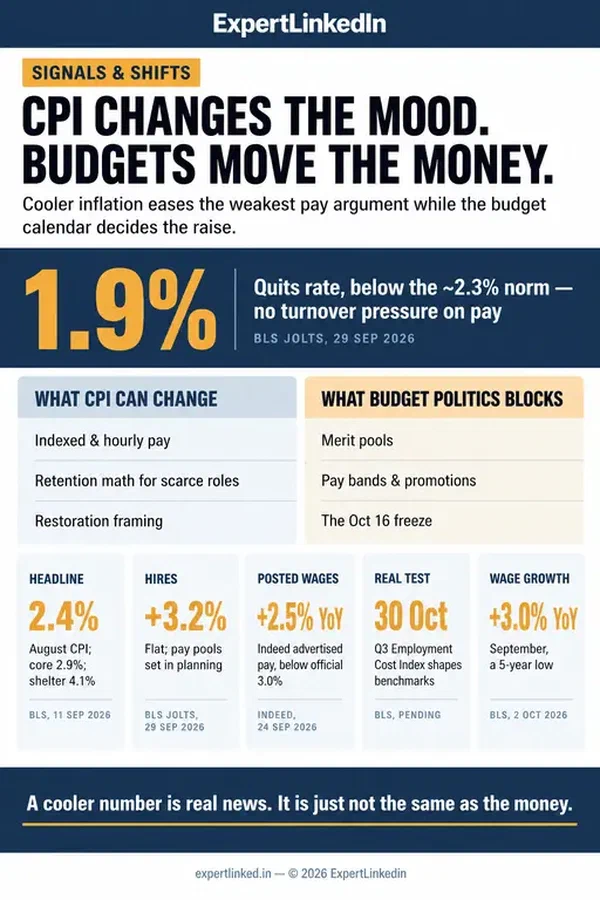
The September CPI report lands today, and markets will react within minutes. But your pay is set by a budget calendar, not a price index. Here is which compensation conversations cooler inflation makes easier — and which quietly die because Q4 budget politics, not macro relief, is doing the constraining.
The September CPI report lands today, and markets will react within minutes. But your pay is set by a budget calendar, not a price index. Here is which compensation conversations cooler inflation makes easier — and which quietly die because Q4 budget politics, not macro relief, is doing the constraining.
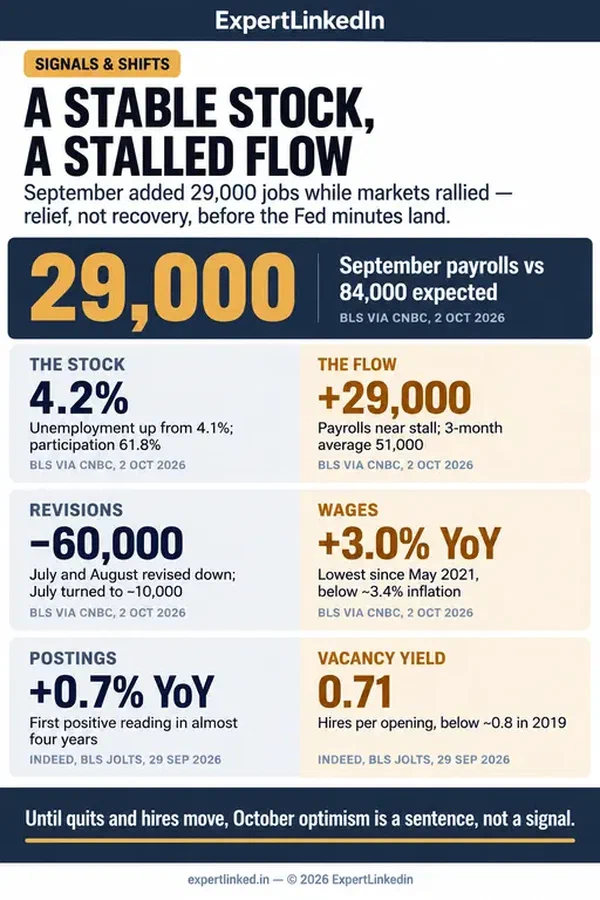
September added just 29,000 jobs — and stocks rallied. The report looked stable in the stock and stalled in the flow, with a 4-year-low wage print and 60,000 jobs revised away. Before the Fed minutes land today, here is how to tell whether Q4 hiring is real movement or just better management language.
September added just 29,000 jobs — and stocks rallied. The report looked stable in the stock and stalled in the flow, with a 4-year-low wage print and 60,000 jobs revised away. Before the Fed minutes land today, here is how to tell whether Q4 hiring is real movement or just better management language.
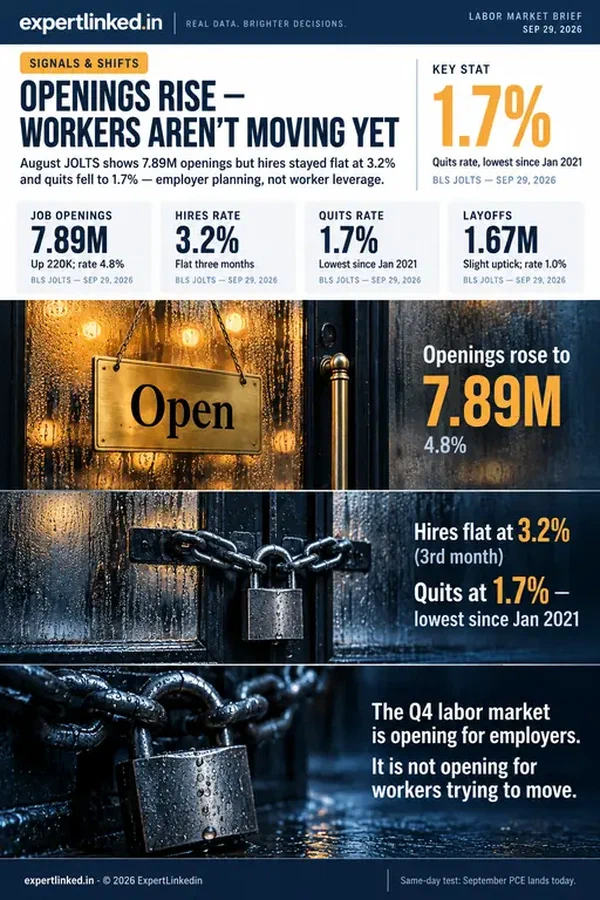
August JOLTS showed openings rising to 7.89M. But hires stayed flat at 3.2% for a third month and quits collapsed to 1.7% — the lowest since January 2021. October optimism should be read as employer planning energy, not worker bargaining power.
Three-panel infographic showing the triple-divergence: openings up, hires flat, quits collapsing. The Q4 labor market is opening for employers, not for workers trying to move.
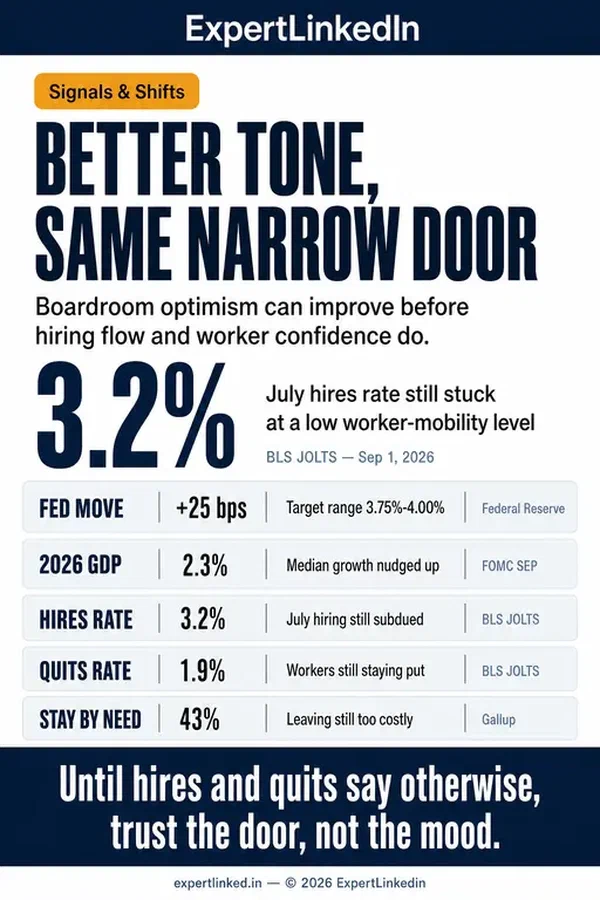
The Fed’s September 2026 decision may improve CEO tone before it improves worker mobility. For anyone trying to read Q4 hiring honestly, the signals that matter more are still the hires rate and quits behavior.
The Fed’s September 2026 decision may improve CEO tone before it improves worker mobility. For anyone trying to read Q4 hiring honestly, the signals that matter more are still the hires rate and quits behavior.
Softer inflation is real. So is the gap between macro relief and the hiring freeze workers are still navigating. The September Fed decision won’t close that gap.
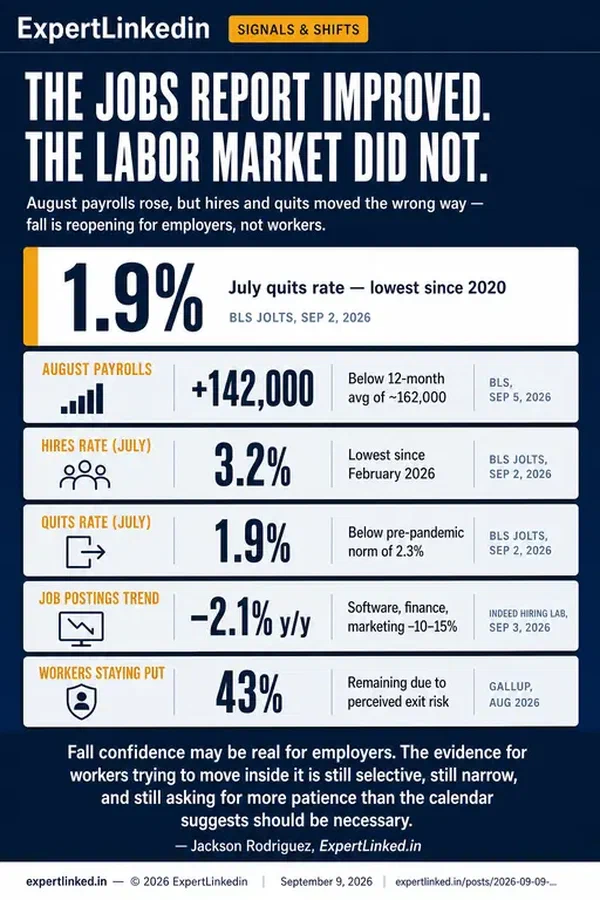
The August jobs report sounded better. The July JOLTS data did not. Together, they describe a market that is stable for employers and still frozen for workers — fall optimism that is real for one side and mostly theoretical for the other.
The August jobs report sounded better. The July JOLTS data did not. Together, they describe a market that is stable for employers and still frozen for workers — fall optimism that is real for one side and mostly theoretical for the other.
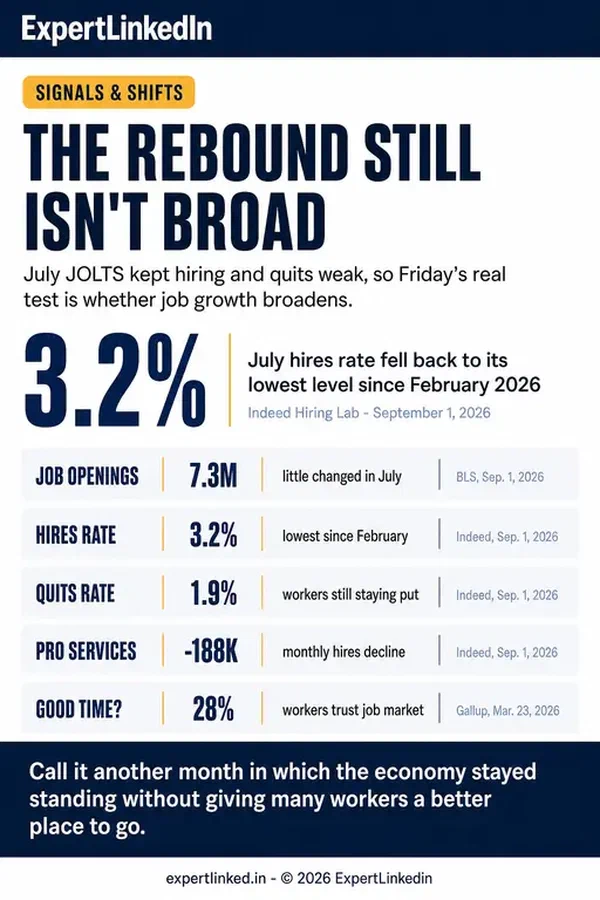
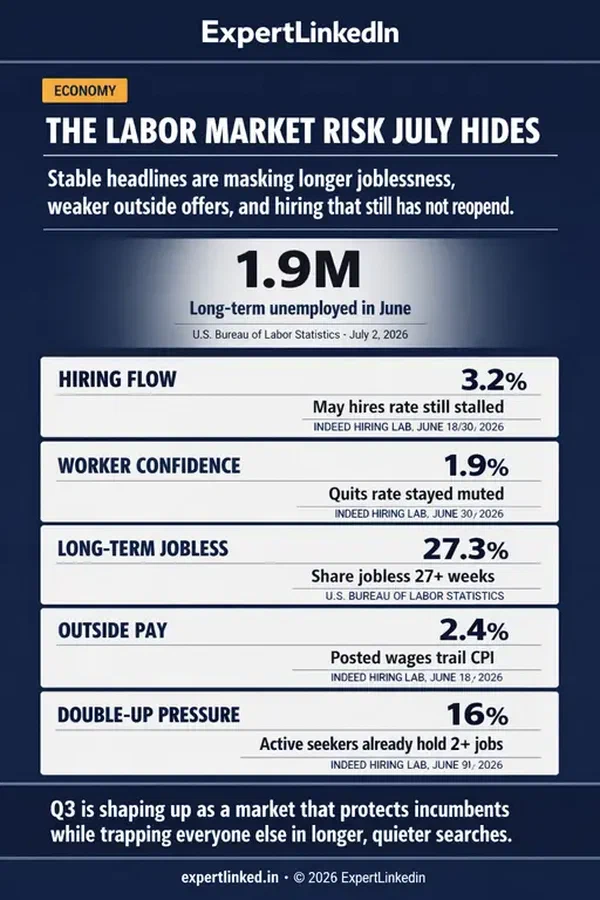
July JOLTS kept the labor market in low-hire, low-fire mode. The number to ignore is the headline; the signal to watch on Friday is whether job growth broadens beyond the same narrow pockets.
July JOLTS kept the labor market in low-hire, low-fire mode. The number to ignore is the headline; the signal to watch on Friday is whether job growth broadens beyond the same narrow pockets.
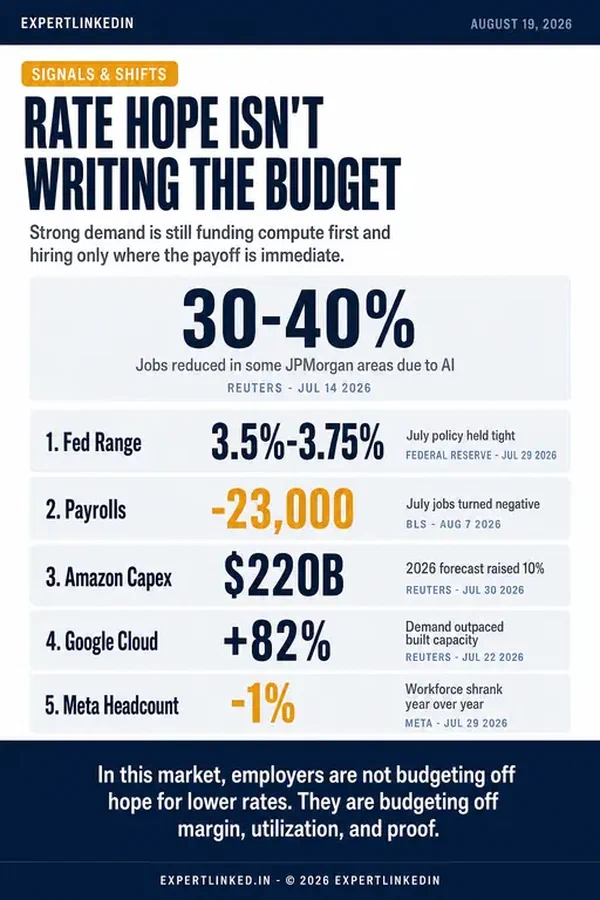
If you are waiting for the July FOMC minutes to rescue fall hiring, you are watching the wrong document. Q2 earnings already showed where the money is going and why headcount approvals still look narrow.
If you are waiting for the July FOMC minutes to rescue fall hiring, you are watching the wrong document. Q2 earnings already showed where the money is going and why headcount approvals still look narrow.
Q2 bank earnings confirm AI is generating record returns at the capital formation layer — not the operational efficiency layer — and the only concrete productivity claim from any CEO this week contained no function, no EBIT figure, and no audit trail.
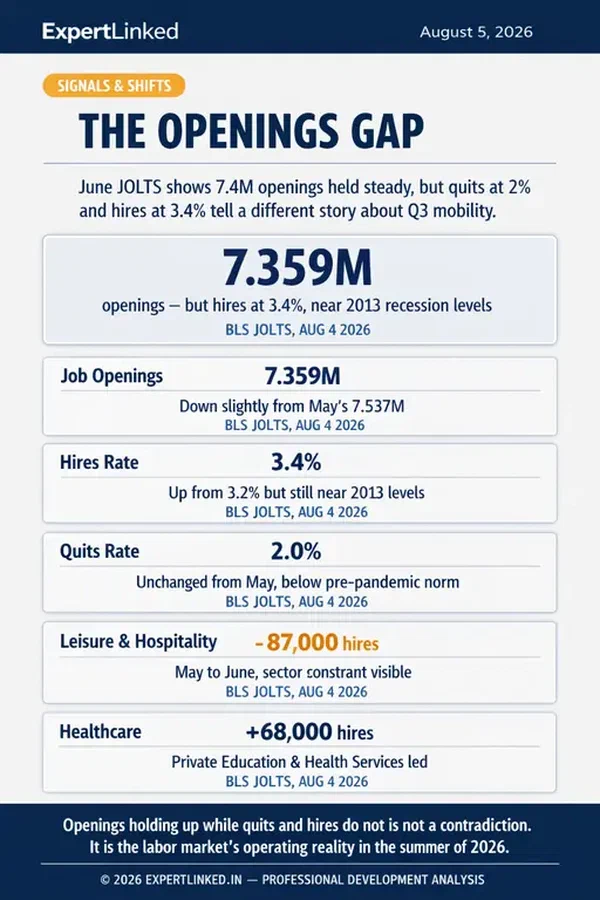
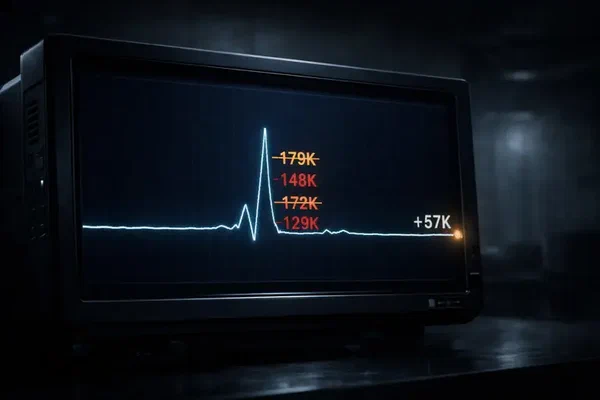
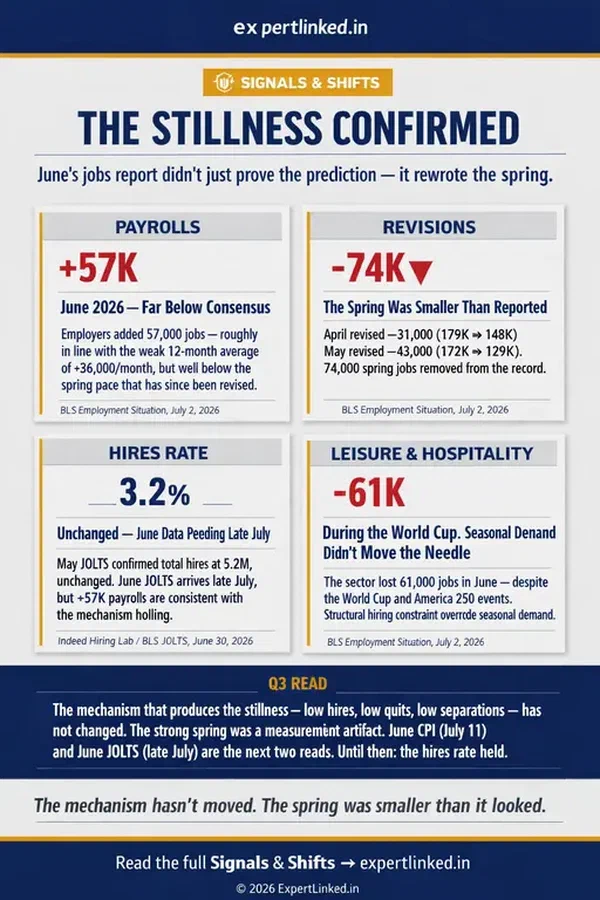
The stillness didn’t break — the ‘strong spring’ was revised down by 74,000 jobs, and June’s 57,000 payrolls confirm the hires mechanism is unchanged. Here is the precise Q3 read.
The stillness didn’t break — the ‘strong spring’ was revised down by 74,000 jobs, and June’s 57,000 payrolls confirm the hires mechanism is unchanged. Here is the precise Q3 read.
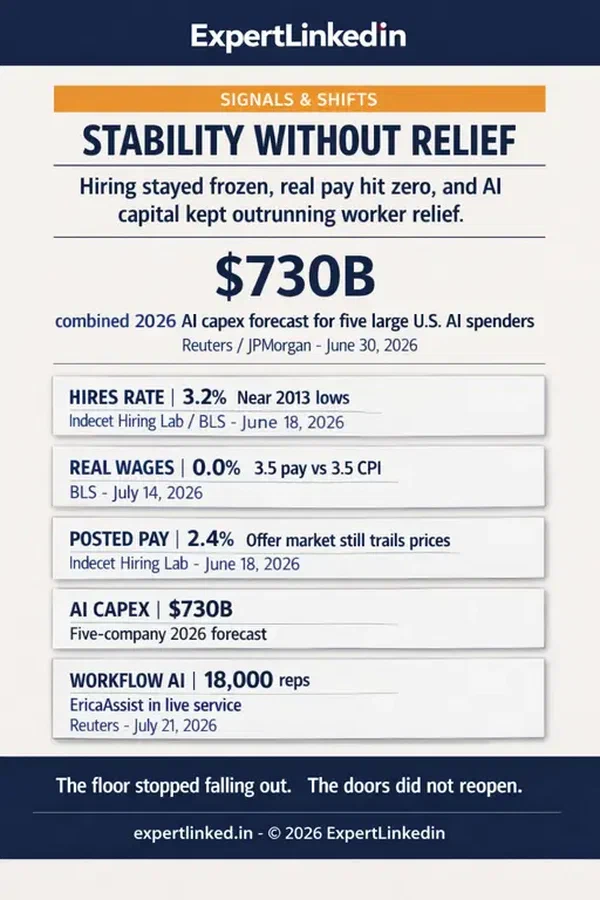
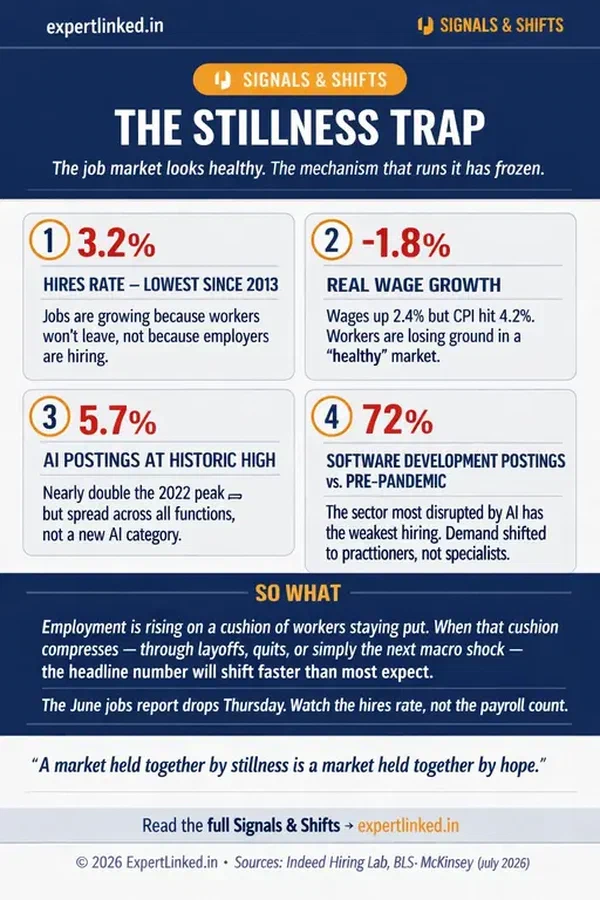
Employment is rising but hiring is not: the labor market is being held up by workers staying put, real wages just turned negative, and AI postings hit a historic high while software hiring collapsed.
Employment is rising but hiring is not: the labor market is being held up by workers staying put, real wages just turned negative, and AI postings hit a historic high while software hiring collapsed.
In a slowing labor market, the real career premium is shifting toward employers and sectors that actively train, sponsor, and route workers through change rather than leaving them to navigate it alone.