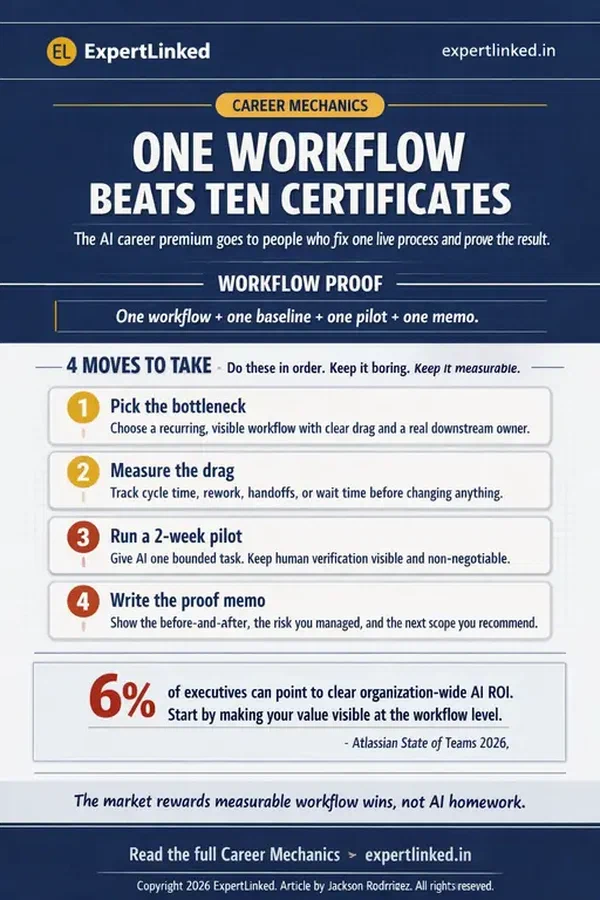
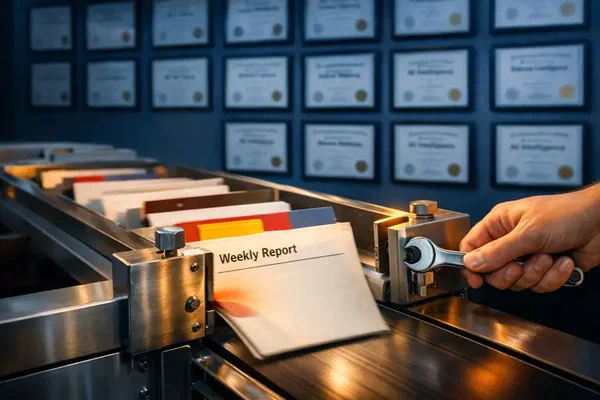
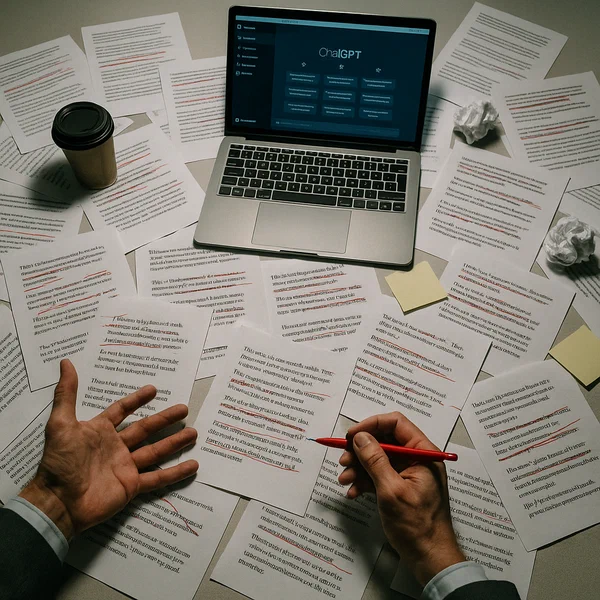
The AI career premium now goes to professionals who can redesign one real workflow and prove the result, not to those collecting tools, certificates, or prompt tricks.
The AI career premium now goes to professionals who can redesign one real workflow and prove the result, not to those collecting tools, certificates, or prompt tricks.
This week’s labor data points to a three-speed market where healthcare concentration, worker-share compression, and AI-skill demand gaps require different career moves.
The next phase of workplace AI is not just automation—it is a surveillance bargain that converts how people work into the raw material for both productivity gains and tighter managerial control.
AI workplace monitoring promises productivity gains but often delivers the opposite—undermining trust, creativity, and the very performance it aims to enhance.
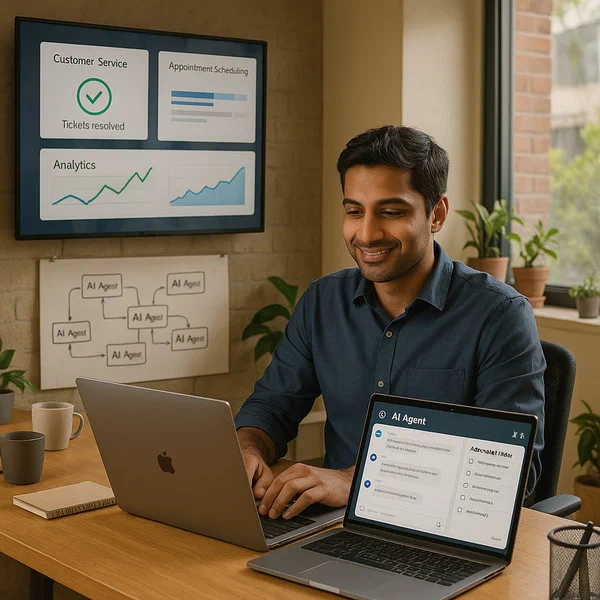
Small businesses are deploying AI agents as autonomous digital workers that handle everything from customer service to operations, often for less than a single employee’s salary.
As AI-generated content floods workplaces with low-quality “workslop,” organizations face a productivity paradox that threatens the very efficiency gains AI promised to deliver.
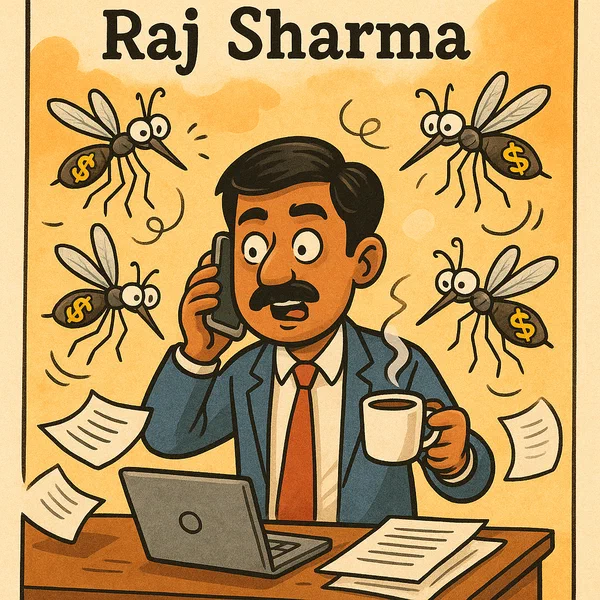
Ever notice how the biggest opportunities show up when you’re least prepared? Like mosquitoes in the bathroom, they buzz around when your hands are full. Here’s why this happens and how to catch them anyway.
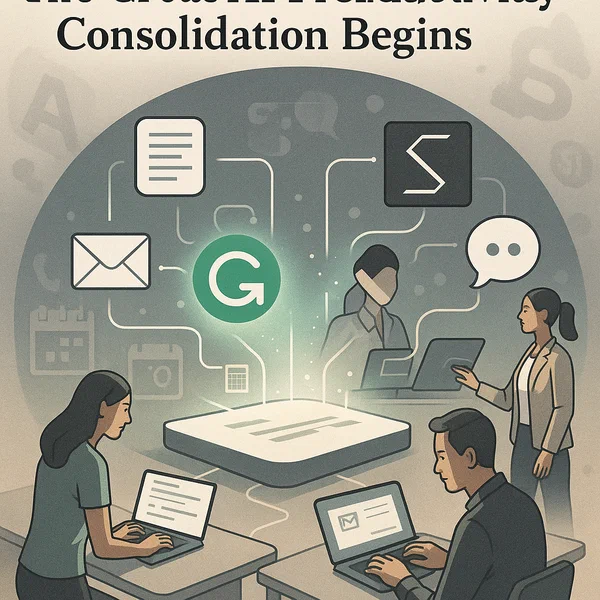
When writing assistants meet email superpowers, the result isn’t just another acquisition—it’s a blueprint for how AI productivity platforms will reshape the modern workplace.
Four-day workweek implementations succeed by redesigning work processes and reducing total hours to 32 rather than simply compressing 40 hours, resulting in maintained productivity with improved retention and reduced absenteeism.
Build sustainable work-life integration by thoughtfully blending professional and personal priorities through intentional strategies that address digital boundary challenges and support overall wellbeing in our always-connected age.
Digital technologies blur traditional work-life boundaries despite cultural frameworks like Germany’s “Feierabend,” requiring structured disconnection strategies to address the 67% of professionals who regularly check work emails outside designated hours.
The 4-day workweek revolution demonstrates that reduced working hours can increase productivity, improve employee wellbeing, reduce burnout, and drive business results through focused work and better work-life integration.
Effective AI communication requires precise prompting with context sandwiching, role specification, and treating AI like an enthusiastic intern who needs specific background information and clear intended use cases.
The future of work prioritizes asynchronous collaboration over remote location debates, enabling flexible scheduling, reducing meeting fatigue, improving productivity, and supporting global team coordination across time zones.
Prompt engineering has become an essential professional skill for maximizing AI tool effectiveness through strategic question formulation, context setting, iterative refinement, and understanding model capabilities and limitations.
Discover practical AI tools and applications that streamline workflows, boost productivity, and deliver measurable improvements to daily work processes.
Gain practical insights into AI implementation strategies, emerging trends, and best practices for leveraging artificial intelligence in modern business environments.
Boost productivity with AI tools for writing, scheduling, data analysis, automation, and decision-making while maintaining human oversight and learning to integrate them effectively into workflows.
Design work-life integration by managing energy instead of time, auditing your natural rhythms, protecting non-negotiables, creating transition rituals, and adapting purposefully to different life seasons.