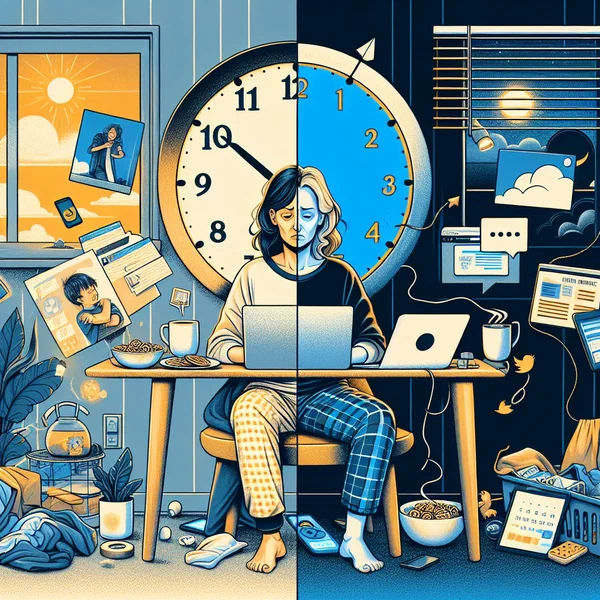
Remote work and flexible schedules promise freedom but often deliver unexpected burnout patterns. This analysis reveals why unlimited flexibility can become a trap and provides strategic frameworks for mastering flexible work without losing professional boundaries or personal sanity.
Uncover the dangerous paradox where record-breaking performance leads to team burnout. Learn why traditional metrics fail, how to identify early warning signs, and discover sustainable leadership strategies that drive results without destroying your human capital.
Four-day workweek implementations succeed by redesigning work processes and reducing total hours to 32 rather than simply compressing 40 hours, resulting in maintained productivity with improved retention and reduced absenteeism.
Implement sustainable remote leadership through structured disconnection policies, asynchronous documentation replacing synchronous meetings, and outcome-based evaluation that focuses on deliverables rather than activity monitoring.
Build sustainable work-life integration by thoughtfully blending professional and personal priorities through intentional strategies that address digital boundary challenges and support overall wellbeing in our always-connected age.
Digital technologies blur traditional work-life boundaries despite cultural frameworks like Germany’s “Feierabend,” requiring structured disconnection strategies to address the 67% of professionals who regularly check work emails outside designated hours.
The 4-day workweek revolution demonstrates that reduced working hours can increase productivity, improve employee wellbeing, reduce burnout, and drive business results through focused work and better work-life integration.
The future of work prioritizes asynchronous collaboration over remote location debates, enabling flexible scheduling, reducing meeting fatigue, improving productivity, and supporting global team coordination across time zones.
Successfully transition careers by leveraging transferable skills, building new competencies, and strategically positioning yourself for industry changes.
Design work-life integration by managing energy instead of time, auditing your natural rhythms, protecting non-negotiables, creating transition rituals, and adapting purposefully to different life seasons.