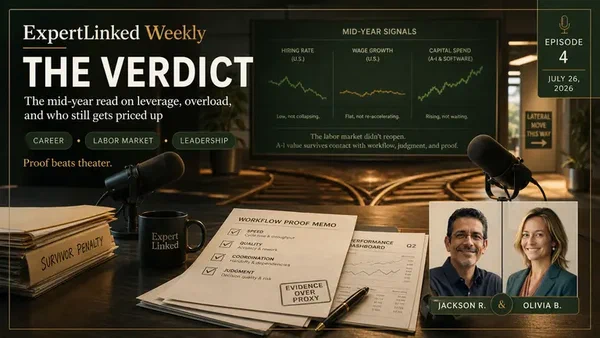
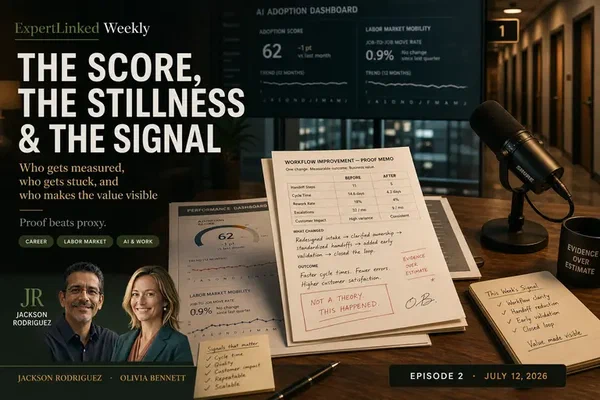
Jackson and Olivia use the week’s six published pieces to deliver a mid-year verdict on work: one proof memo is not enough, the labor market floor held without reopening, managers are absorbing invisible structural cost, and the AI labor market is splitting around workflow judgment.
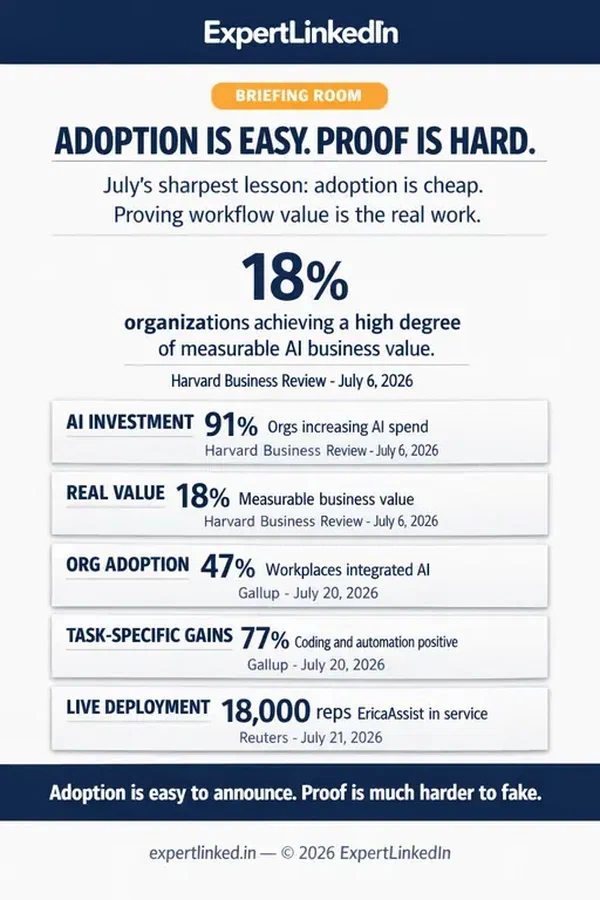
July 2026’s sharpest article, tool, opportunity, research, and internal idea all pointed to one lesson: AI value only counts when it survives contact with real workflows.
July 2026’s sharpest article, tool, opportunity, research, and internal idea all pointed to one lesson: AI value only counts when it survives contact with real workflows.
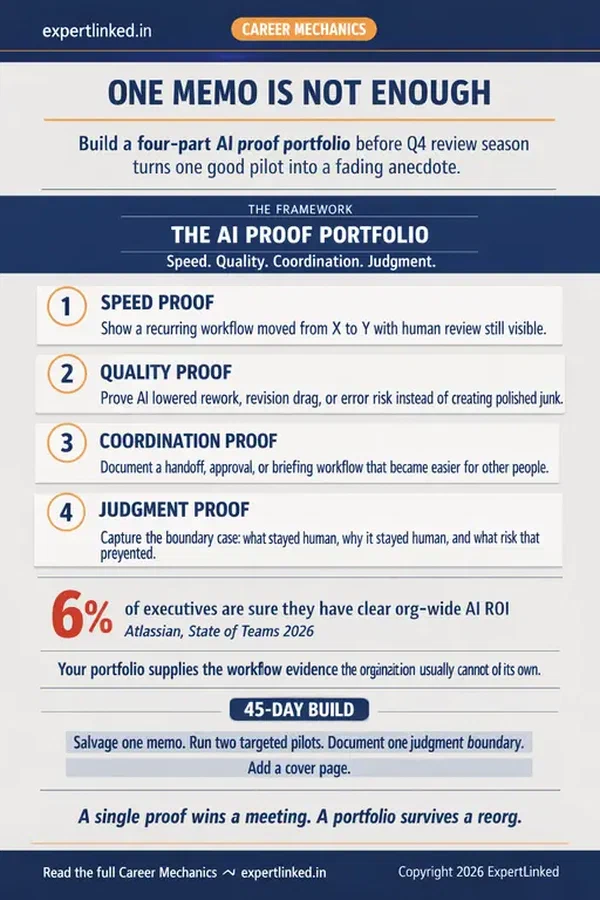
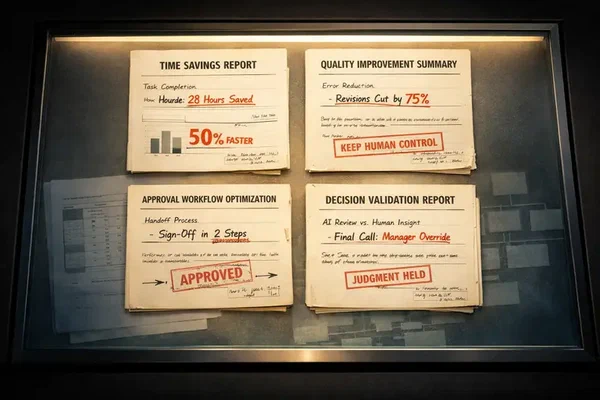
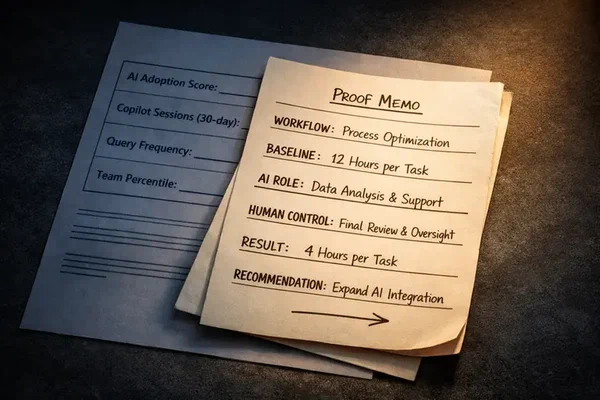
One proof memo is a data point; a portfolio of three to four across different workflows is the career artifact that survives Q4 review season and organizational change.
One proof memo is a data point; a portfolio of three to four across different workflows is the career artifact that survives Q4 review season and organizational change.
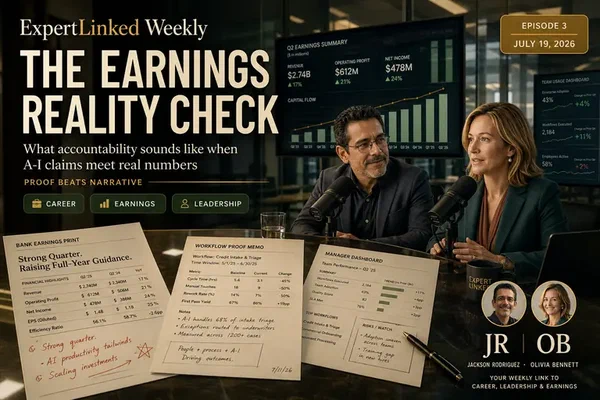
Jackson and Olivia use the week’s three published pieces to ask a blunt question: what counts as accountability when AI claims are everywhere and proof is uneven? They unpack the career moves that still work in a frozen market, the Q2 earnings disclosures that still do not document internal AI ROI cleanly, and the managerial difference between real adoption and compliance theater.
Q2 bank earnings confirm AI is generating record returns at the capital formation layer — not the operational efficiency layer — and the only concrete productivity claim from any CEO this week contained no function, no EBIT figure, and no audit trail.
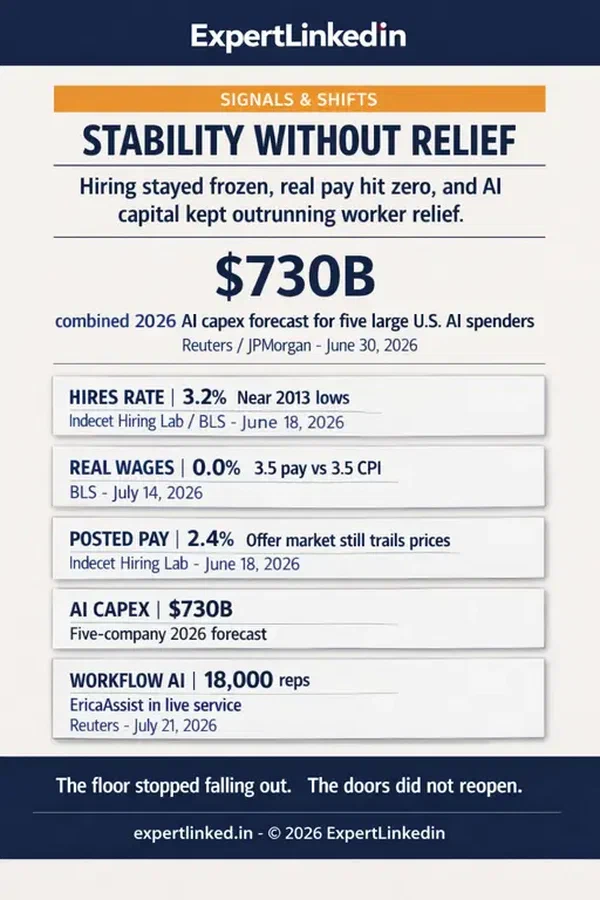
Jackson and Olivia spend the week on a single question: who gets to define your AI value before a dashboard or a stalled labor market does it for you? They unpack the mid-year proof memo, the June jobs report’s still-frozen hiring mechanism, the compliance theater of tool mandates without workflow redesign, and a practitioner story about turning one redesigned bottleneck into a promotion signal.
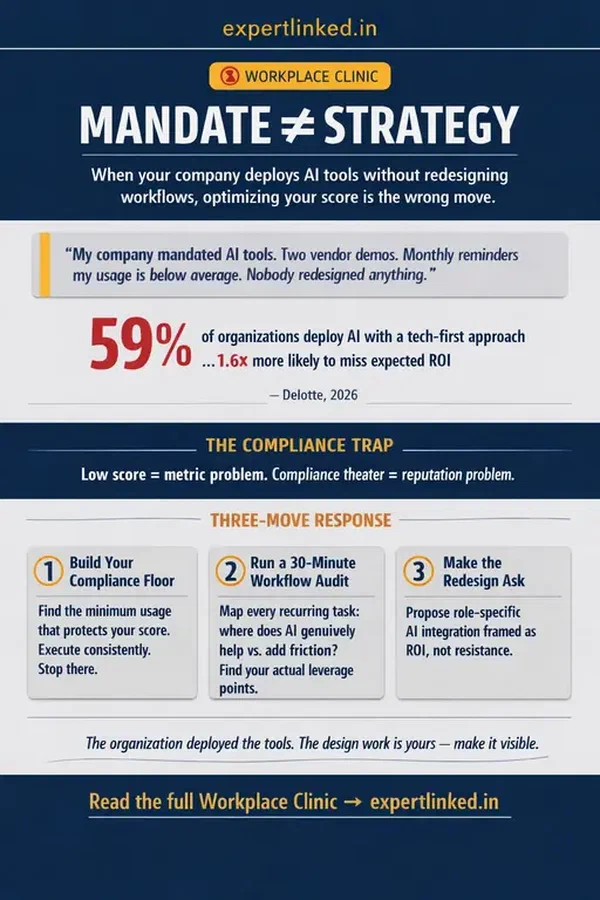
Tool deployment without workflow redesign reliably produces compliance theater — and compliance theater is more damaging to your career signals than a low adoption score.
Tool deployment without workflow redesign reliably produces compliance theater — and compliance theater is more damaging to your career signals than a low adoption score.
Your manager already has a metric for your AI contribution. The question is whether you control what it says — and mid-year is the last window to change the terms.
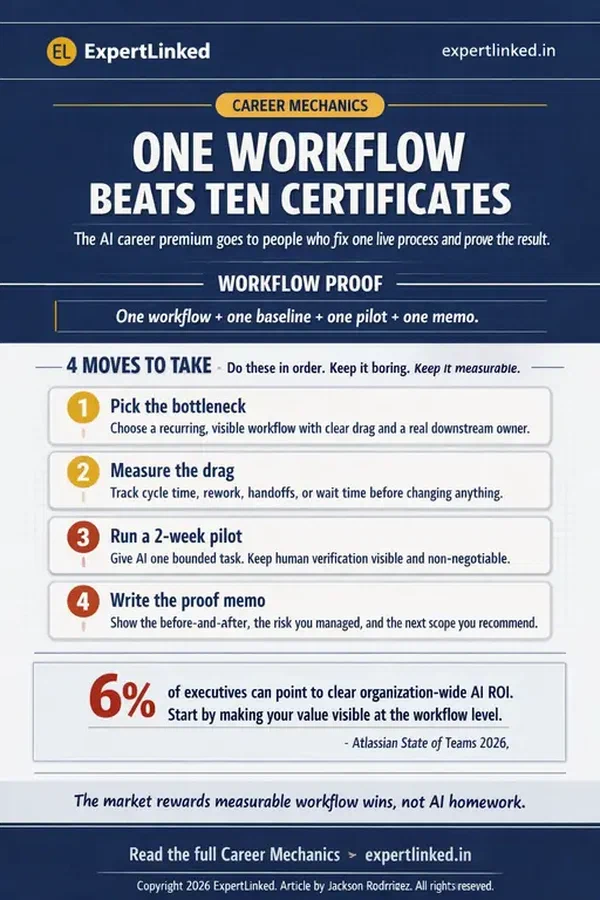
The AI career premium now goes to professionals who can redesign one real workflow and prove the result, not to those collecting tools, certificates, or prompt tricks.
The AI career premium now goes to professionals who can redesign one real workflow and prove the result, not to those collecting tools, certificates, or prompt tricks.
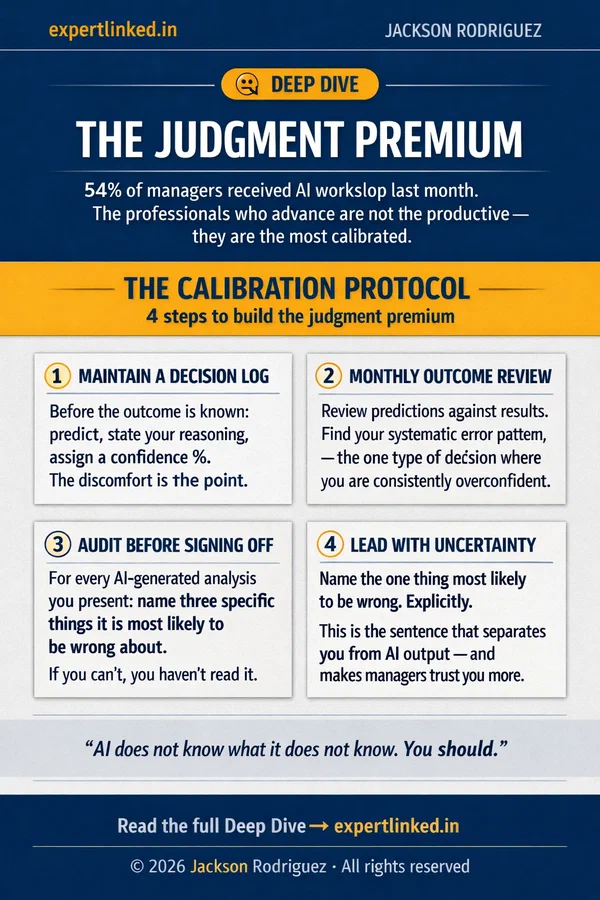
As AI floods organizations with plausible output, the professionals who advance are not the most productive—they are the most calibrated. Here is the framework for building that edge.
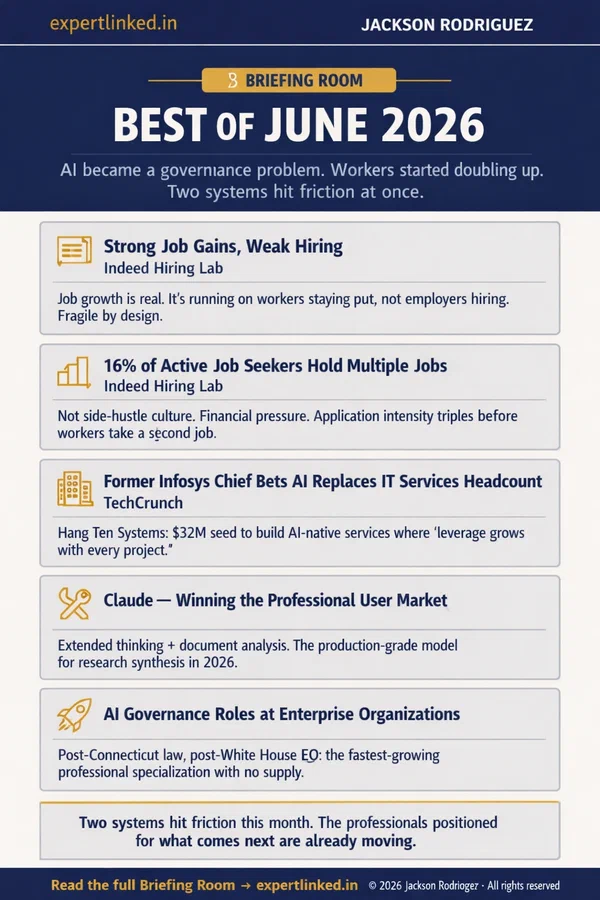
June 2026 confirmed two things at once: AI is now a governance problem, not just a productivity story, and a labor market that looks stable is actually running on workers staying put rather than employers hiring.
As AI floods organizations with plausible output, the professionals who advance are not the most productive—they are the most calibrated. Here is the framework for building that edge.
June 2026 confirmed two things at once: AI is now a governance problem, not just a productivity story, and a labor market that looks stable is actually running on workers staying put rather than employers hiring.
In a slowing labor market, the real career premium is shifting toward employers and sectors that actively train, sponsor, and route workers through change rather than leaving them to navigate it alone.
87% of knowledge workers say AI-speed output has destroyed their capacity to coordinate. The professionals who advance are not the ones producing the most — they are the ones whose work actually lands.
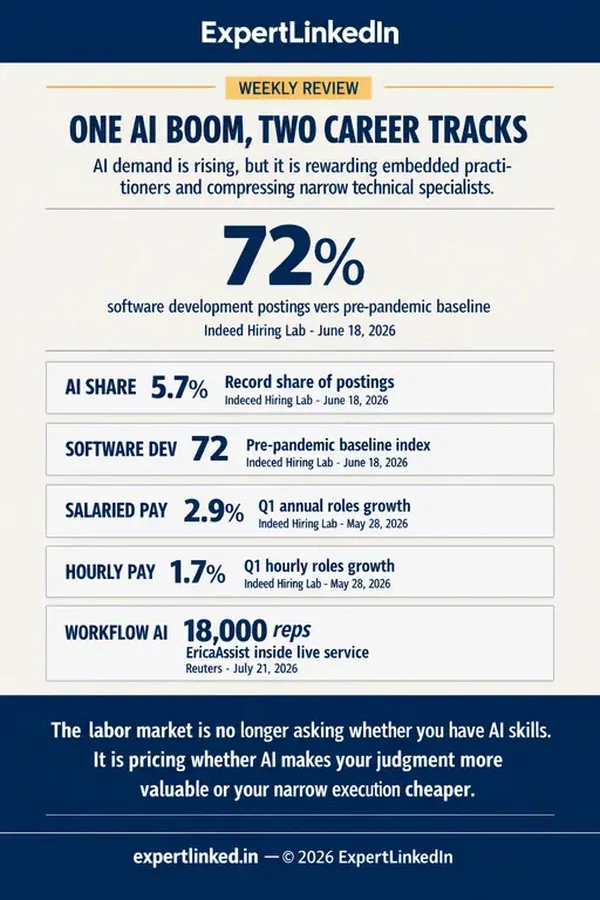
New data from Indeed and the BLS reveals that the labor market is now producing three distinct experiences — skill-concentrated insiders, structurally locked-out outsiders, and a growing patching class — each demanding a different career playbook.
A practical Career Mechanics framework for knowing which decisions to trust to AI and which to own yourself — because in 2026, that calibration is what your career depends on.
Nearly 1 in 4 CEOs say half their workforce needs AI retraining, but the problem isn’t adoption — it’s that most professionals can’t tell when AI is getting things wrong, and that gap is now a career liability.
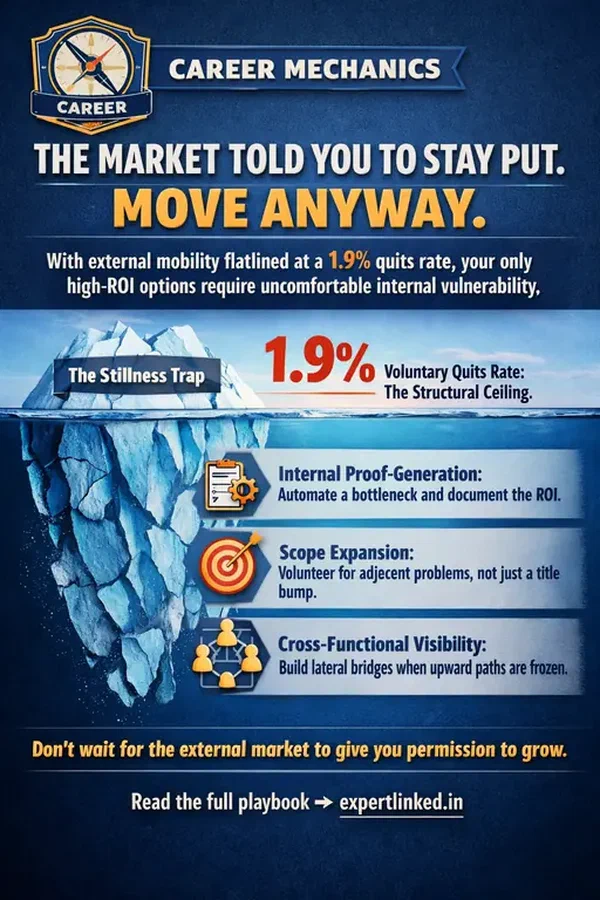
For a growing share of professionals, the smartest career move is no longer upward by title, but sideways into high-impact work that protects energy and deepens craft.