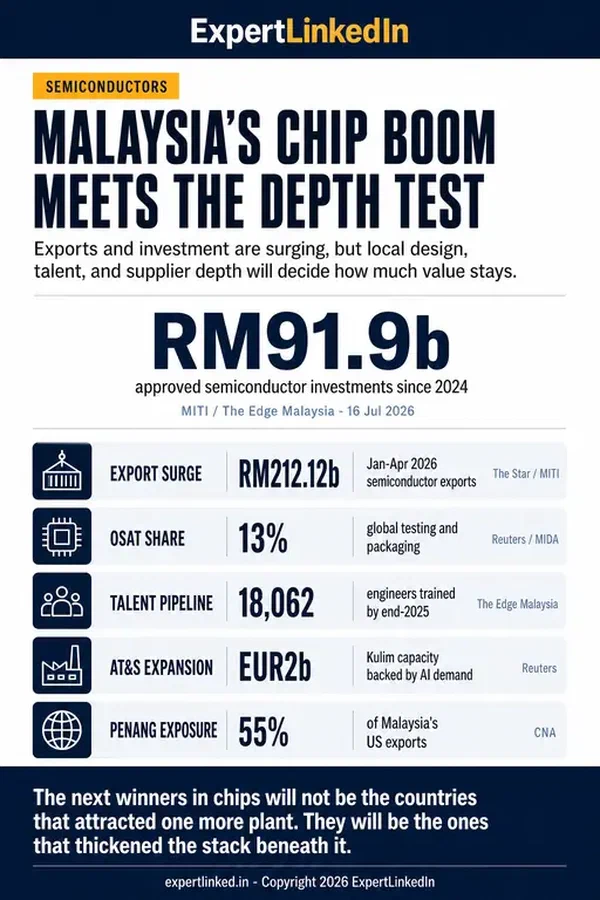
Malaysia no longer has to prove it can attract chip plants. With exports up 50% and RM91.9 billion approved since 2024, the harder test is whether Penang and Kulim can build enough local design, supplier, packaging, and talent depth to keep more value when tariffs and bottlenecks hit.
Malaysia no longer has to prove it can attract chip plants. With exports up 50% and RM91.9 billion approved since 2024, the harder test is whether Penang and Kulim can build enough local design, supplier, packaging, and talent depth to keep more value when tariffs and bottlenecks hit.
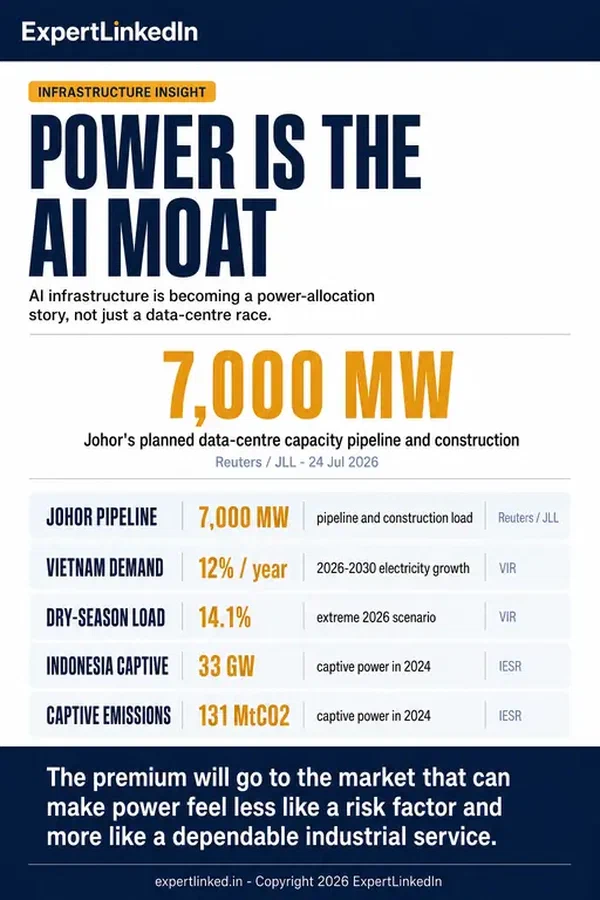
Southeast Asia’s AI build-out is colliding with a physical constraint the hype cycle keeps understating: reliable power. Johor, Vietnam, and Indonesia show that the next winners will be the markets that can turn electricity, grid access, and carbon discipline into predictable industrial capacity.
Southeast Asia’s AI build-out is colliding with a physical constraint the hype cycle keeps understating: reliable power. Johor, Vietnam, and Indonesia show that the next winners will be the markets that can turn electricity, grid access, and carbon discipline into predictable industrial capacity.
America’s first major AI governance act was not bias rules or transparency requirements. It was a competitor-triggered export control that the security community says makes defenders worse off — and the AI ethics movement needs to treat that as a problem, not a win.
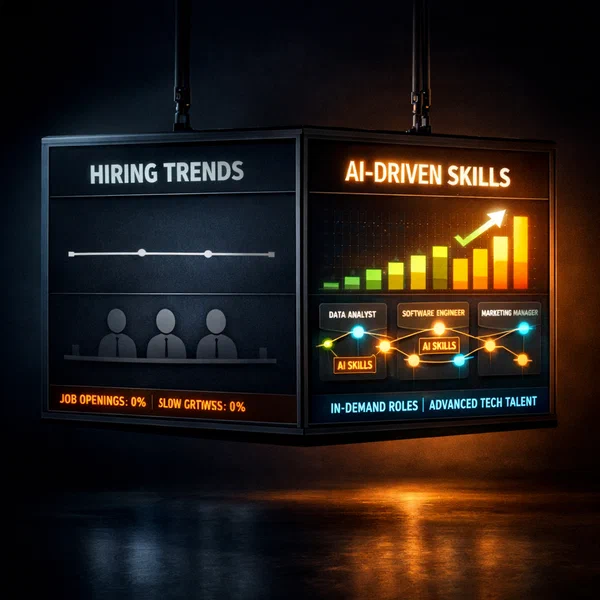
Hiring is slow overall, but demand for AI-adjacent capability is accelerating, creating a split-screen market that rewards evidence-backed adaptability.
India deploys AI more than any other country, yet has nearly the lowest density of true power users—and Anthropic’s March 2026 Economic Index just quantified what that gap is costing every founder who hasn’t noticed.
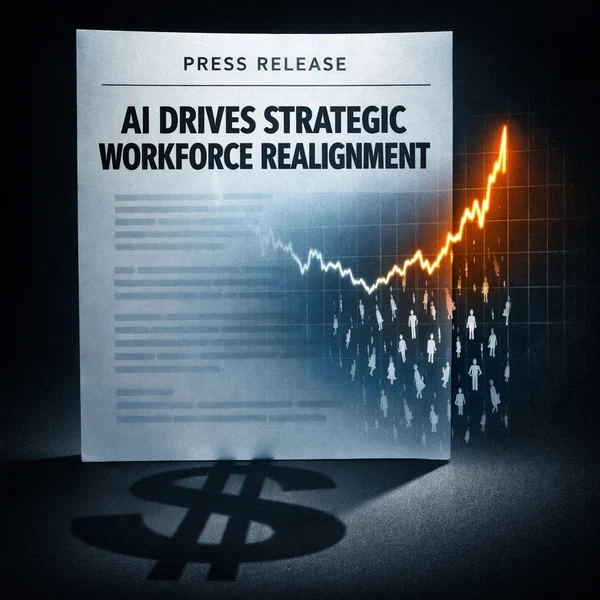
The ‘AI layoff’ headline is partly a financial narrative. Understanding which part is spin and which is signal will determine whether you pivot to safety or deeper into the storm.
LinkedIn’s new LLM-powered feed algorithm punishes engagement bait and rewards real expertise. The playbook professionals have relied on for years just changed.
LinkedIn’s 2026 algorithm update penalizes engagement bait by up to 60% while rewarding genuine expertise and meaningful conversation—transforming how professionals must build their personal brands.
OpenAI and industry leaders acknowledge persistent AI security vulnerabilities, highlighting the urgent need for honest risk communication and stronger governance as AI deployment accelerates.
Venture capitalists are deploying a ‘kingmaking’ strategy to crown AI startup winners in their infancy, fundamentally changing how founders compete for funding and market position.
Grammarly’s dramatic rebrand to ‘Superhuman’ signals a seismic shift in corporate communication tools that LinkedIn strategists can’t afford to ignore.
One of the original architects of the transformer model is now urging the AI community to look beyond it. Is the technology that sparked a revolution now holding us back from the next one?
OpenAI’s move toward granular opt‑in character controls in Sora reframes creative leverage—and forces brands and creators to redesign compliance, cameo, and narrative cadences simultaneously.
Strategic AI acquisitions like OpenAI’s $1.1B Statsig purchase show how leading AI companies are solving enterprise adoption challenges through targeted M&A.
The rise of AI model betting and enduring lottery cultures reveal humanity’s complex relationship with uncertainty, prediction, and the illusion of control in an algorithmic society.
Acqui-hires and the AI talent arms race are changing how professionals pivot into AI; practical steps to leverage your transferable skills and build an AI transition portfolio.
Mid-2025 analysis reveals that only 20% of AI initiatives launched in Q1 achieved production scale, but those delivering 3x projected returns. Success factors include data quality over model sophistication, seamless business process integration, and strategic focus on measurable outcomes rather than technological novelty.
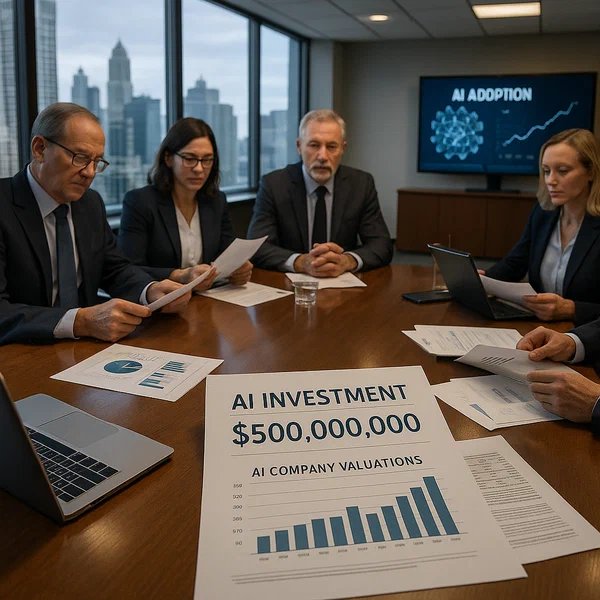
Week of July 21-27, 2025 brings critical tech earnings with focus on AI infrastructure ROI, enterprise adoption metrics, and international revenue diversity. Key regulatory developments and emerging technology trends will shape strategic business decisions for the remainder of the year.
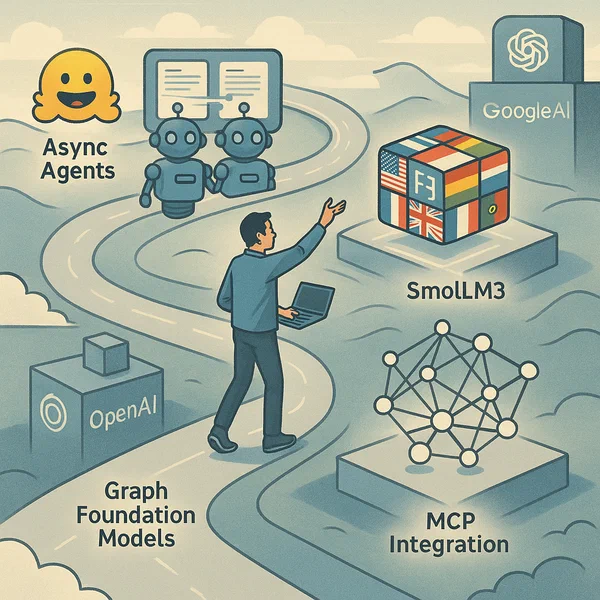
July 2025 brought major LLM breakthroughs including Hugging Face’s asynchronous robot inference, SmolLM3’s multilingual capabilities, OpenAI’s collaboration expansions, and Google’s graph foundation models—signaling the next wave of prompt engineering innovation.
Meta’s successful recruitment of Apple’s head of AI models signals an escalating tech talent war where human expertise becomes the industry’s most valuable commodity. This strategic hire reveals critical lessons about AI leadership acquisition and the evolving battle for top-tier technical talent.
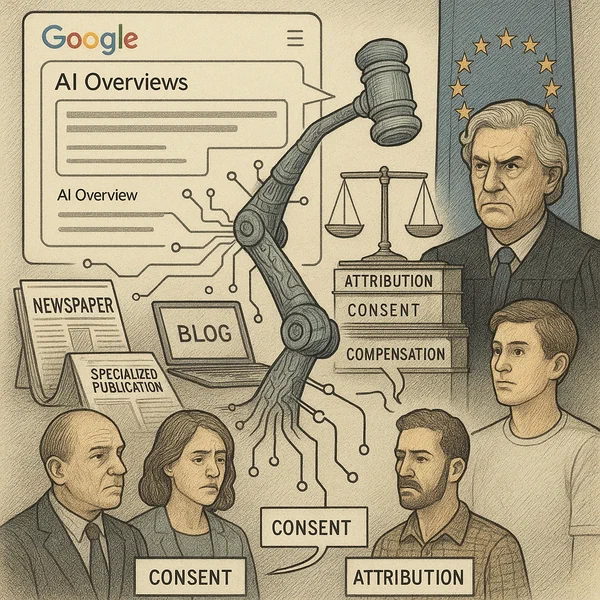
When AI systems extract and summarize content without meaningful publisher consent, we’re not just witnessing a business dispute—we’re seeing the collision between innovation and fundamental questions of digital rights and fair compensation.
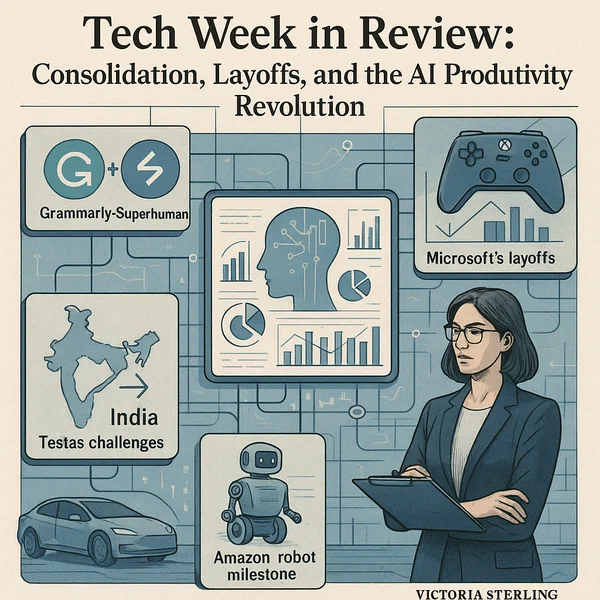
A turbulent week in tech reveals the industry’s new reality: strategic consolidation, workforce optimization, and the race to build AI-first productivity platforms.