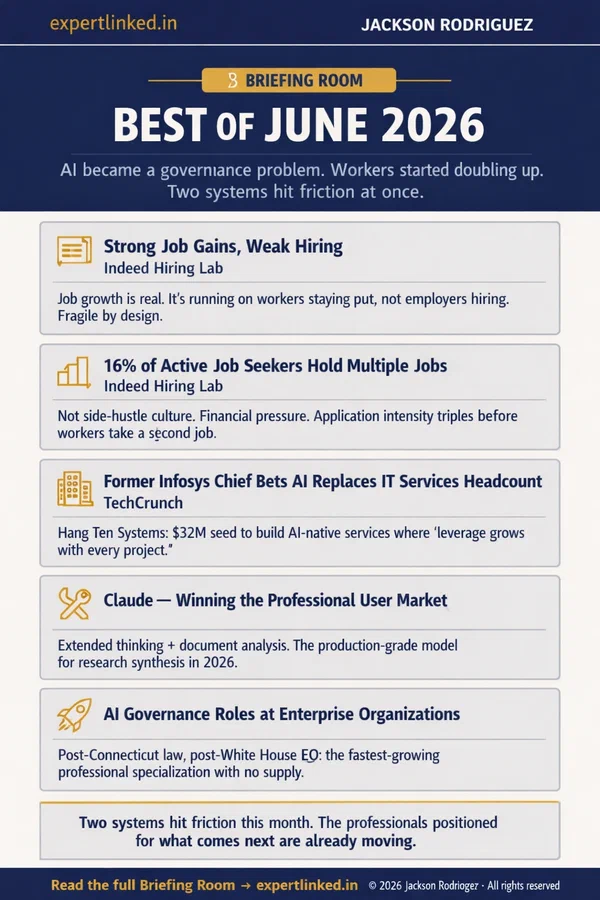
June 2026 confirmed two things at once: AI is now a governance problem, not just a productivity story, and a labor market that looks stable is actually running on workers staying put rather than employers hiring.
June 2026 confirmed two things at once: AI is now a governance problem, not just a productivity story, and a labor market that looks stable is actually running on workers staying put rather than employers hiring.
America’s first major AI governance act was not bias rules or transparency requirements. It was a competitor-triggered export control that the security community says makes defenders worse off — and the AI ethics movement needs to treat that as a problem, not a win.
This week’s layoffs-and-capex cycle reveals that AI workforce risk is less about automation magic and more about who gets to convert labor budgets into infrastructure bets.
The Musk v. OpenAI trial produced in one week what three years of voluntary governance frameworks could not: forced disclosure of training practices, private beliefs about AGI, and the structural arms-race dynamic that makes individual restraint impossible.
The next phase of workplace AI is not just automation—it is a surveillance bargain that converts how people work into the raw material for both productivity gains and tighter managerial control.
Anthropic’s triple-incident week wasn’t just embarrassing—it opened a window into the most underexamined assumption in AI governance: that ’trust us’ is a safety framework.
Anthropic was blacklisted by the Pentagon for holding two ethical redlines. What that tells us about the future of responsible AI is more alarming than the dispute itself.
The world crossed a regulatory threshold yesterday: mandatory AI content labeling and three-hour takedowns are now law in India, signaling a global governance shift that every AI practitioner must understand.
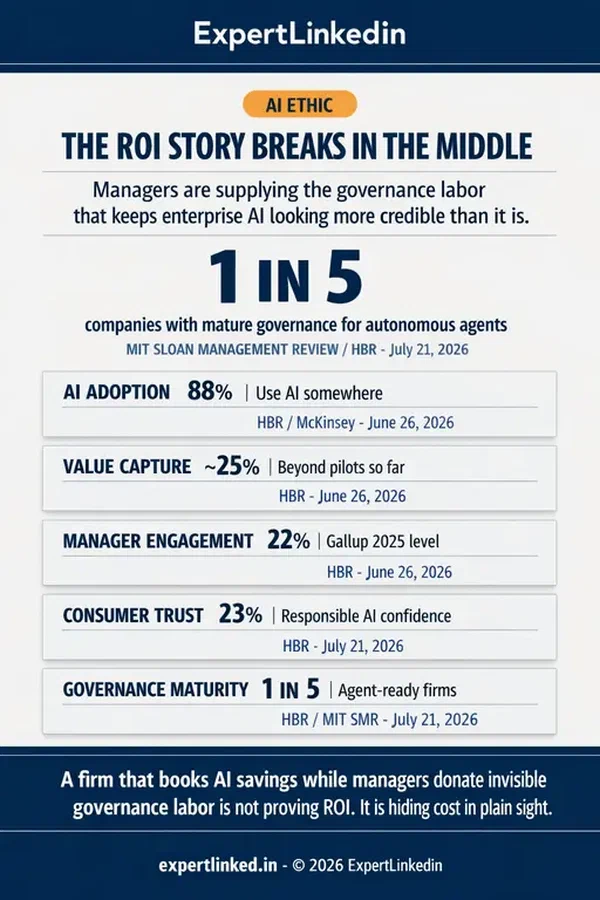
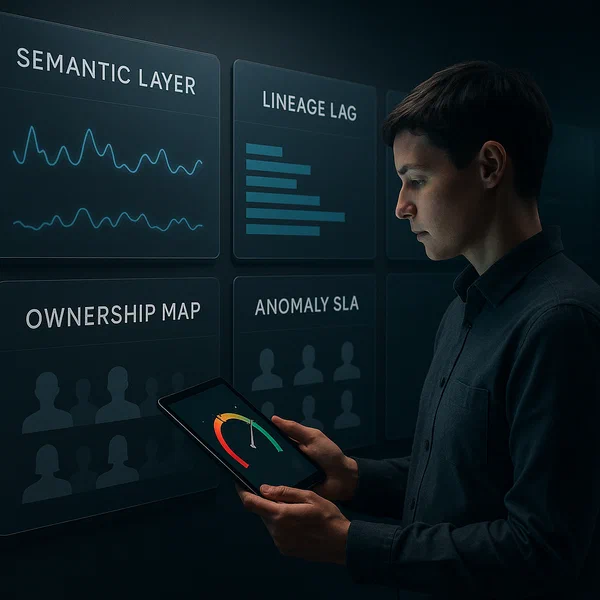
A wave of ‘AI trust layer’ launches won’t fix the 80% enterprise AI failure rate unless organizations convert abstractions into named ownership, lineage instrumentation, and escalation muscle.
As AI reshapes the modern workplace, new ethical challenges around trust, transparency, and human dignity are emerging that require immediate attention from leaders and policymakers.
Explore the critical ethical challenges as AI transforms the modern workplace. Learn how organizations can balance technological advancement with human dignity, build trust through transparent AI governance, and create ethical frameworks that protect worker rights while embracing innovation.
AI ethics requires navigating the transparency paradox where complex algorithms offer transformative benefits alongside potential harm, demanding interpretable systems and meaningful human oversight to ensure responsible innovation in high-stakes applications.
Implement AI governance through clear policies, ethical frameworks, risk assessment procedures, stakeholder accountability, and compliance mechanisms for responsible AI deployment.