Clinical AI’s safety case assumes a competent clinician will catch its mistakes. But every deployment asks that clinician to supervise the model — removing the reps that build the judgment. A Lancet colonoscopy study shows unaided detection falling six points after AI exposure, and almost nobody measures the skill the system still depends on.
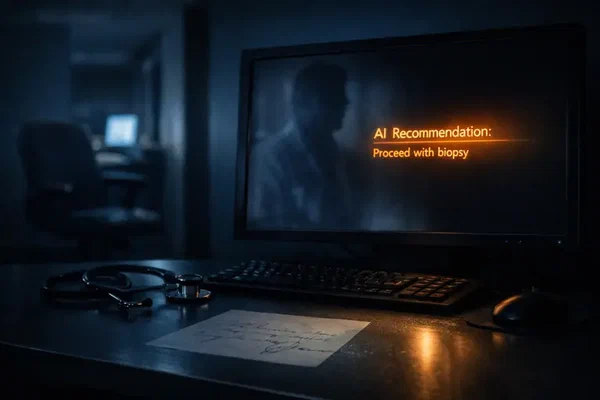
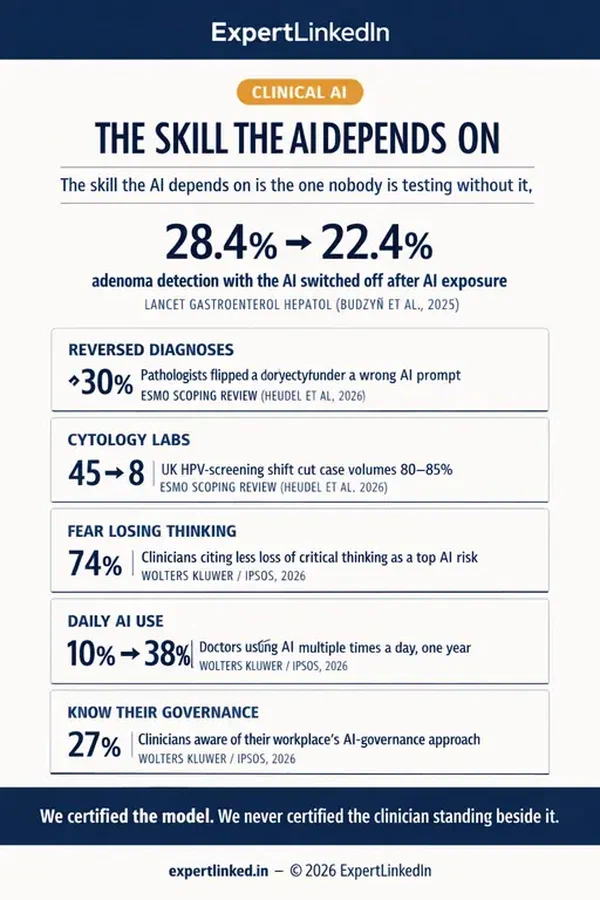
Clinical AI’s safety case assumes a competent clinician will catch its mistakes. But every deployment asks that clinician to supervise the model — removing the reps that build the judgment. A Lancet colonoscopy study shows unaided detection falling six points after AI exposure, and almost nobody measures the skill the system still depends on.
We keep certifying clinical AI on model accuracy scores, but the 2026 evidence shows the real safety problem lives in the clinician-plus-AI pair. Doctors follow confident AI advice even when it is wrong, and explanations do not protect them.
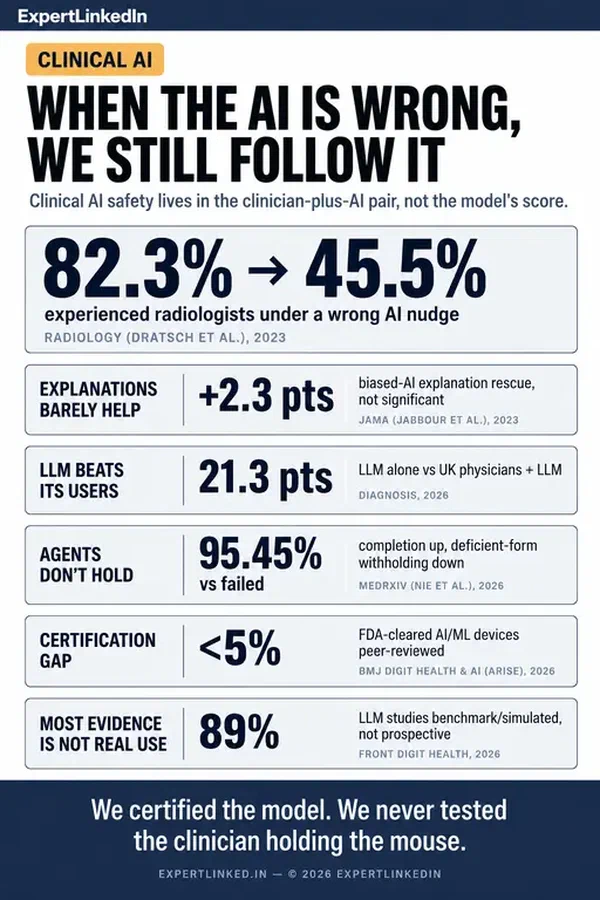
We keep certifying clinical AI on model accuracy scores, but the 2026 evidence shows the real safety problem lives in the clinician-plus-AI pair. Doctors follow confident AI advice even when it is wrong, and explanations do not protect them.
This week’s clinical AI milestones reveal a structural fault line: the capability to transform global healthcare now exists, but the market will not deploy it where the need is greatest.