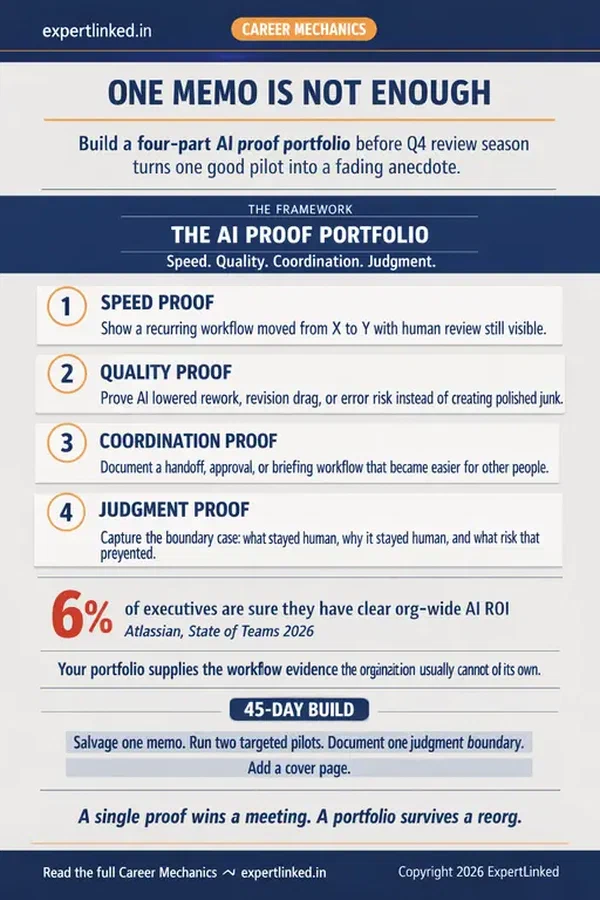
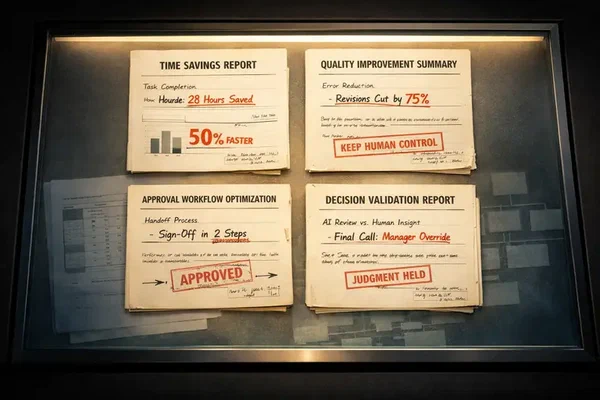
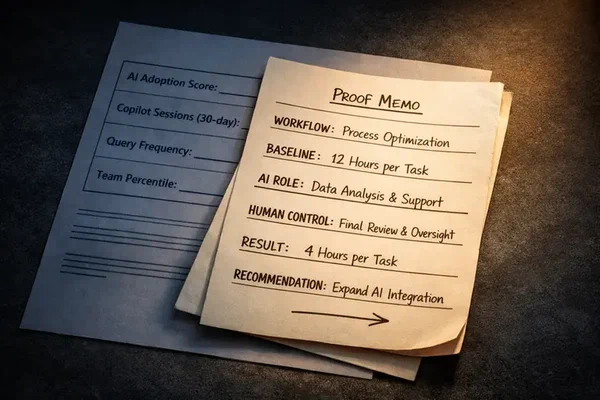
One proof memo is a data point; a portfolio of three to four across different workflows is the career artifact that survives Q4 review season and organizational change.
One proof memo is a data point; a portfolio of three to four across different workflows is the career artifact that survives Q4 review season and organizational change.
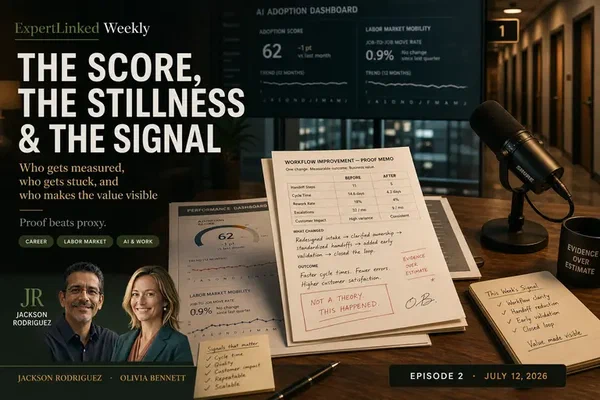
Jackson and Olivia spend the week on a single question: who gets to define your AI value before a dashboard or a stalled labor market does it for you? They unpack the mid-year proof memo, the June jobs report’s still-frozen hiring mechanism, the compliance theater of tool mandates without workflow redesign, and a practitioner story about turning one redesigned bottleneck into a promotion signal.
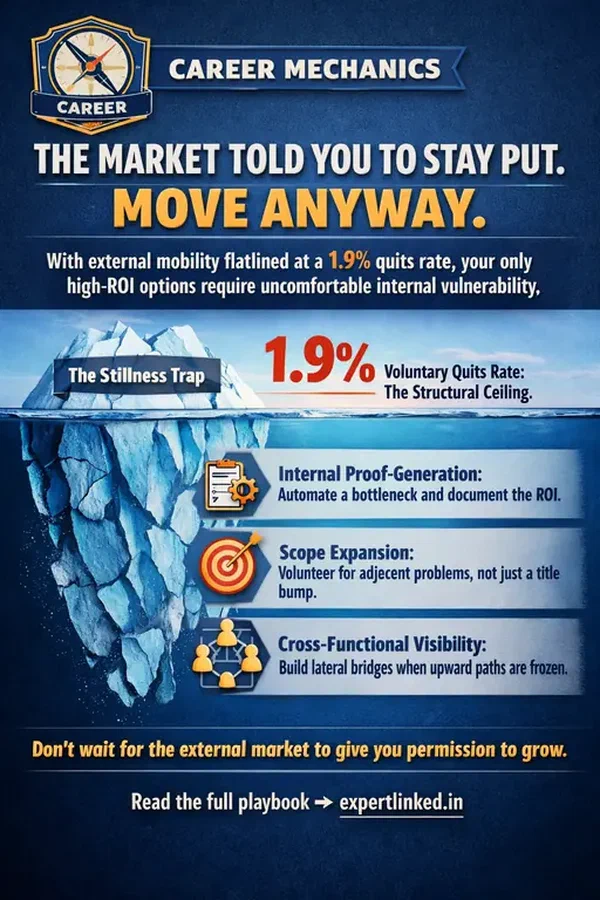
Your manager already has a metric for your AI contribution. The question is whether you control what it says — and mid-year is the last window to change the terms.
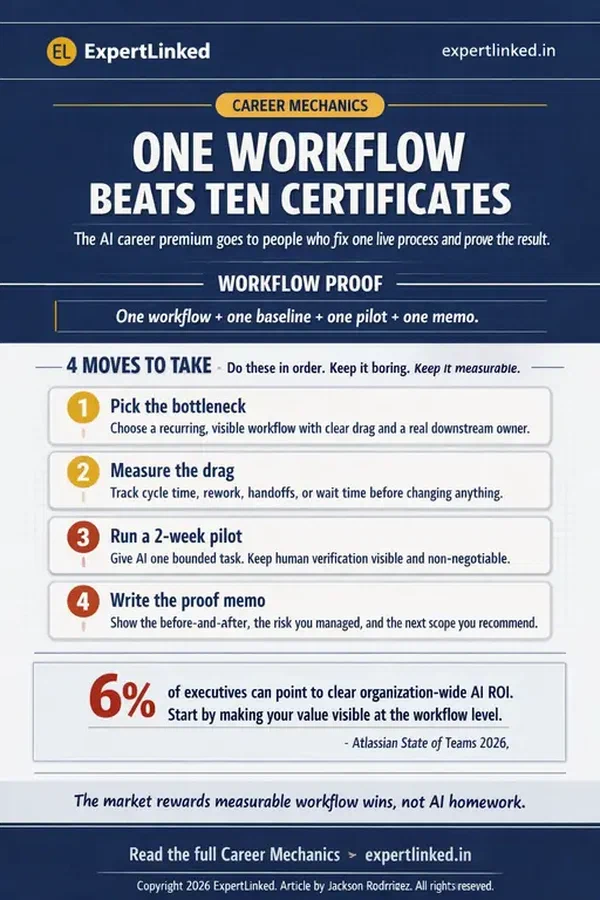
The AI career premium now goes to professionals who can redesign one real workflow and prove the result, not to those collecting tools, certificates, or prompt tricks.
The AI career premium now goes to professionals who can redesign one real workflow and prove the result, not to those collecting tools, certificates, or prompt tricks.
A practical Career Mechanics framework for knowing which decisions to trust to AI and which to own yourself — because in 2026, that calibration is what your career depends on.
Nearly 1 in 4 CEOs say half their workforce needs AI retraining, but the problem isn’t adoption — it’s that most professionals can’t tell when AI is getting things wrong, and that gap is now a career liability.
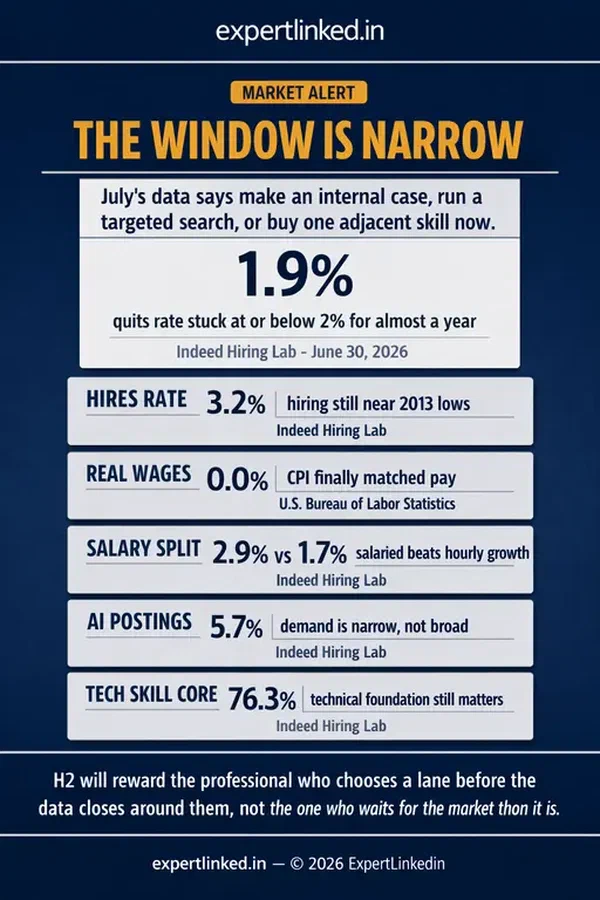
This week’s labor data shows a quiet freeze—headline stability with uneven opportunity—making role-specific market mapping and AI-visible proof work the highest-leverage moves right now.
This week’s labor data points to a three-speed market where healthcare concentration, worker-share compression, and AI-skill demand gaps require different career moves.
March 2026’s JOLTS numbers look flat at the headline, but sector-level and experience-level data reveal a three-way fracture splitting by industry, career stage, and AI-skill possession.
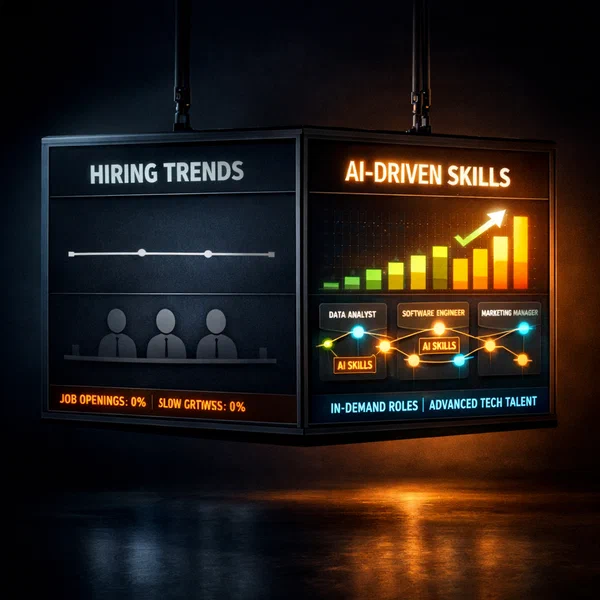
Hiring is slow overall, but demand for AI-adjacent capability is accelerating, creating a split-screen market that rewards evidence-backed adaptability.
The ‘AI layoff’ headline is partly a financial narrative. Understanding which part is spin and which is signal will determine whether you pivot to safety or deeper into the storm.