The convergence of AI and robotics is creating a gold rush for career transitions, with major tech players democratizing access and skills gaps widening faster than ever.
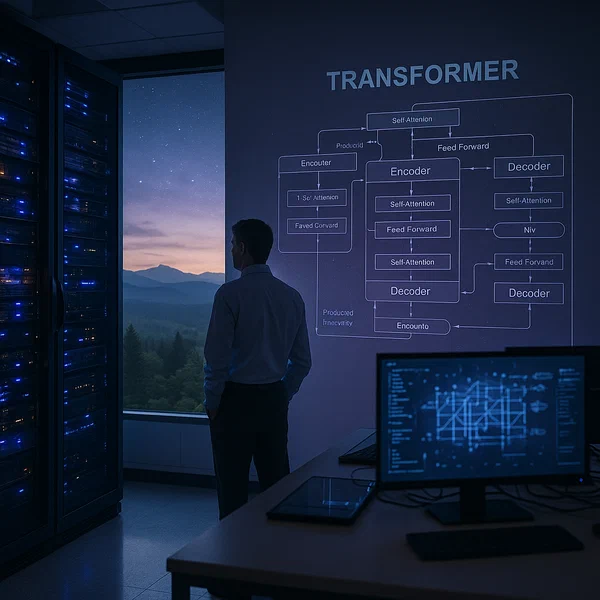
One of the original architects of the transformer model is now urging the AI community to look beyond it. Is the technology that sparked a revolution now holding us back from the next one?
Practical strategies for professionals experiencing AI-related career anxiety, focusing on skills mapping and strategic storytelling to pivot confidently in the AI era.
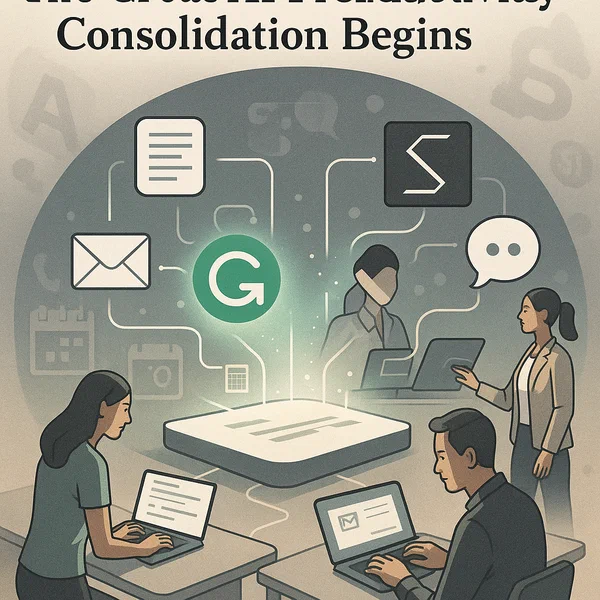
When writing assistants meet email superpowers, the result isn’t just another acquisition—it’s a blueprint for how AI productivity platforms will reshape the modern workplace.
AI is revolutionizing drug discovery by accurately predicting protein structures, accelerating target identification, and designing novel molecules, dramatically reducing development timelines from years to months while addressing untreatable conditions.
In the AI age, authentic human networking becomes more valuable than ever, requiring a focus on deep relationships, genuine connections, and value-first approaches that stand out from automated outreach.
Master advanced prompt engineering with chain-of-thought techniques that break down complex problems into step-by-step reasoning, dramatically improving AI output quality and reliability for professional applications.
AI-powered telemedicine platforms are democratizing healthcare access by eliminating language barriers, enabling specialist connections, and reducing emergency room visits while serving diverse populations across geographic boundaries.
Transform financial analysis with sophisticated prompt engineering by using context-rich queries, multi-step workflows, precise financial terminology, and risk-aware prompts that enhance rather than replace analytical expertise.
The future of work lies in human-AI collaboration where critical thinking, creativity, and emotional intelligence become more valuable, requiring organizations to invest in both technological adoption and human skill development.
Master prompt engineering as both art and science by crafting neural symphonies that transform AI from question-answering tools into sophisticated reasoning partners through carefully designed human-machine communication.
Success in the AI era requires adopting an augmentation mindset that enhances human capabilities rather than replacing workers, focusing on task-level analysis to create blended workforce models that combine technological efficiency with irreplaceable human strengths.
Prompt engineering emerges as the hottest skill in tech, teaching professionals to communicate effectively with AI systems through natural language to dramatically improve results and unlock new career opportunities in the AI-driven workplace.
AI offers transformative solutions to combat climate change through data analysis, pattern recognition, and predictions that enable greenhouse gas emission reduction, adaptation to climate impacts, and building resilience against climate-related shocks.
AI transforms healthcare diagnosis with 94% accuracy rates for conditions like melanoma and diabetic retinopathy, serving as powerful complementary tools that reduce diagnostic errors while democratizing specialized medical expertise to underserved regions.
Natural Language Processing revolutionizes human-computer communication by enabling machines to understand, interpret, and generate human language, transforming everything from chatbots to translation services across multiple industries.
The future of AI promises transformative advances in automation, personalized services, and problem-solving capabilities while requiring careful navigation of ethical challenges, workforce transitions, and societal impacts across all industries.
AI ethics in the 21st century demands proactive frameworks addressing algorithmic bias, privacy protection, and human autonomy to ensure artificial intelligence development serves humanity’s best interests while preventing discriminatory and harmful outcomes.
Machine learning revolutionizes healthcare by enabling early disease detection, personalized treatment recommendations, and predictive analytics that improve patient outcomes while reducing costs and medical errors across global healthcare systems.
Neural networks are machine learning algorithms designed to recognize patterns by mimicking brain operations through interconnected layers that process input data, adjust weights during training, and enable applications in image recognition, speech processing, and natural language understanding.
AI transforms elderly care through monitoring systems, predictive health analytics, and assistive technologies that enhance quality of life while supporting caregivers and maintaining human dignity and connection.
AI revolutionizes financial services through fraud detection, algorithmic trading, risk assessment, and customer service automation while requiring robust regulatory compliance and ethical oversight for responsible implementation.
AI transforms healthcare delivery through improved diagnostic accuracy, personalized treatment planning, and predictive analytics while requiring careful ethical oversight and human-centered implementation approaches for optimal patient outcomes.
French healthcare embraces AI revolution through rigorous clinical validation, patient privacy protection, and systematic implementation approaches that improve diagnostic accuracy while maintaining high medical ethics standards.
German AI ethics frameworks prioritize data privacy, algorithmic transparency, and systematic governance approaches that balance innovation potential with strict regulatory compliance and citizen protection principles.
Prompt engineering success requires understanding AI model capabilities, crafting specific instructions, iterative refinement, and strategic context provision to unlock powerful results from large language models across diverse professional applications.
Deep learning uses multi-layered neural networks to automatically learn complex patterns from data without manual feature engineering, enabling breakthrough applications in image recognition, natural language processing, and predictive analytics.
AI in healthcare revolutionizes patient care through enhanced diagnostic imaging, personalized treatment plans based on genetic and lifestyle data, virtual assistants for patient support, and improved efficiency while empowering medical professionals.