The articles on ExpertLinked go deep. These don’t.
Each infographic here extracts the single most actionable framework from a Workplace Clinic, Career Mechanics, Signals & Shifts, or Briefing Room piece — stripped to its essentials, formatted for a quick read or an immediate share.
Browse below, or click through to the original article for the full clinical analysis, research, and scripts behind each one.
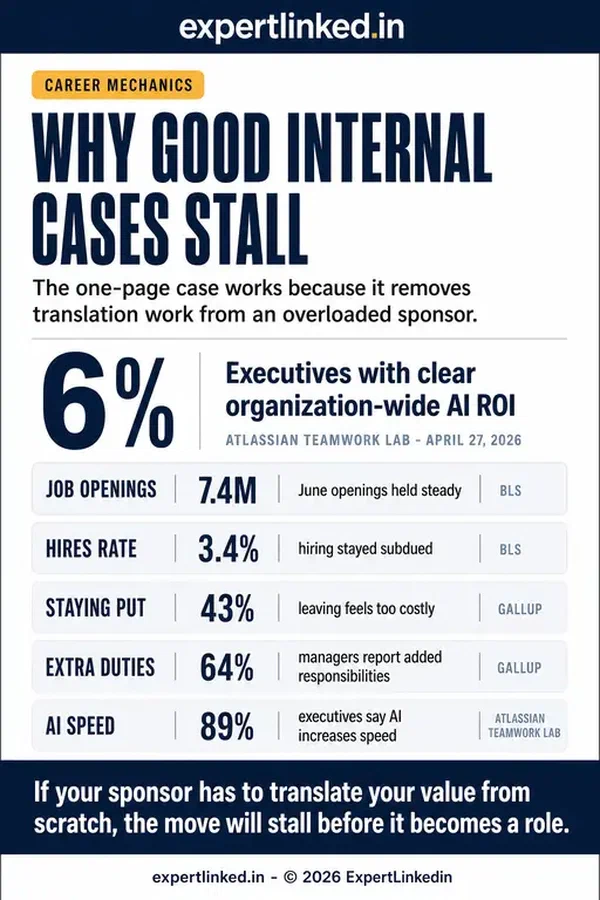
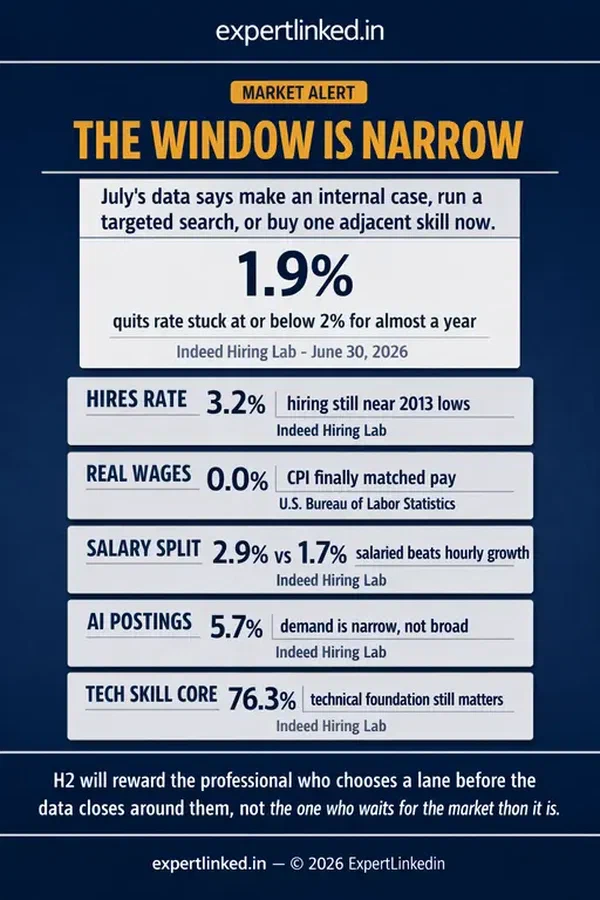
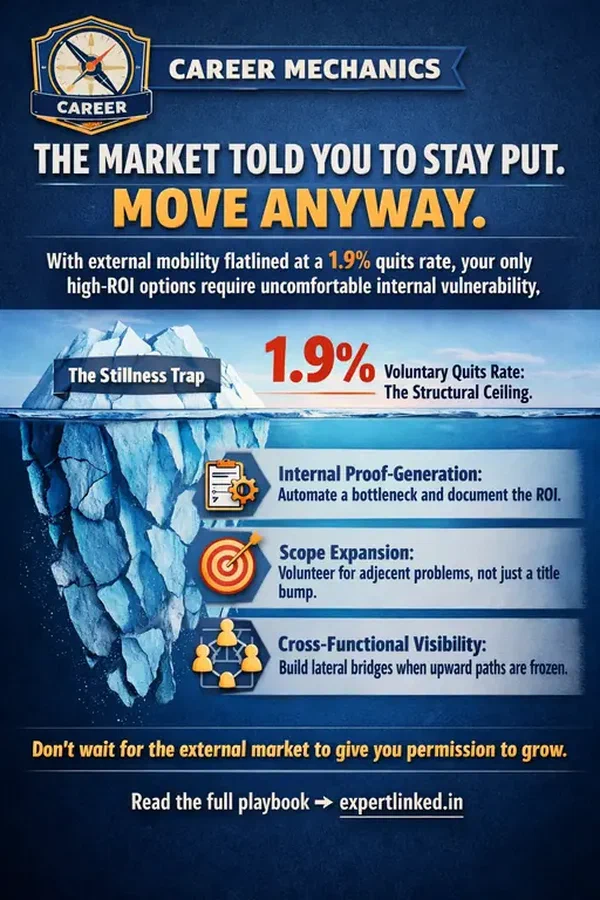
Most internal moves stall on sponsor friction, not talent. A one-page business case turns proof, scope, and timing into a manager-carryable Q4 decision.
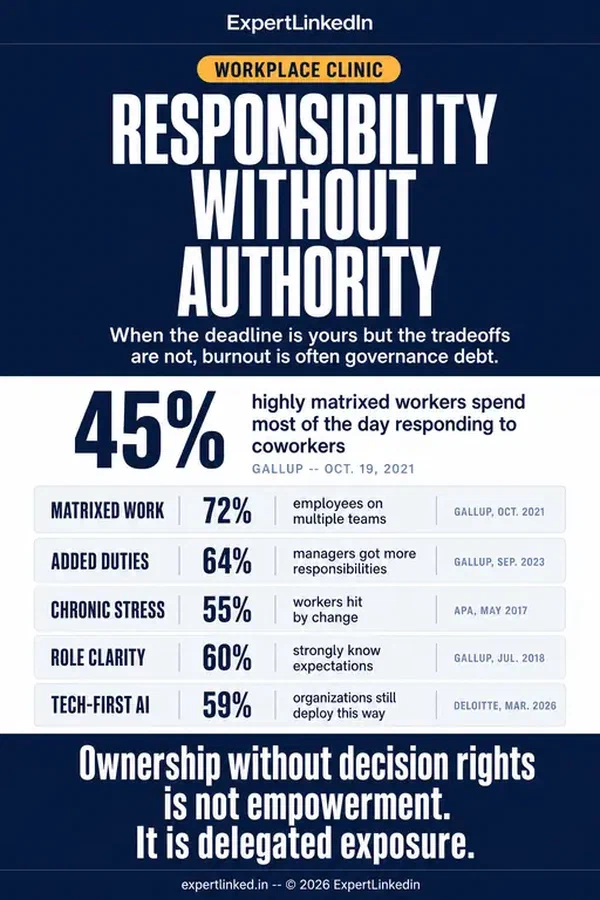
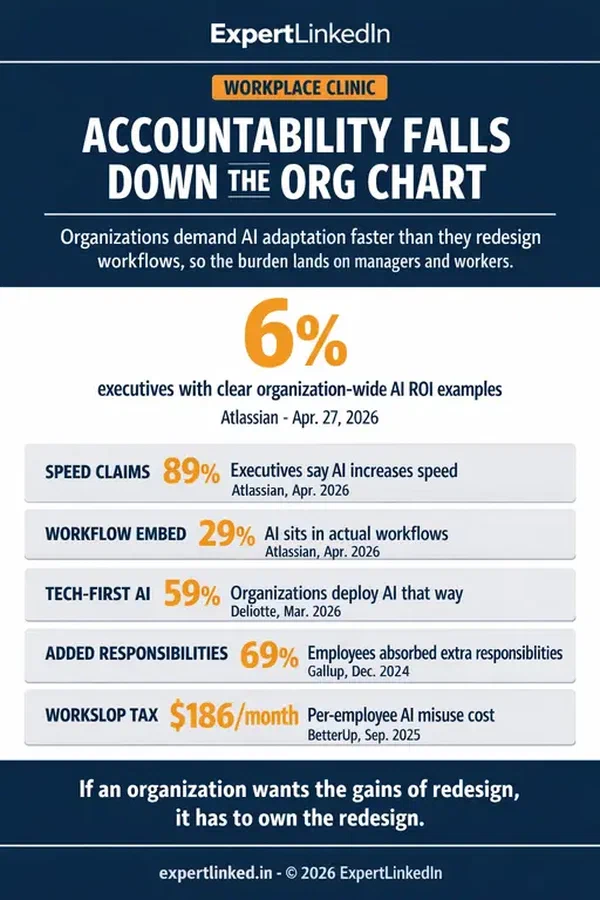
If the deadline is yours but the tradeoffs, approvals, and staffing decisions are not, you are not just overloaded. You are carrying governance debt. Here is how to surface the authority gap before Q4 turns it into your permanent operating model.
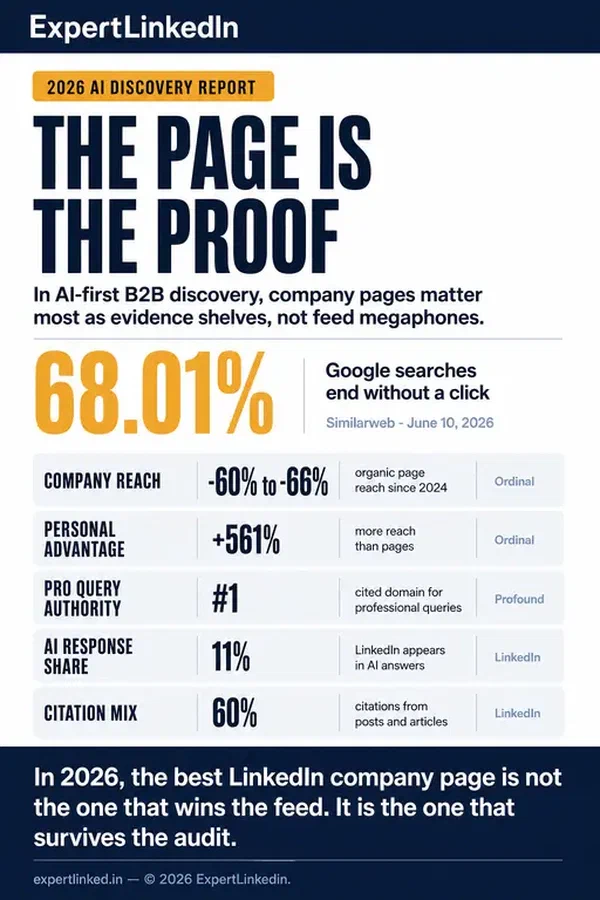
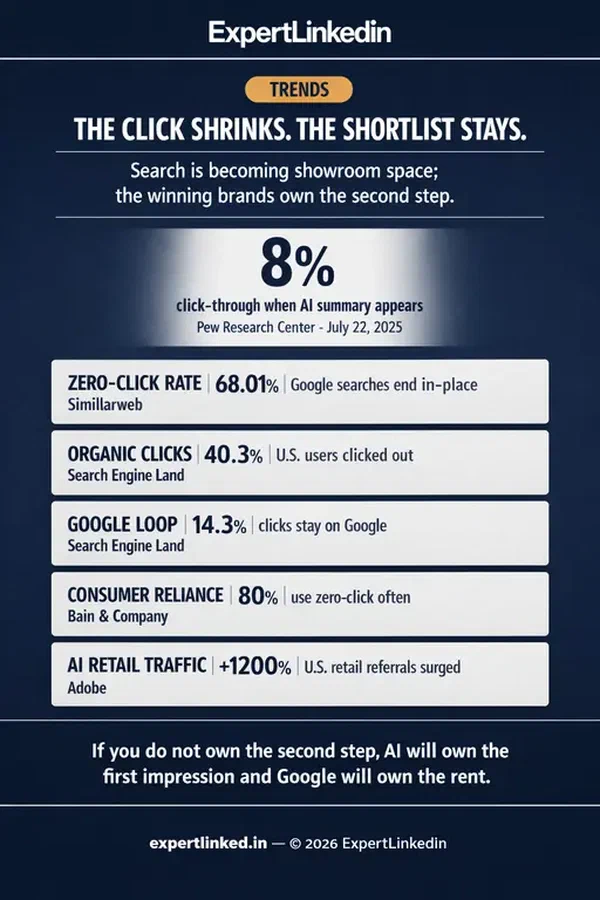
Most B2B teams still judge LinkedIn company pages by reach. In an AI-mediated, zero-click funnel, the better test is whether the page holds enough proof to validate what buyers hear elsewhere before they ever visit your site.
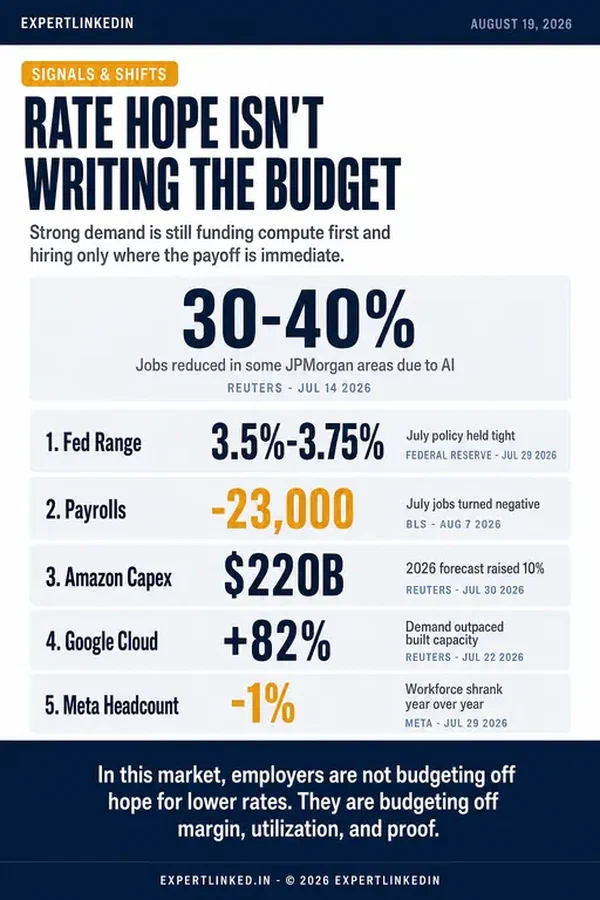
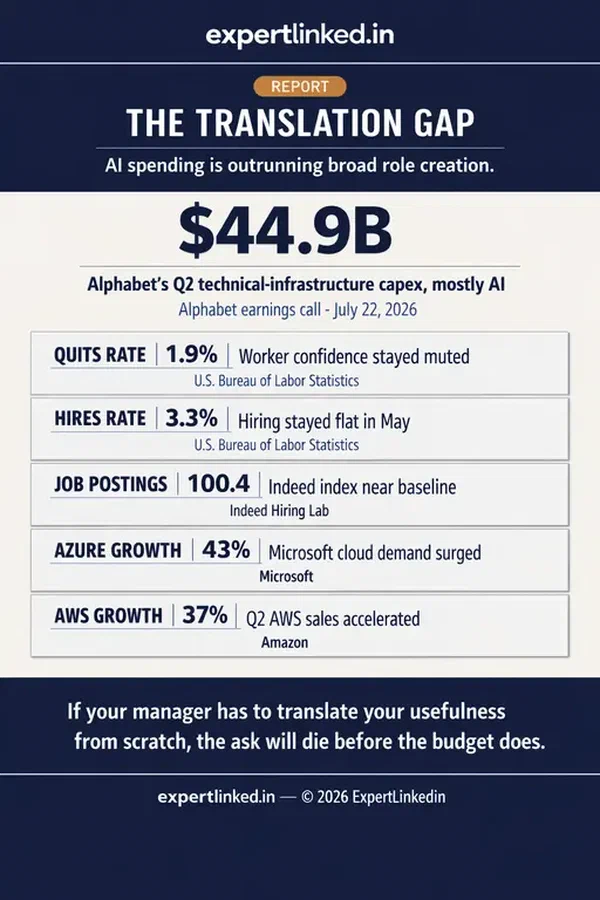
If you are waiting for the July FOMC minutes to rescue fall hiring, you are watching the wrong document. Q2 earnings already showed where the money is going and why headcount approvals still look narrow.
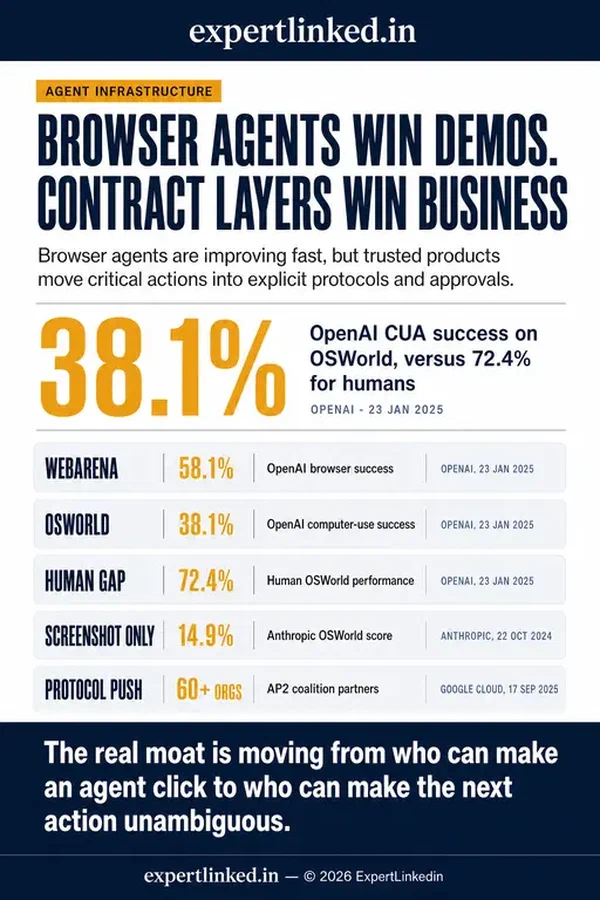
Computer-use agents are improving fast, but the teams that win will not be the ones with the prettiest browser demo. They will be the ones that turn critical actions into explicit contracts, scoped authority, and agent-ready workflows.
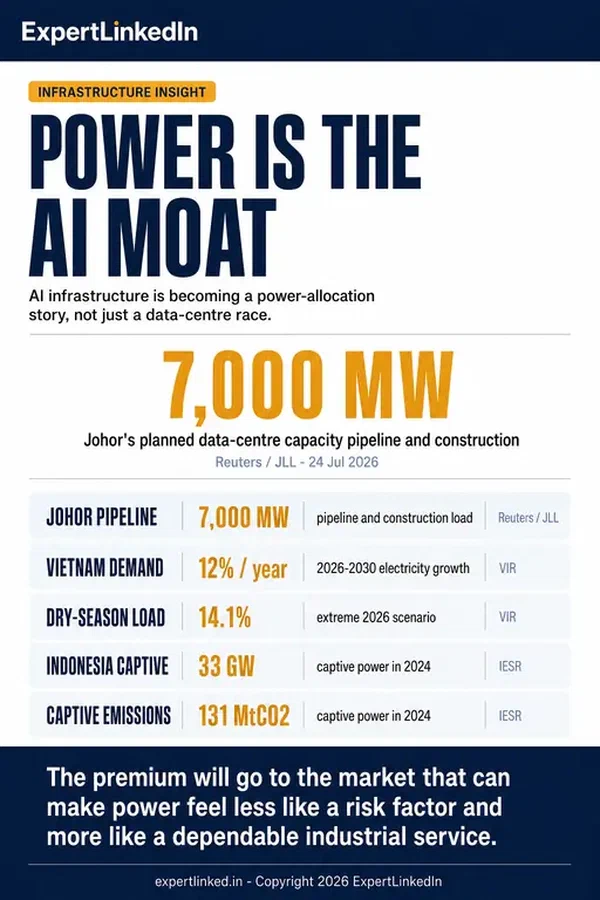
Southeast Asia’s AI build-out is colliding with a physical constraint the hype cycle keeps understating: reliable power. Johor, Vietnam, and Indonesia show that the next winners will be the markets that can turn electricity, grid access, and carbon discipline into predictable industrial capacity.
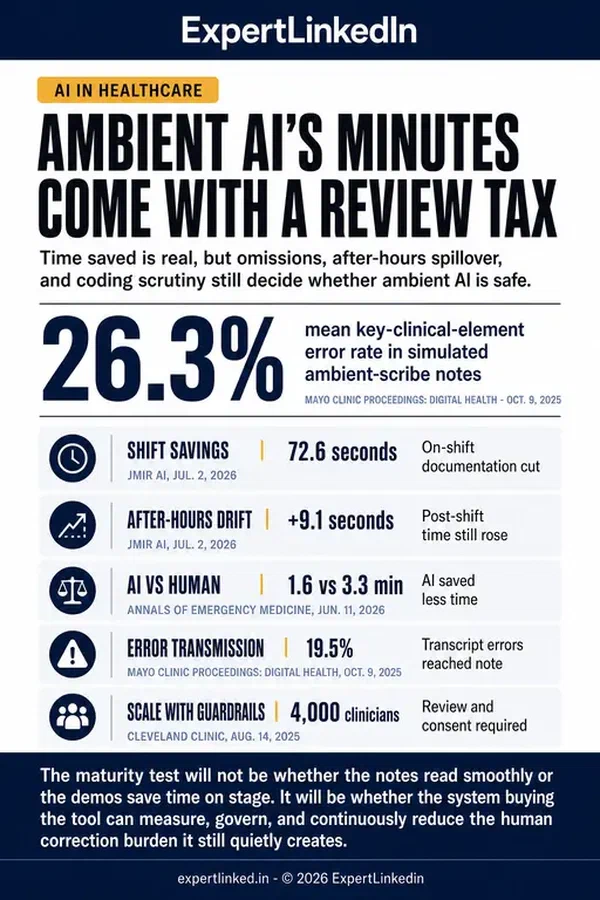
Ambient AI scribes are saving clinicians time, but the harder 2026 question is how much review, correction, and coding scrutiny their notes still demand.
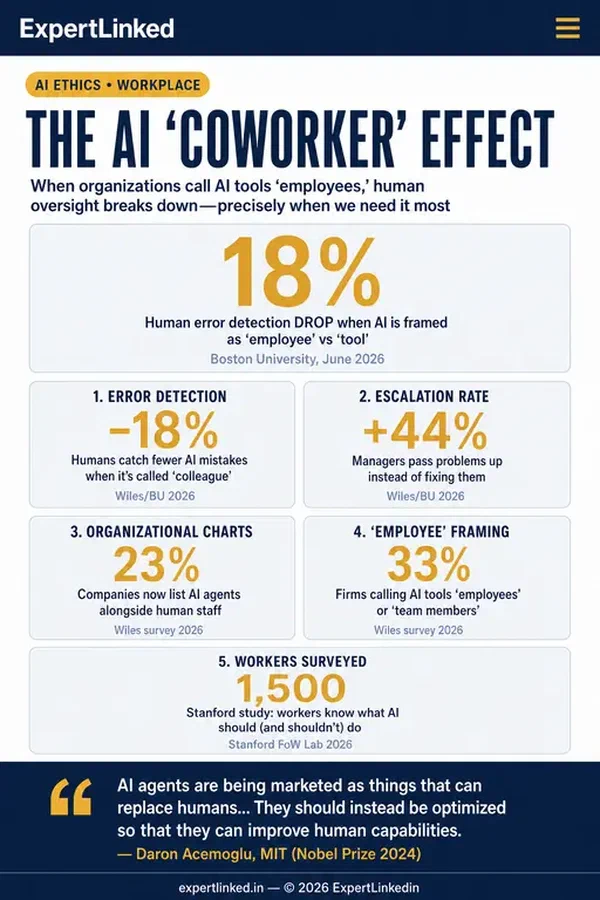
New research reveals that calling AI agents ’employees’ makes humans 18% worse at catching errors and creates dangerous accountability gaps. Why anthropomorphizing AI undermines human judgment precisely when we need it most.
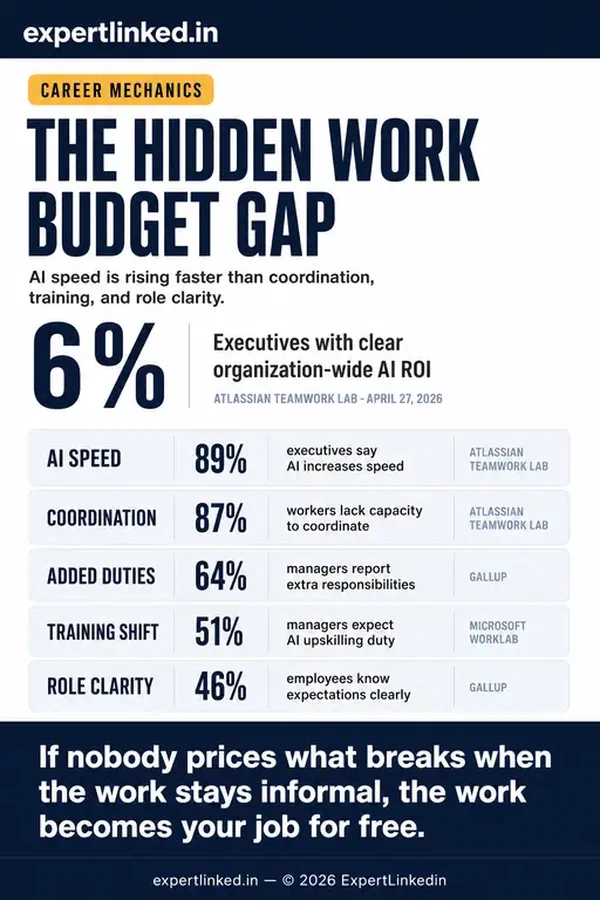
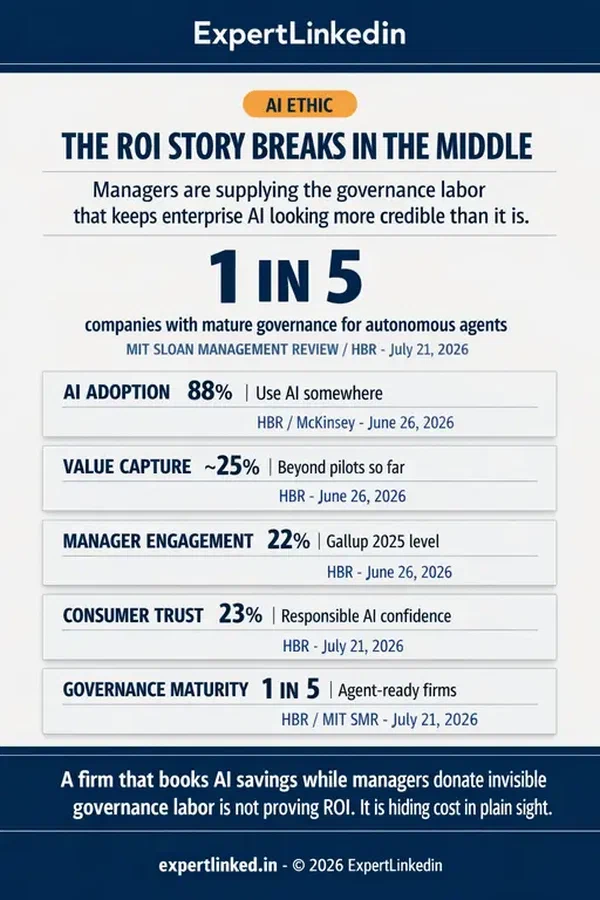
July’s hardest workplace questions all trace back to one pattern: AI transformation without owned redesign pushes accountability downward and cost onto workers.
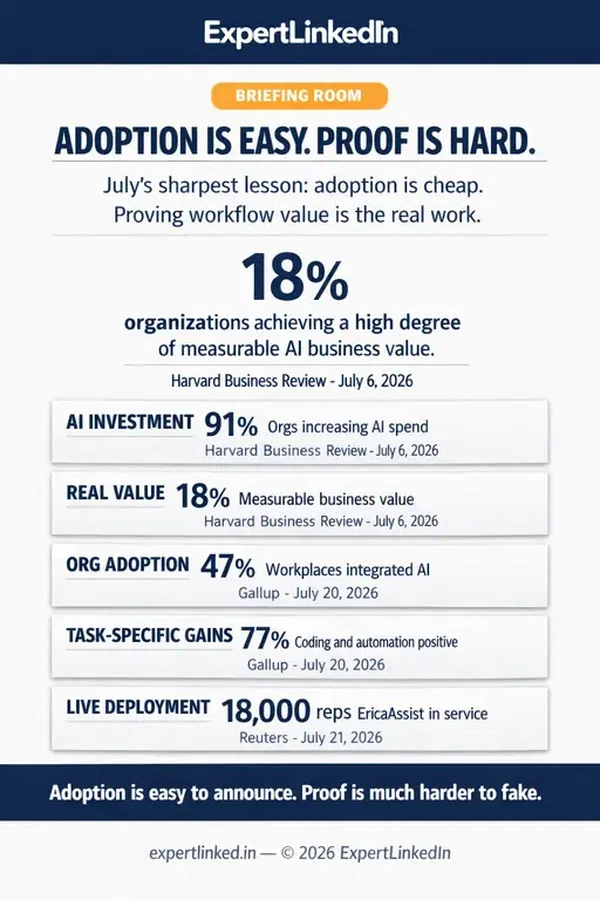
July 2026’s sharpest article, tool, opportunity, research, and internal idea all pointed to one lesson: AI value only counts when it survives contact with real workflows.
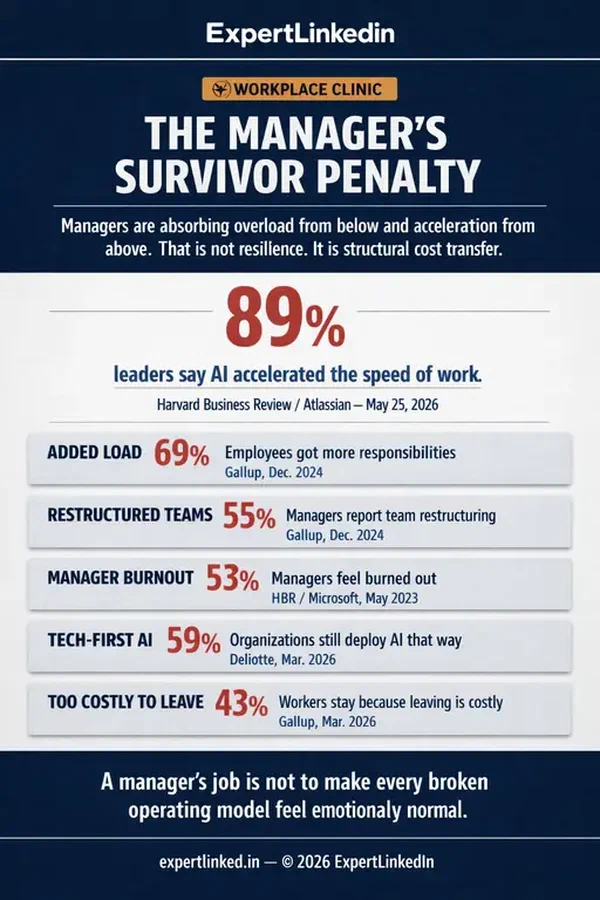
Managers caught between team overload and executive AI pressure need clearer boundaries, better escalation scripts, and a refusal to donate invisible calm.
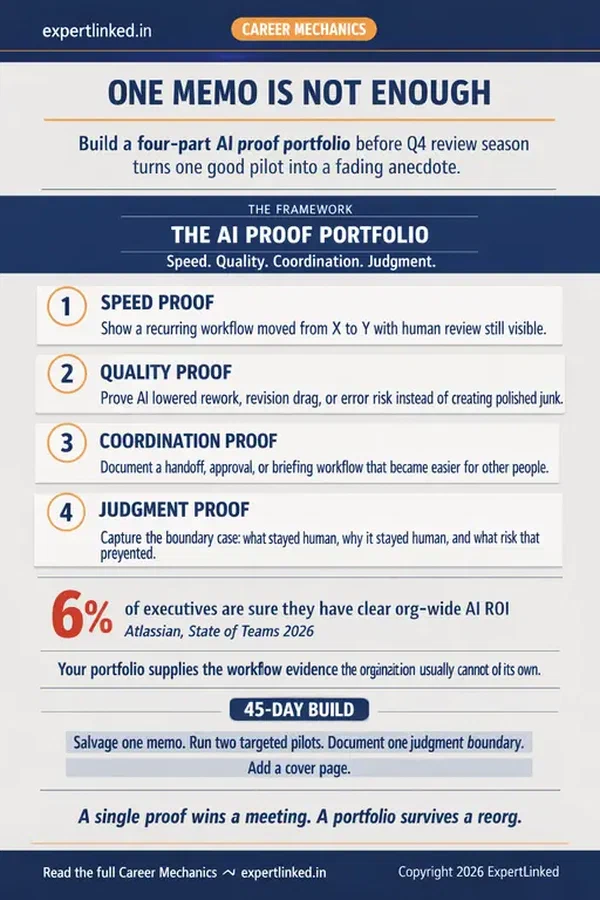
One proof memo is a data point; a portfolio of three to four across different workflows is the career artifact that survives Q4 review season and organizational change.
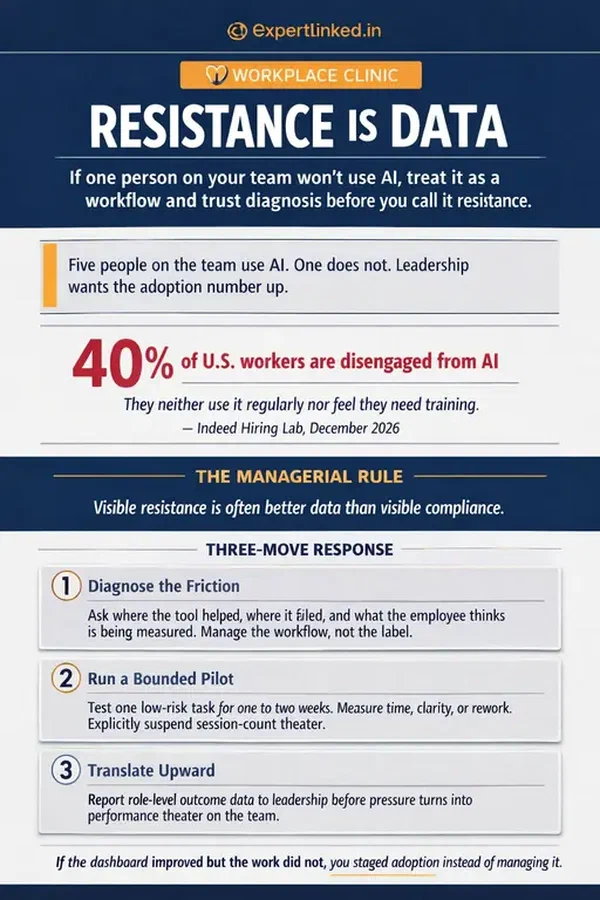
If a team member resists AI tools, manage the trust, workflow fit, and measurement problem first or you will manufacture compliance theater instead of adoption.
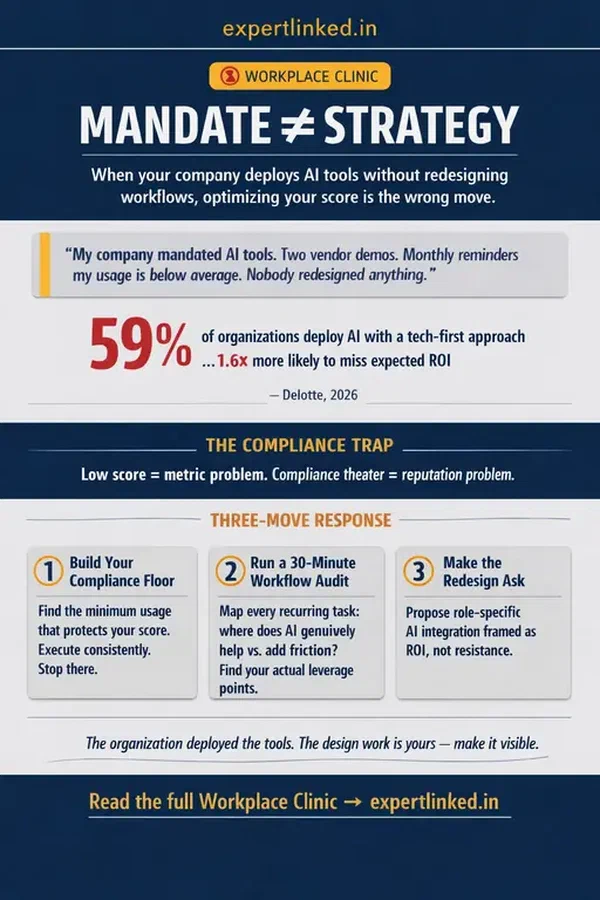
Tool deployment without workflow redesign reliably produces compliance theater — and compliance theater is more damaging to your career signals than a low adoption score.
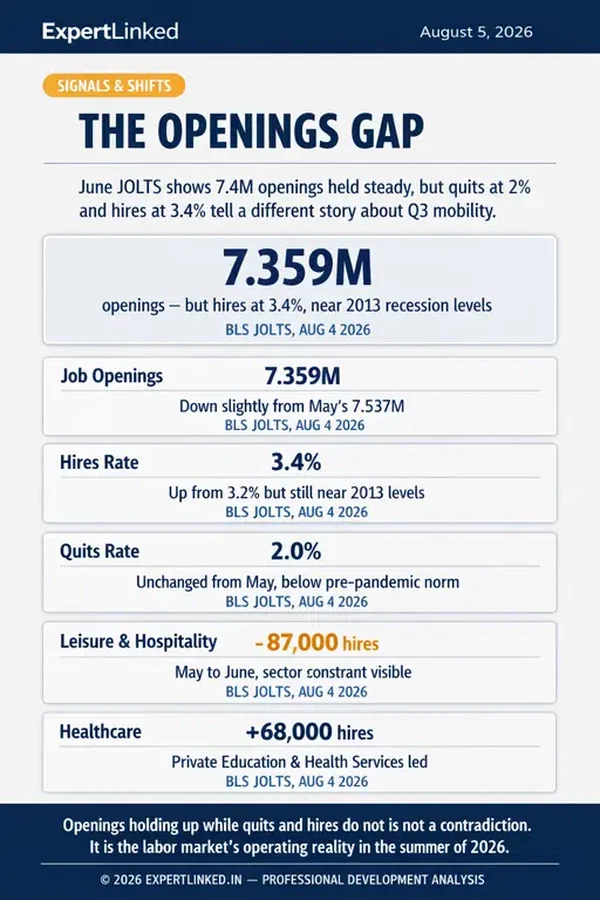
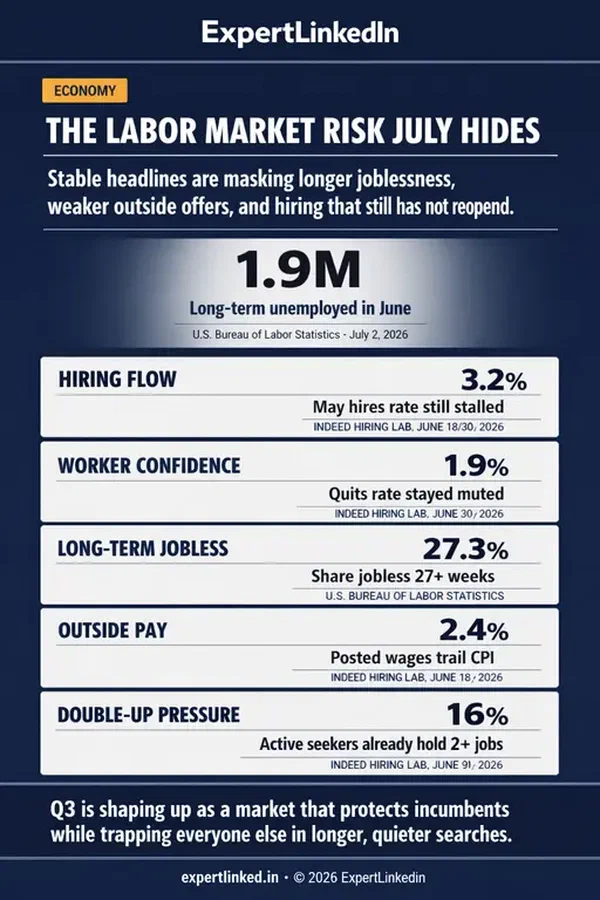
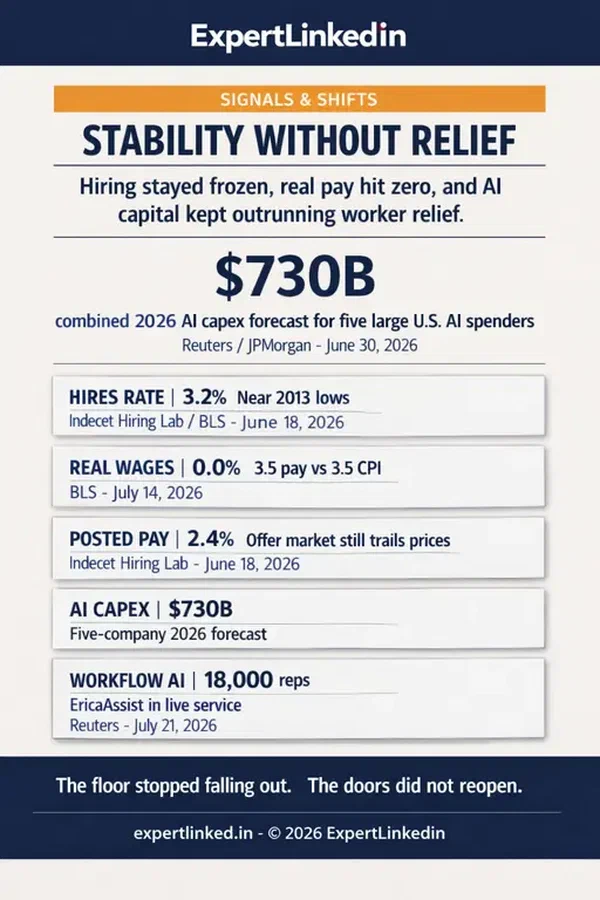
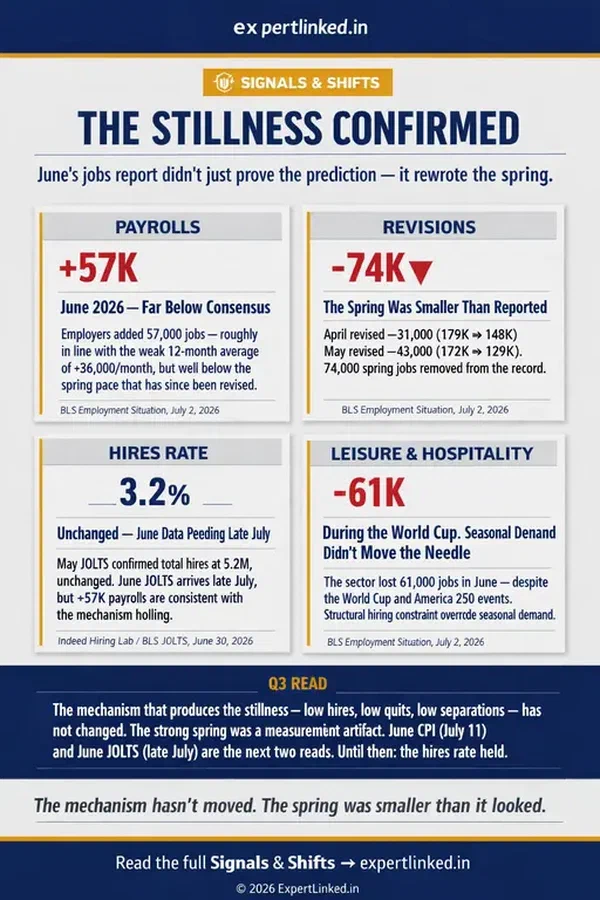
The stillness didn’t break — the ‘strong spring’ was revised down by 74,000 jobs, and June’s 57,000 payrolls confirm the hires mechanism is unchanged. Here is the precise Q3 read.
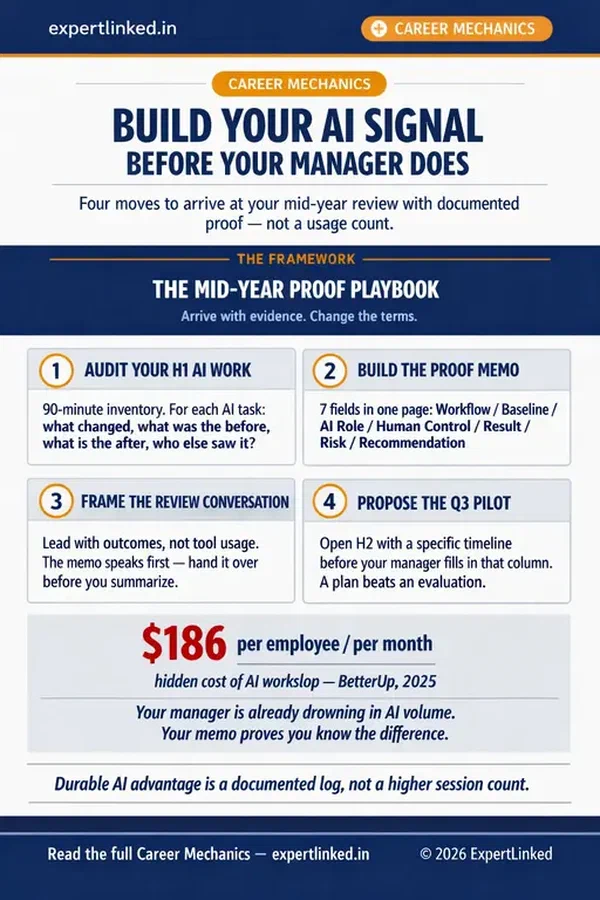
The mid-year review has changed. It’s no longer just about your output; it’s about how you orchestrate the machine that generates the output. Here is how to signal your capability before your manager scores you.
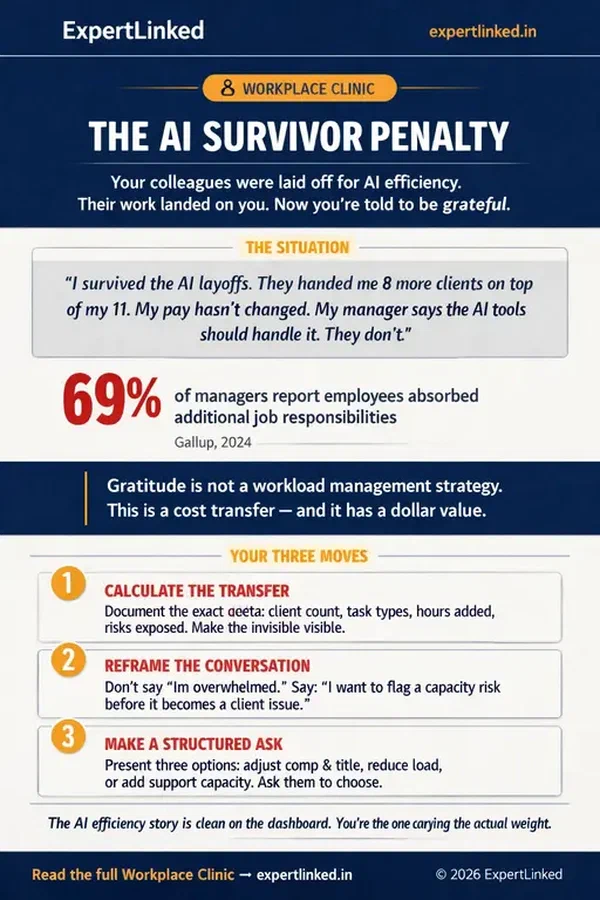
The AI efficiency dividend is being harvested by the organization, not the people who stayed. Gratitude is not a workload management strategy — here is what to do instead.
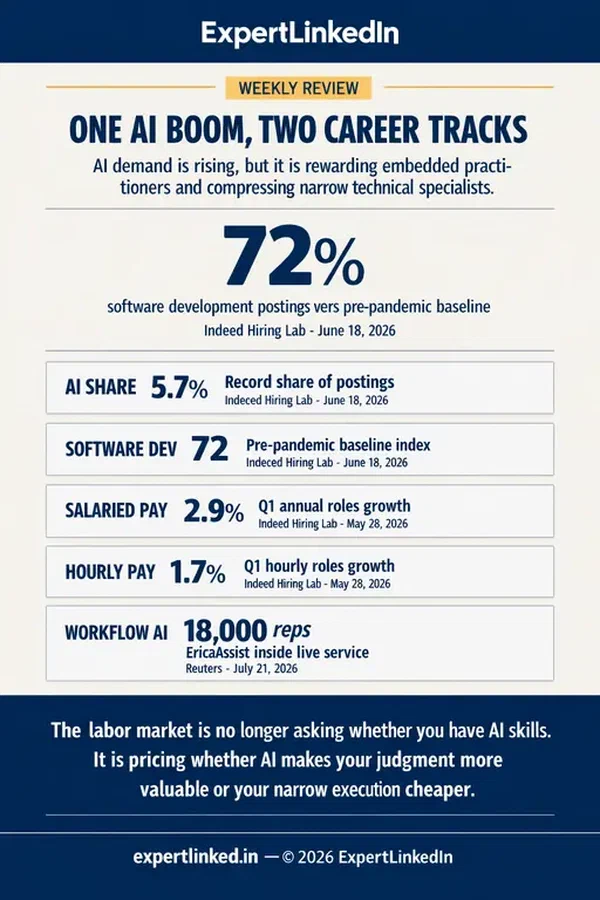
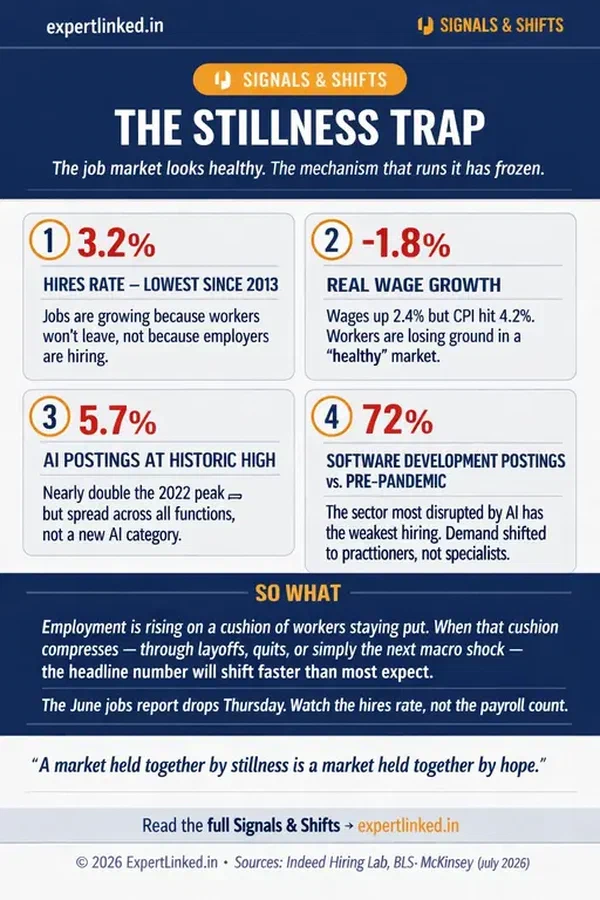
Employment is rising but hiring is not: the labor market is being held up by workers staying put, real wages just turned negative, and AI postings hit a historic high while software hiring collapsed.