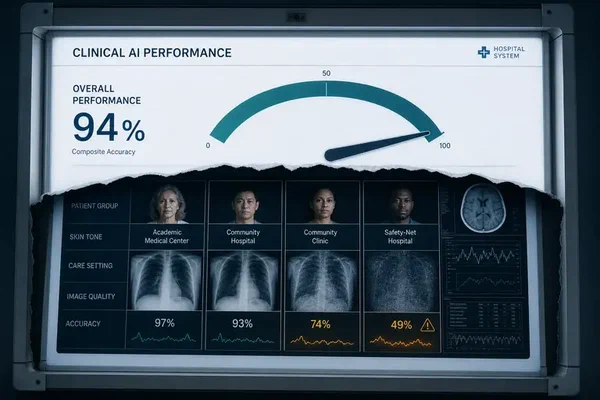
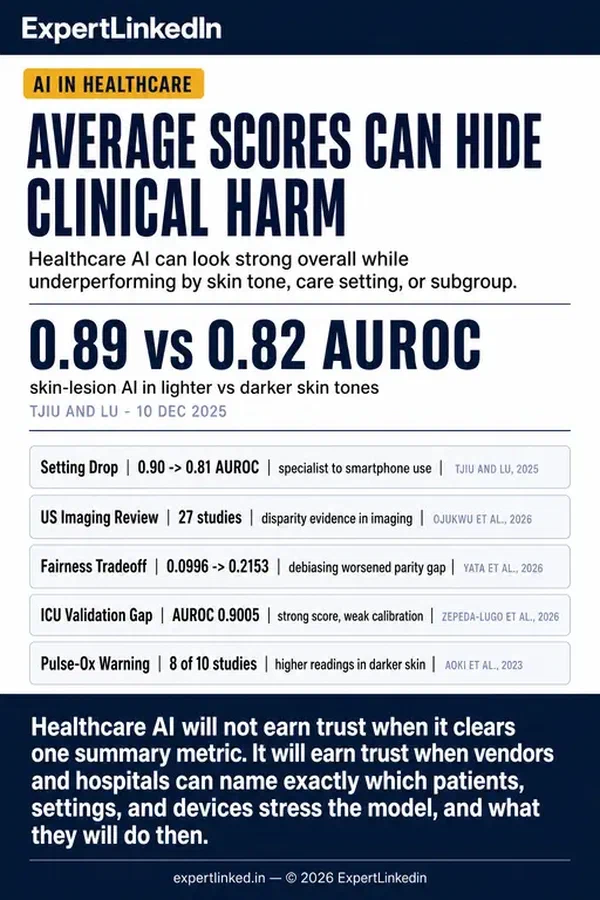
A strong average score can hide the patients and care settings where healthcare AI breaks. Skin-tone gaps, validation shortcuts, and weak postmarket monitoring make subgroup evidence more important than another headline AUROC.
A strong average score can hide the patients and care settings where healthcare AI breaks. Skin-tone gaps, validation shortcuts, and weak postmarket monitoring make subgroup evidence more important than another headline AUROC.
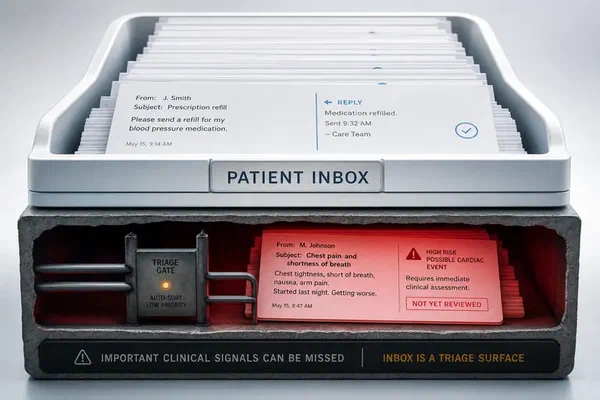
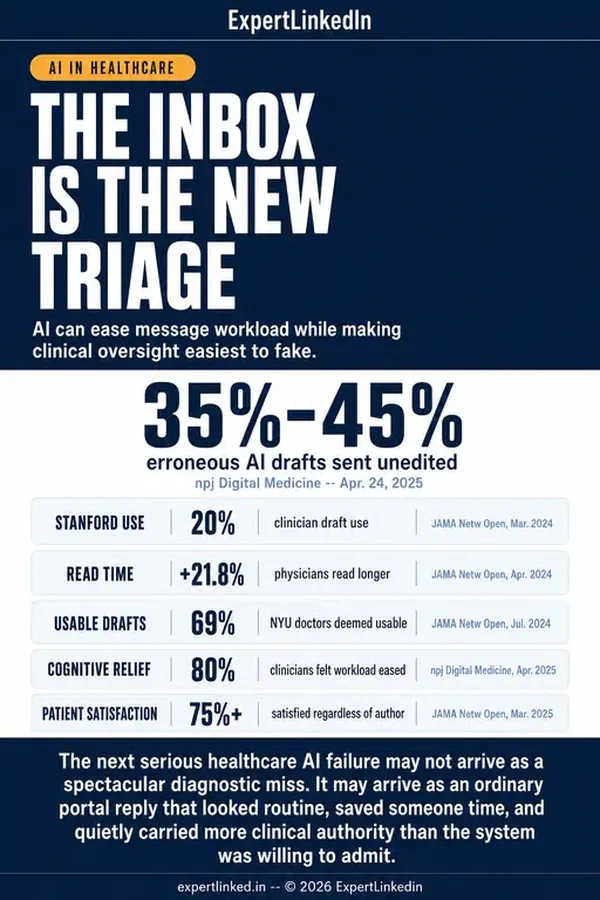
Health systems are using AI to draft patient-inbox replies to ease physician burnout. The harder 2026 question is whether the inbox is quietly becoming a clinical triage surface with too much trust and too little supervision.
Health systems are using AI to draft patient-inbox replies to ease physician burnout. The harder 2026 question is whether the inbox is quietly becoming a clinical triage surface with too much trust and too little supervision.
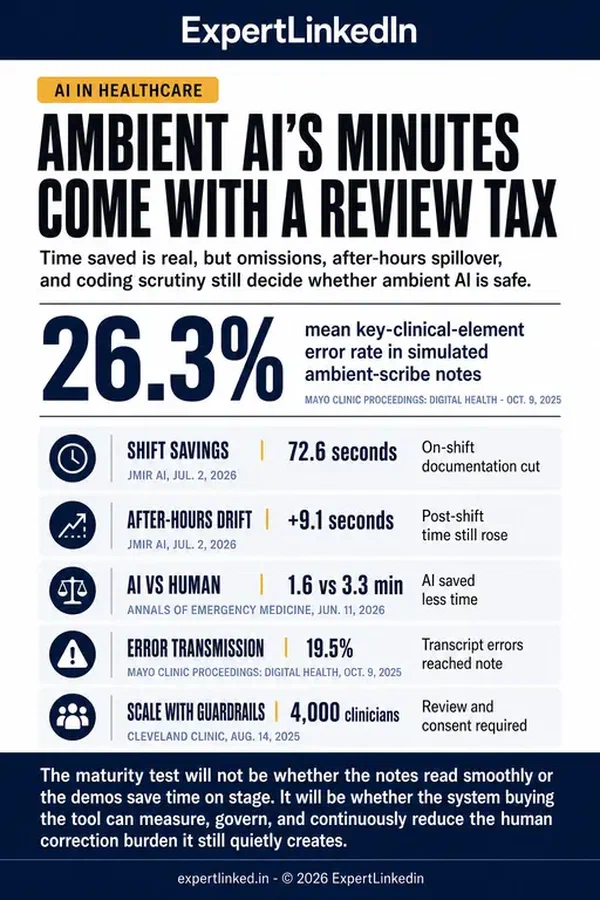
Ambient AI scribes are saving clinicians time, but the harder 2026 question is how much review, correction, and coding scrutiny their notes still demand.
Ambient AI scribes are saving clinicians time, but the harder 2026 question is how much review, correction, and coding scrutiny their notes still demand.
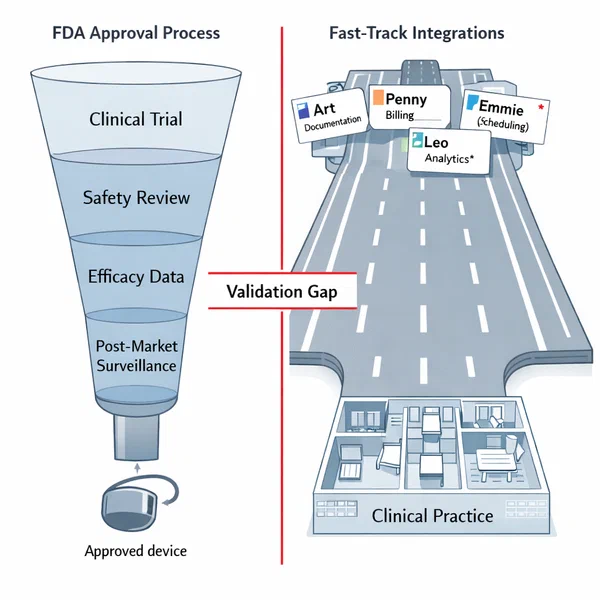
AI agents are proliferating across clinical settings faster than any validation framework can track — and a new BCBS study showing $663 million in AI-inflated billing is just the opening act.
As major AI companies race into healthcare with sophisticated tools, the critical question isn’t just capability—it’s whether innovation can coexist with the human touch that defines quality care.
Horizon 1000’s ambitious plan to bring AI to 1,000 African clinics by 2028 forces us to confront both AI’s potential and the structural inequities that threaten its success.
The January 2026 launches of ChatGPT Health and Claude for Healthcare represent both tremendous promise and serious peril for the future of AI in medicine.
Senator demands AI disclosure from Medicare insurers as Coalition for Health AI faces political attack, exposing dangerous accountability vacuum in clinical automation.
Discover how AI medical scribes are revolutionizing healthcare with $5.3 billion in funding. Learn how this technology reduces physician burnout, improves patient care, and transforms clinical documentation through innovative physician-AI collaboration.
Navigate AI ethics in healthcare by addressing algorithmic bias, ensuring transparency in medical AI decisions, and developing AI-specific consent processes that prioritize patient welfare while enabling innovation.
AI-assisted diagnostics are transforming rural healthcare by providing decision support for primary care providers, reducing specialist referral wait times from 47 to 8 days, and operating effectively without requiring cloud connectivity.
German healthcare AI implementation prioritizes patient privacy, regulatory compliance, and ethical oversight through rigorous medical device standards and systematic approaches that balance innovation with patient safety and data protection.