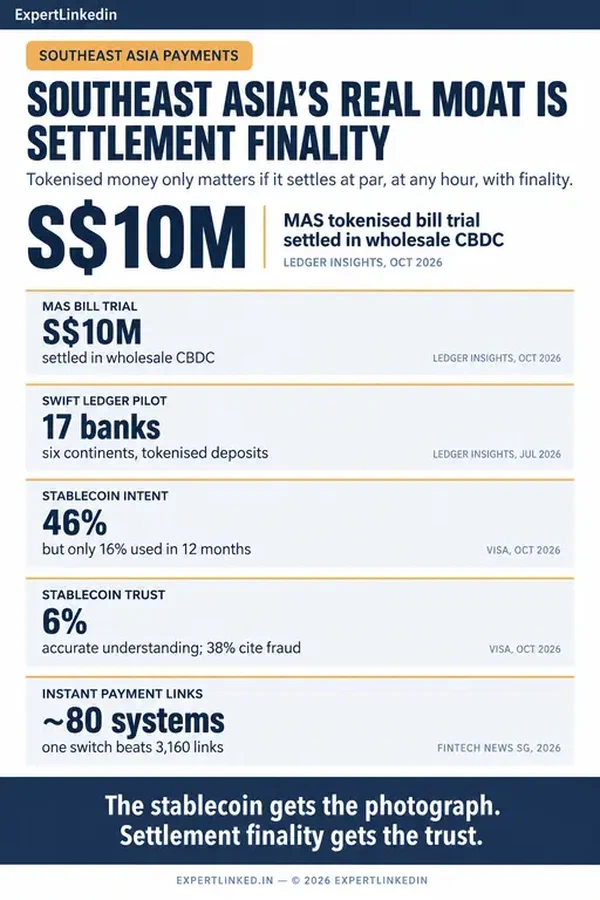
Stablecoins get the headlines, but Southeast Asia’s real fintech moat in 2026 is settlement finality: the interoperability and audit layer that lets tokenised money move between banks, currencies and ledgers. MAS’s wholesale CBDC trials, live bank tokenised deposits and Project Nexus show why.
Stablecoins get the headlines, but Southeast Asia’s real fintech moat in 2026 is settlement finality: the interoperability and audit layer that lets tokenised money move between banks, currencies and ledgers. MAS’s wholesale CBDC trials, live bank tokenised deposits and Project Nexus show why.
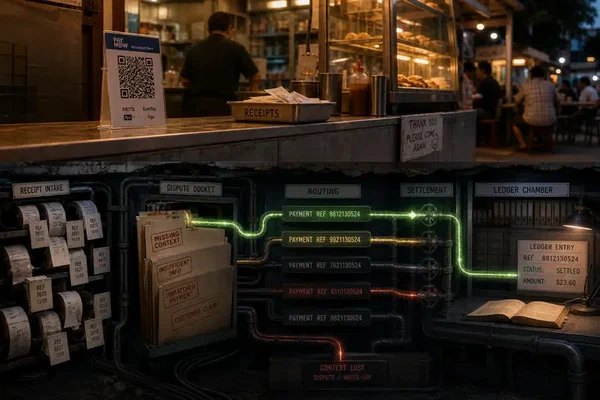
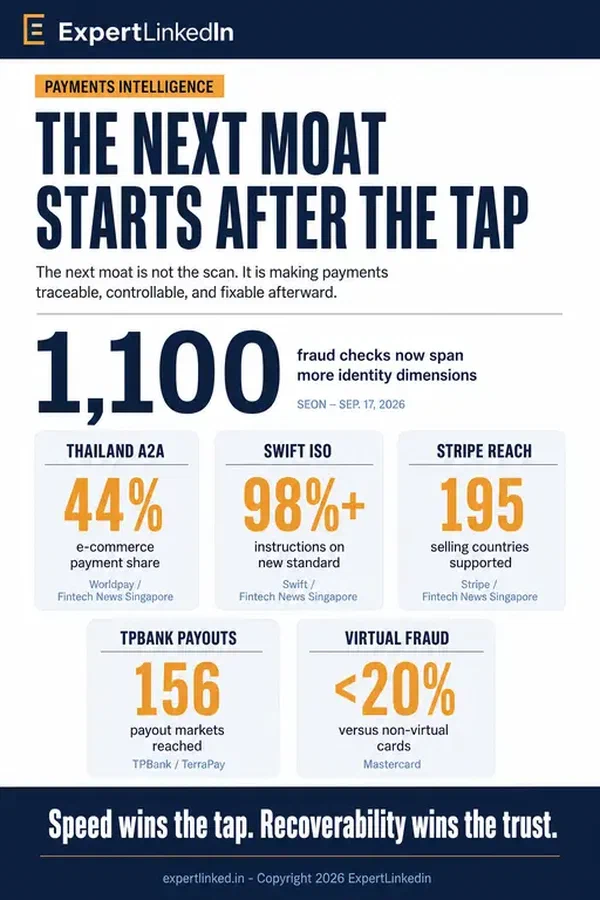
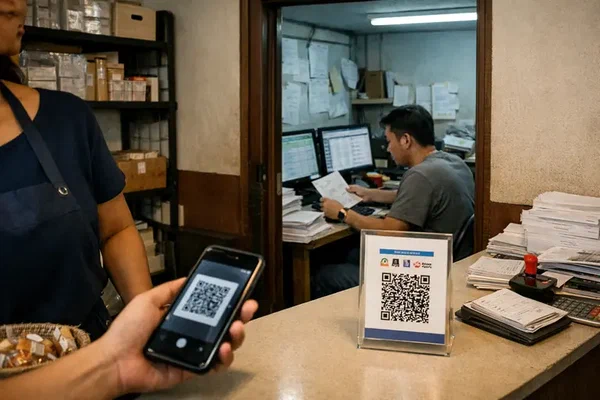
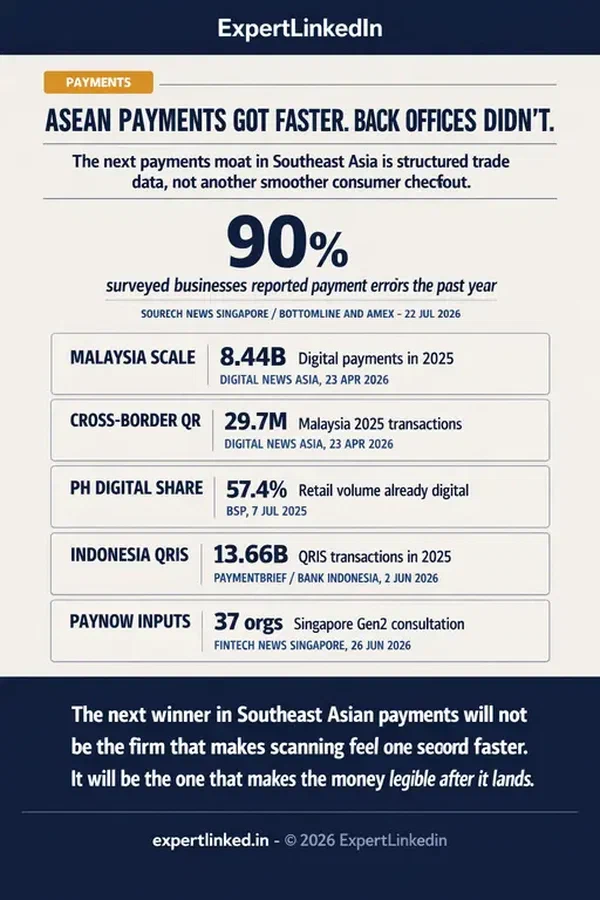
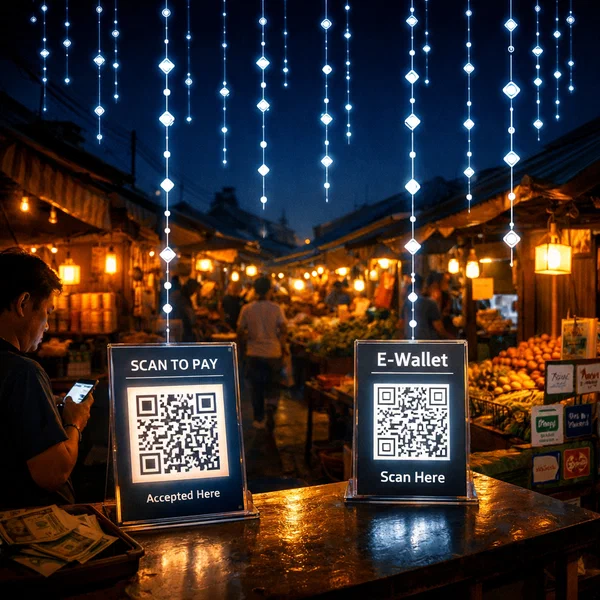
Southeast Asia already solved the consumer-facing scan. The real payments moat now is recoverability: transaction search, structured references, control layers, and 24/7 settlement that keep trust intact after money moves.
Southeast Asia already solved the consumer-facing scan. The real payments moat now is recoverability: transaction search, structured references, control layers, and 24/7 settlement that keep trust intact after money moves.
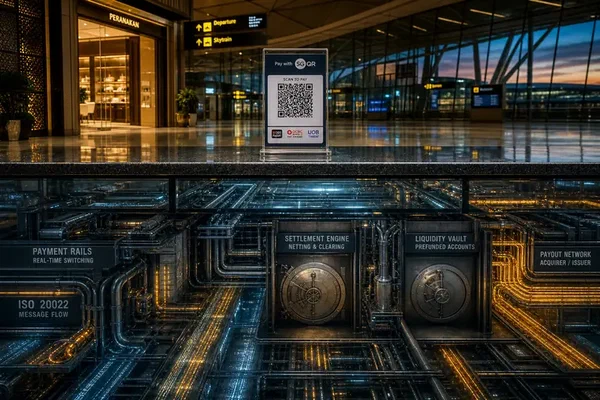
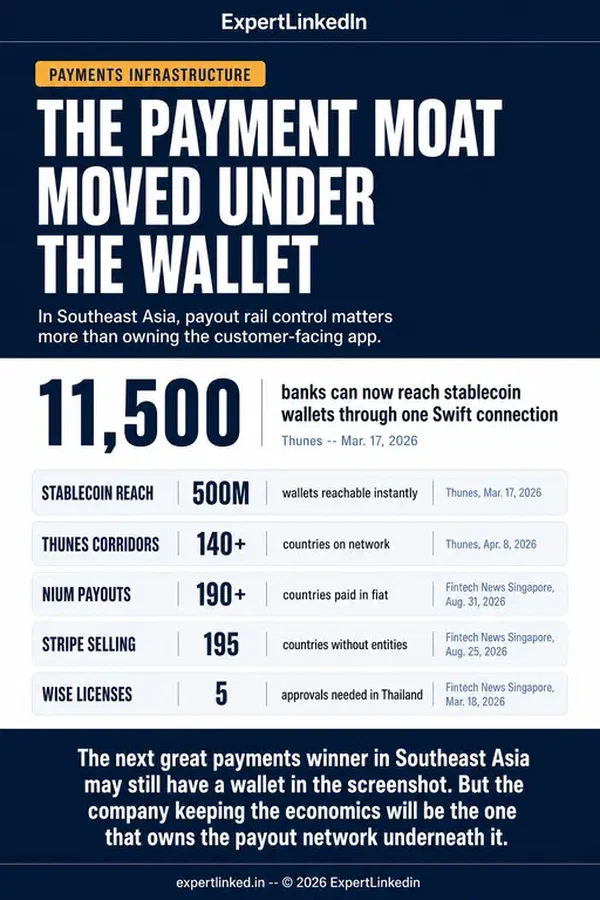
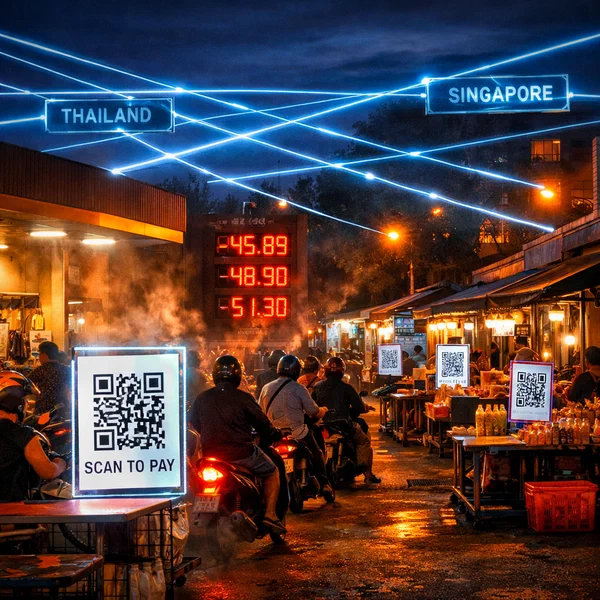
Consumer wallets still take the headline in Southeast Asia. The harder-to-copy asset now sits underneath them: licensed payout and settlement networks that move money across borders, rails, and weekends without forcing merchants to rebuild the front end.
Consumer wallets still take the headline in Southeast Asia. The harder-to-copy asset now sits underneath them: licensed payout and settlement networks that move money across borders, rails, and weekends without forcing merchants to rebuild the front end.
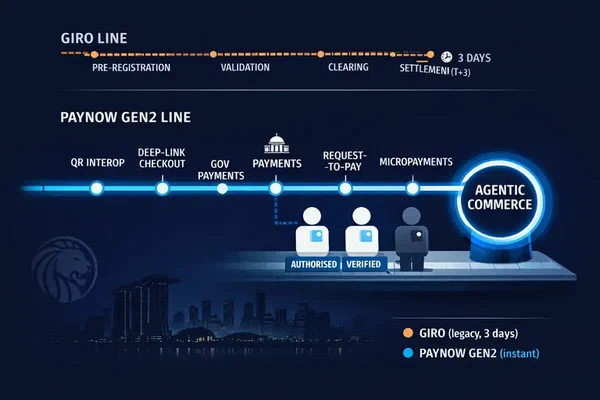
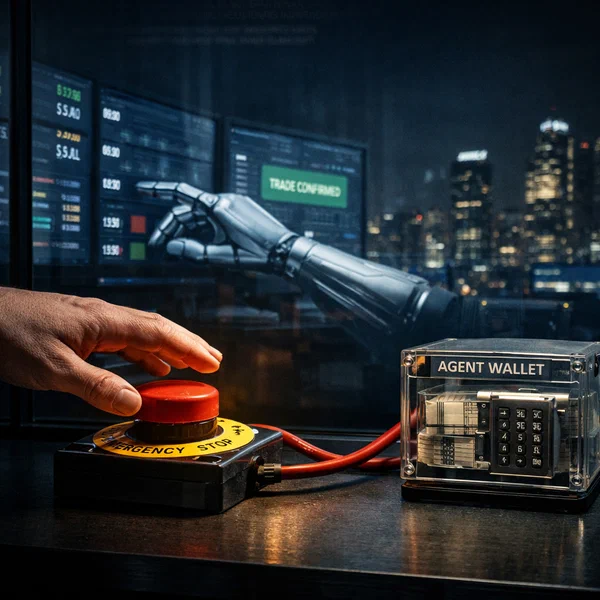
Singapore’s PayNow Gen2 isn’t just a payment upgrade — it’s the first national instant payment infrastructure explicitly designed for AI agents to transact, while the rest of the world is still writing governance papers about the problem.
This week’s most important Southeast Asia fintech story is that macro stress is turning payment infrastructure from a convenience feature into an economic resilience tool.
Agentic commerce arrived in Southeast Asia this week, and the more interesting story is what the region’s payment platforms reveal about whether they’re ready to be where the agents shop.
The tariff anniversary week that mattered wasn’t for what it revealed about factories. It was for what it revealed about the alternative architecture Southeast Asia has been quietly building.
The week stablecoins became boring, Vietnam asserted control over $200 billion in offshore crypto flows, and two events on the same day captured everything awkward about banking’s AI transition.