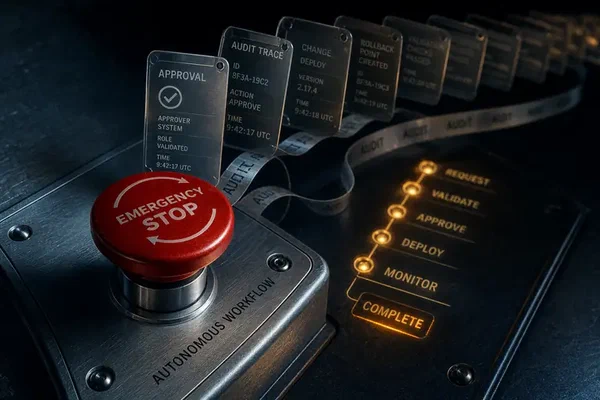
The flashiest agent demo is not the durable advantage. As AI platforms formalize confirmations, traces, and resumable tasks, the real moat is the recovery layer that pauses bad runs before they become user harm.
Most review packets fail because they show effort and force a sponsor to rewrite the case. This four-page Q4 2026 evidence packet helps you prove consequence, compare scope, and make promotion or pay conversations easier to carry upward.
The most dangerous KPI shift is often the one nobody announces. A temporary summer workaround can quietly become your Q4 review baseline unless teams separate exceptional effort from sustainable role scope.
Digital wallets already won the screenshot in Southeast Asia. The harder fight for digital banks now is becoming the place salary lands, savings stay, and customers buy their second and third financial product. Trust, MariBank, Revolut, and GXS show why the next moat is a primary-money relationship, not another app install.
The August jobs report sounded better. The July JOLTS data did not. Together, they describe a market that is stable for employers and still frozen for workers — fall optimism that is real for one side and mostly theoretical for the other.
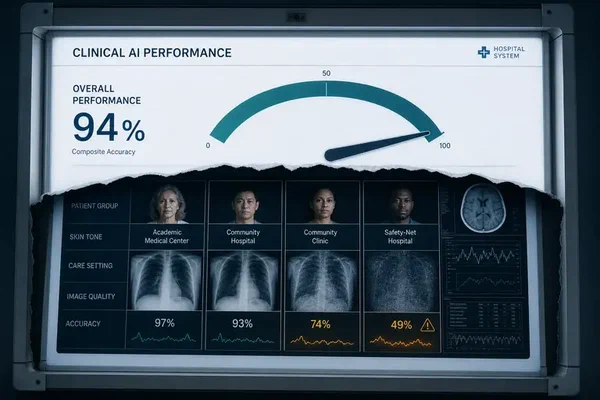
A strong average score can hide the patients and care settings where healthcare AI breaks. Skin-tone gaps, validation shortcuts, and weak postmarket monitoring make subgroup evidence more important than another headline AUROC.
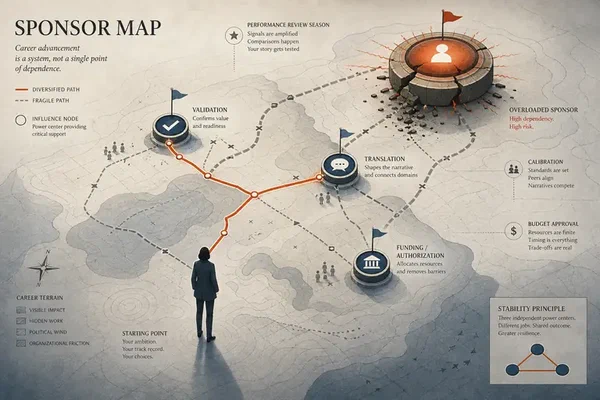
One supportive manager is rarely enough. Before Q4 review season, map who can validate your work, translate your case across the organization, and fund the move so your next step is not trapped in one relationship.
The first week back from vacation is usually a backlog-clearing sprint, not proof of sustainable capacity. If your team treats that burst as September’s new baseline, here is how to reset expectations before helpful overperformance becomes policy.
Malaysia no longer has to prove it can attract chip plants. With exports up 50% and RM91.9 billion approved since 2024, the harder test is whether Penang and Kulim can build enough local design, supplier, packaging, and talent depth to keep more value when tariffs and bottlenecks hit.
July JOLTS kept the labor market in low-hire, low-fire mode. The number to ignore is the headline; the signal to watch on Friday is whether job growth broadens beyond the same narrow pockets.
Consumer wallets still take the headline in Southeast Asia. The harder-to-copy asset now sits underneath them: licensed payout and settlement networks that move money across borders, rails, and weekends without forcing merchants to rebuild the front end.
Most readers do not need to panic or quit. They need to pressure-test whether their current role has real sponsor strength, Q4 budget relevance, and portable proof before September accelerates.
In Q3 2026, the most important labor market for many professionals is inside the firm. Scope authorship, workflow proof, and legible risk reduction now matter more than waiting for an external posting.
August’s strongest labor, management, and AI spending signals all pointed to one conclusion: career leverage is being allocated inside firms before public hiring catches up.
Coming back to a ’new setup’ is one of the easiest ways organizations turn temporary changes into permanent scope. Here is how to surface what shifted, reopen the authority conversation, and stop Q4 from recording your reentry triage as your new job.
The AI career pivot many companies need is not a new model expert. It is the mid-career translator who can turn messy handoffs, exception queues, and governance gaps into a real role before the org chart knows what to call it.
A bigger context window will not save your agent. Once it starts carrying user preferences, tool outputs, and half-finished tasks across turns, memory becomes a product, audit, and governance surface.
Health systems are using AI to draft patient-inbox replies to ease physician burnout. The harder 2026 question is whether the inbox is quietly becoming a clinical triage surface with too much trust and too little supervision.
AI did not remove friction from hiring. It moved the cost of trust onto candidates through AI interviews, work samples, and verification loops that reward time, money, and calm as much as merit.
Most internal moves stall on sponsor friction, not talent. A one-page business case turns proof, scope, and timing into a manager-carryable Q4 decision.
If the deadline is yours but the tradeoffs, approvals, and staffing decisions are not, you are not just overloaded. You are carrying governance debt. Here is how to surface the authority gap before Q4 turns it into your permanent operating model.
Most B2B teams still judge LinkedIn company pages by reach. In an AI-mediated, zero-click funnel, the better test is whether the page holds enough proof to validate what buyers hear elsewhere before they ever visit your site.
If you are waiting for the July FOMC minutes to rescue fall hiring, you are watching the wrong document. Q2 earnings already showed where the money is going and why headcount approvals still look narrow.
Computer-use agents are improving fast, but the teams that win will not be the ones with the prettiest browser demo. They will be the ones that turn critical actions into explicit contracts, scoped authority, and agent-ready workflows.
A composite August 2026 career story about an operations professional who turned summer stretch work into a workflow audit, a one-page proposal, and an internal move before the formal title existed.
If your employer can interrupt you anytime but you cannot go unavailable without reputation cost, that is not flexibility. It is always-on work in softer language. Here is the clinical read and the three-move response before September turns it into policy.
Southeast Asia’s AI build-out is colliding with a physical constraint the hype cycle keeps understating: reliable power. Johor, Vietnam, and Indonesia show that the next winners will be the markets that can turn electricity, grid access, and carbon discipline into predictable industrial capacity.