May 2026 confirmed what the data has been building toward for months — AI is pulling up the bottom rungs of the career ladder while demographics and immigration are simultaneously constructing a supply wall at the other end.
If people keep cutting you off, the issue is not just courtesy—it is a visibility system problem you can redesign with scripts, structure, and follow-through.
Foreign talent interest in the US has collapsed to a six-year low while employers triple their visa sponsorship offers, Baby Boomer retirements are set to pull 5.9 million workers from the market by 2032, and AI is disrupting the wrong sectors — together these three forces are constructing a supply wall that demands new career positioning now.
LinkedIn’s real 2026 shift is that trust has moved from a soft brand idea into an operational system that rewards teams who can prove capability, not just publish content.
Management transitions are accelerating across every level of the org chart, and the professionals who treat each one as a strategic reset — rather than a waiting game — are building the career capital that internally-promoted C-suite leaders have always held.
When your manager takes credit for your work, the real threat isn’t the stolen praise — it’s the growing invisibility that quietly derails your career trajectory.
This week’s layoffs-and-capex cycle reveals that AI workforce risk is less about automation magic and more about who gets to convert labor budgets into infrastructure bets.
This week’s labor data shows a quiet freeze—headline stability with uneven opportunity—making role-specific market mapping and AI-visible proof work the highest-leverage moves right now.
This week’s clinical AI milestones reveal a structural fault line: the capability to transform global healthcare now exists, but the market will not deploy it where the need is greatest.
This week’s biggest Southeast Asia stories show a region attracting capital at scale while still struggling to keep enough value, capability, and resilience at home.
New research shows that 92% of executives fail the one behavioral test most likely to determine whether they get promoted — and most of them have no idea they’re failing it.
LinkedIn’s newest agency credential matters less as a badge and more as a signal that trust on the platform is being formalized, scored, and monetized end to end.
Microsoft’s own security team just found critical RCE in Microsoft’s own AI agent framework. The same flaw pattern shows up in Semantic Kernel, Claude Code, CrewAI, and LangChain. It is not a coincidence — it is a shared architectural assumption that was always wrong.
This week’s labor data points to a three-speed market where healthcare concentration, worker-share compression, and AI-skill demand gaps require different career moves.
Southeast Asia’s biggest economic stories this week share one pattern: governments are no longer just inviting capital — they are redesigning where margins sit.
The managers gaining leverage in 2026 are not the ones supervising more status updates; they are the ones who can still do the work, redesign the workflow, and improve decisions.
The career break is the most misunderstood credential in modern work — and a growing movement of employers, organisations, and relaunchers are finally correcting that.
Ambient AI scribes are not creating a winner-take-all model race in healthcare; they are creating a governance-and-infrastructure race that most systems still underestimate.
The Musk v. OpenAI trial produced in one week what three years of voluntary governance frameworks could not: forced disclosure of training practices, private beliefs about AGI, and the structural arms-race dynamic that makes individual restraint impossible.
March 2026’s JOLTS numbers look flat at the headline, but sector-level and experience-level data reveal a three-way fracture splitting by industry, career stage, and AI-skill possession.
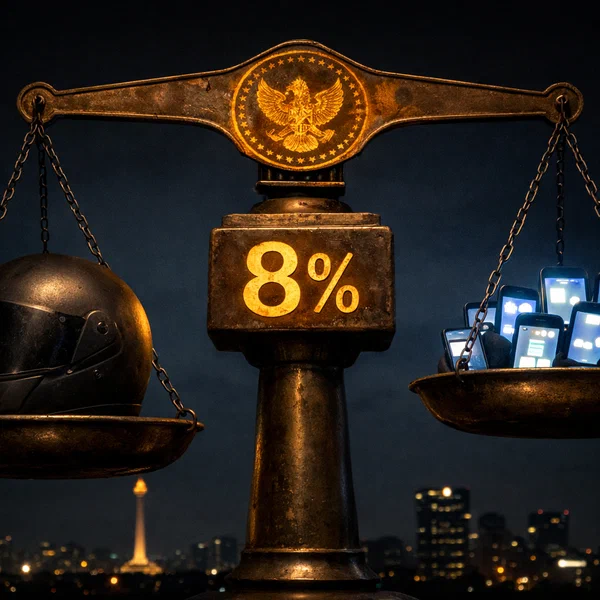
Prabowo’s 8% commission cap is a labor story on the surface. Underneath it is a systematic nationalization of value capture in Indonesia’s platform economy — and Danantara’s dual role as owner and regulator is the most consequential development in SEA tech this year.
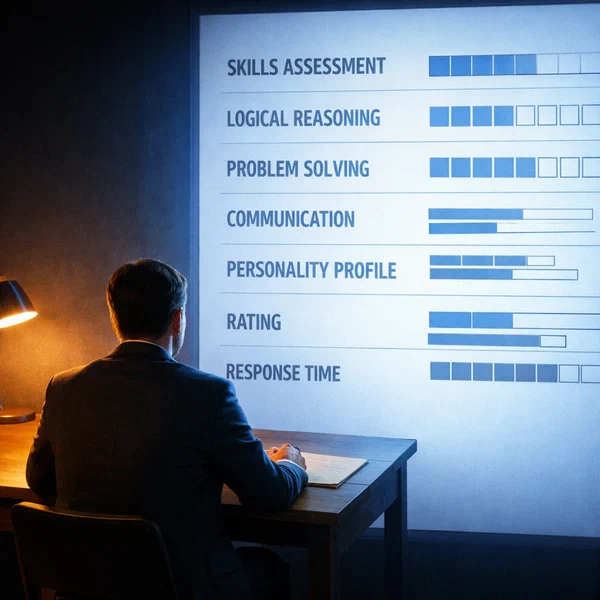
Nearly two-thirds of US job seekers have already sat through an AI interview, yet almost no one is preparing for it differently from a human interview — and that gap is costing candidates offers.
ClawSwarm, RAG poisoning, and the Cursor-Opus production database deletion all happened this week — and none of them triggered a security alert, because none of them involved malicious code.
The AACR 2026 AI pathology revolution promises to turn penny-cheap H&E slides into precision oncology tools for the whole world. The problem: the models were built on data from the world’s wealthiest hospitals.
Beneath April 2026’s flat hiring headlines, three structural currents are rewriting employment composition, shifting leverage firmly to employers, and automating the hiring pipeline itself.