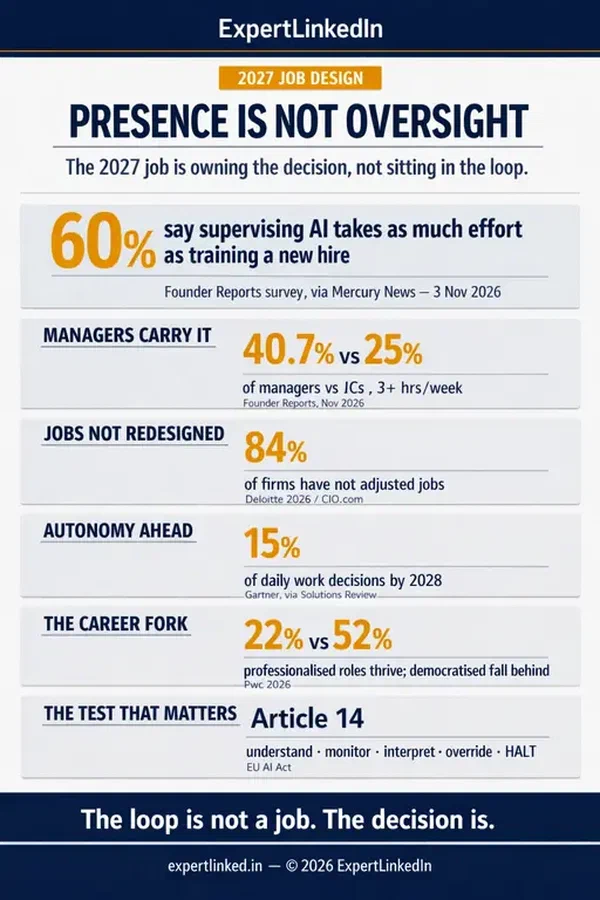
‘There will still be a human in the loop’ is how companies claim to govern AI. But presence is not oversight. As AI takes the execution, the 2027 job is to own the decision — with the authority to halt, the time to judge and the funded competence to be accountable, not to absorb the blame.
‘There will still be a human in the loop’ is how companies claim to govern AI. But presence is not oversight. As AI takes the execution, the 2027 job is to own the decision — with the authority to halt, the time to judge and the funded competence to be accountable, not to absorb the blame.
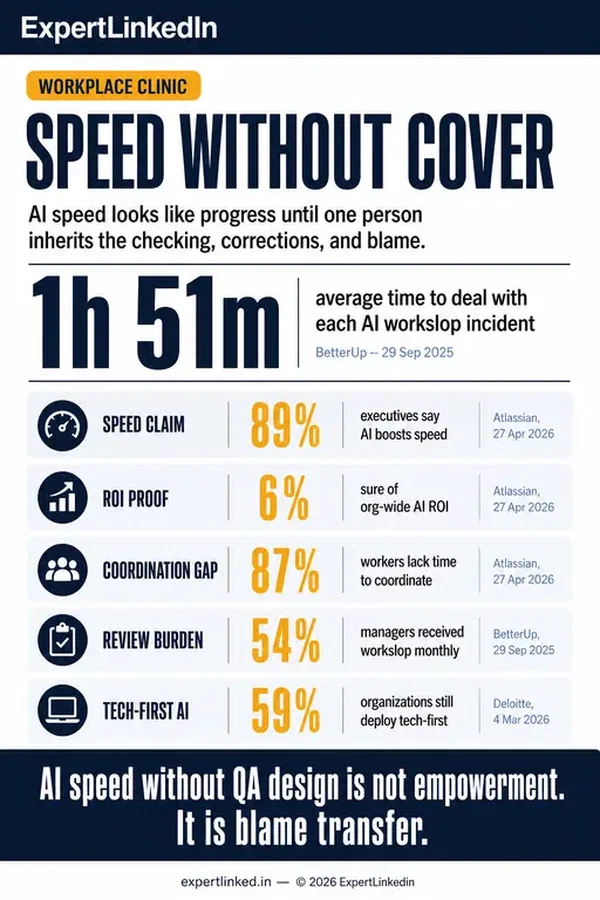
AI can make a team look faster while quietly pushing the checking, corrections, and reputational risk onto one person. Before Q4 reviews lock that arrangement in, you need a clearer QA line, a workload trade-off, and a manager who will own the risk with you.
AI can make a team look faster while quietly pushing the checking, corrections, and reputational risk onto one person. Before Q4 reviews lock that arrangement in, you need a clearer QA line, a workload trade-off, and a manager who will own the risk with you.
Insurance giants, safety researchers, and employees are converging on the same conclusion: AI deployment is outpacing our ability to manage its risks responsibly.
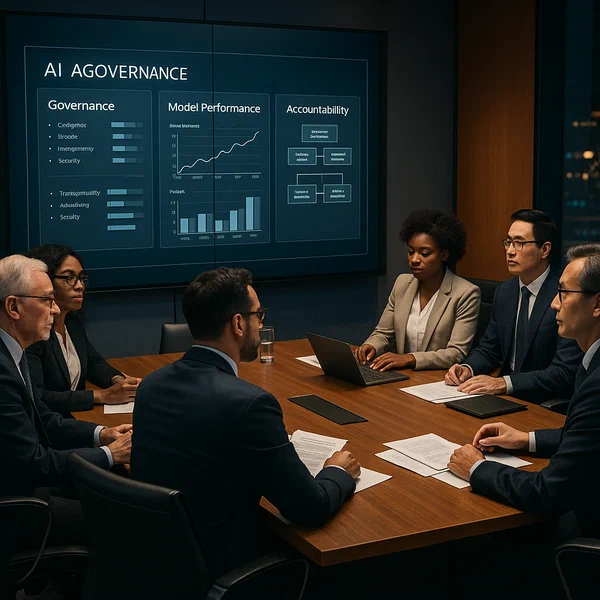
Effective AI model governance requires moving beyond compliance checklists to create accountability frameworks that embed ethical considerations throughout the AI lifecycle while maintaining operational agility.