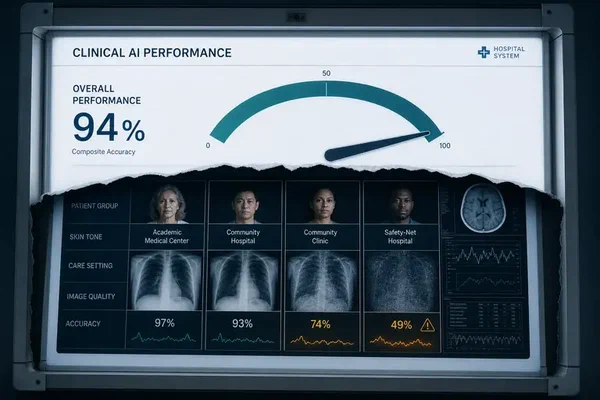
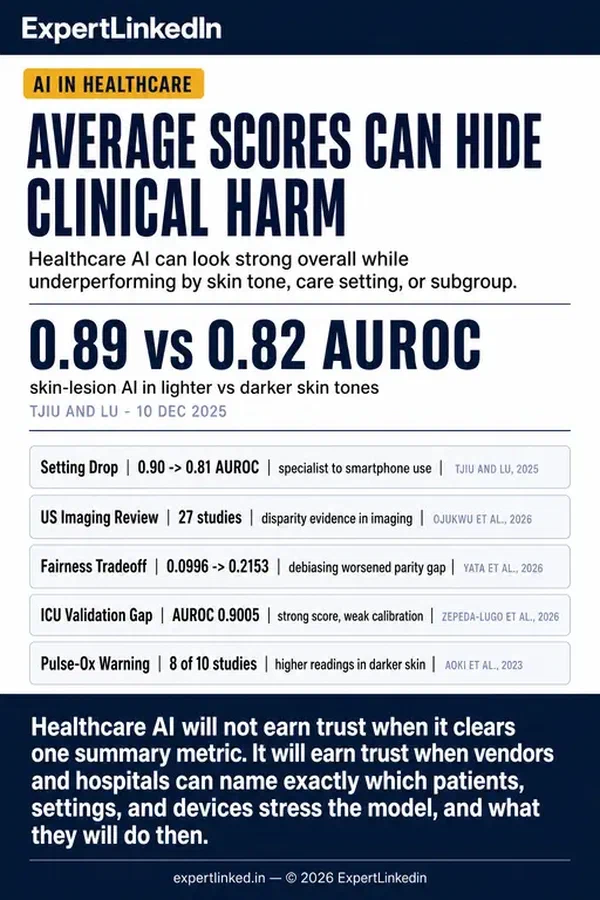
A strong average score can hide the patients and care settings where healthcare AI breaks. Skin-tone gaps, validation shortcuts, and weak postmarket monitoring make subgroup evidence more important than another headline AUROC.
A strong average score can hide the patients and care settings where healthcare AI breaks. Skin-tone gaps, validation shortcuts, and weak postmarket monitoring make subgroup evidence more important than another headline AUROC.
The explosion of AI tools in medical imaging reveals a critical validation gap—innovation velocity is outpacing clinical evidence, creating challenges for patient care and radiologist workflows.
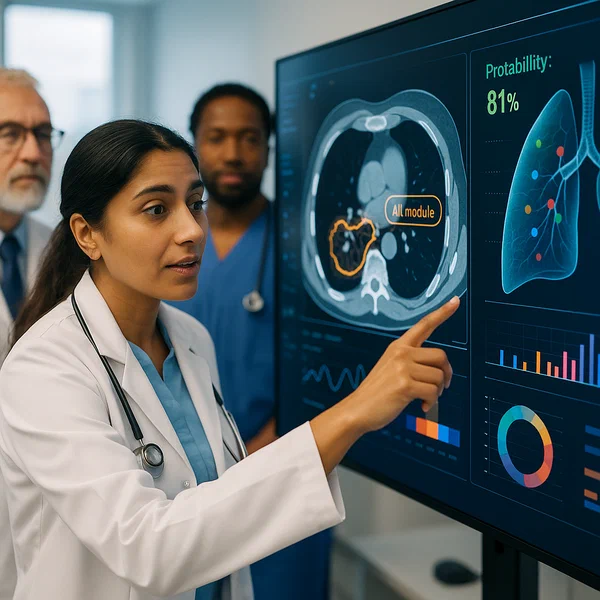
AI-powered early disease detection systems are revolutionizing preventive healthcare by identifying diseases years before traditional methods, but successful implementation requires addressing algorithmic bias, clinical integration challenges, and maintaining the essential human element in medical care.