AI Promised to Fix Burnout. Instead, It Invented a New Kind.

Here’s the headline your AI vendor would love you to see: burnout risk in the workplace has fallen 22%, to its lowest level in years. Clean number. Great story. Time to celebrate.
Here’s the headline buried three pages into the same dataset: disengagement risk just jumped to 23% of employees, focused work time has hit a three-year low, and your workforce is now starting productive work on Sundays at 10:58 a.m. — almost an hour and a half earlier than three years ago.
Both numbers are real. They come from ActivTrak’s 2026 State of the Workplace report, which analyzed 443 million hours of digital work activity across 1,111 organizations and 163,638 employees. Together they reveal something more uncomfortable than the old burnout story: we haven’t fixed the problem. We’ve reorganized it. Burnout is now wearing a productivity costume, and most leaders have no idea.
The Treadmill Got Faster #
The promise was simple: AI absorbs the repetitive work, humans do the meaningful work, everyone breathes more. Eric Yuan, Zoom’s CEO, predicted it would enable three- to four-day workweeks. Demis Hassabis, Google DeepMind’s chief, spoke of a “golden era” of superhuman workers. The consulting decks were full of charts showing hours freed.
The actual numbers tell a different story. After organizations adopted AI tools, time spent across work applications — every single one — increased between 27% and 346%. Email use rose 104%. Chat and messaging climbed 145%. Business management tools: up 94%. ActivTrak tracked 10,584 employees for 180 days before and after AI adoption and found zero work categories where AI reduced time spent. Not one.
Meanwhile, the average AI user lost 23 minutes of focused work per day. The share of work time spent “in the zone” fell to 60% — a three-year low. And the people who are supposedly gaining from AI? They are now starting their Saturdays at 7:11 a.m. — an hour and twenty-four minutes earlier than they did two years ago. Saturday productive hours jumped 46%. Sunday: up 58%.
This is not a productivity miracle. This is a faster treadmill with better marketing.
Brain Fry Is Now a Research Diagnosis #
The most important cognitive research emerging in early 2026 comes from Julie Bedard, a managing director and partner at Boston Consulting Group, whose team published a study in Harvard Business Review in March 2026 under the title “When Using AI Leads to Brain Fry.” What Bedard and her colleagues found is not that AI makes people work harder in the traditional sense. It is that supervising AI is a cognitively taxing activity — one that most job designs don’t account for at all.
“People were using the tool and getting a lot more done,” Bedard explained, “but also feeling like they were reaching the limits of their brain power, like there were too many decisions to make. Things were moving too fast, and they didn’t have the cognitive ability to process all the information and make all the decisions.”
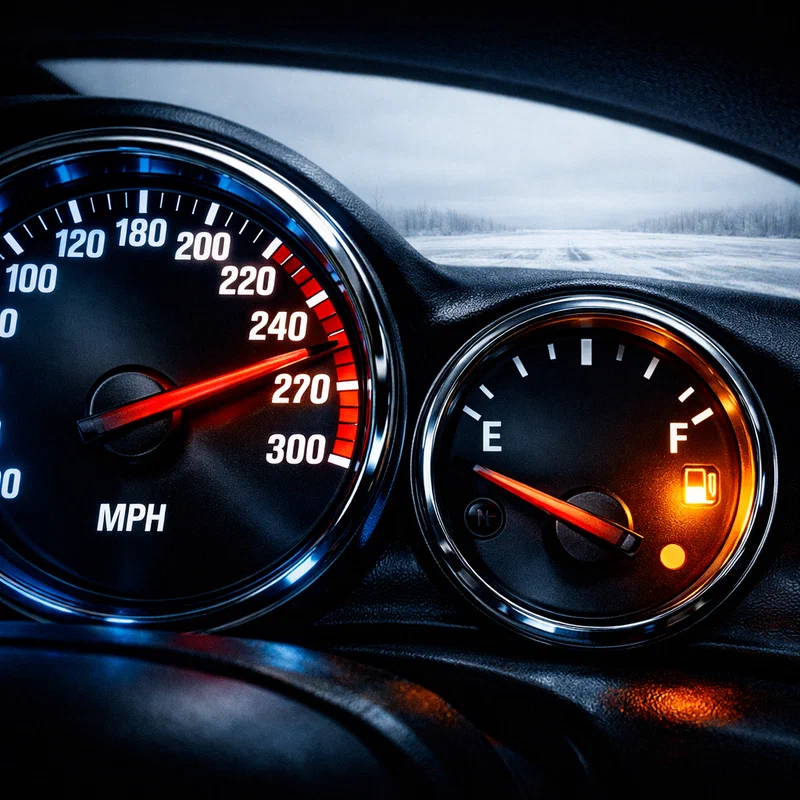
This is the mechanism that nearly every AI rollout misses. When AI takes over task execution, it doesn’t eliminate mental effort. It transfers it — from doing to verifying, from creating to checking, from thinking to supervising. Validating AI outputs, catching AI errors delivered with supreme confidence, coordinating between seven or more AI tools (the current enterprise average, up from two tools in 2023, per ActivTrak) — all of this is cognitive work. It is often more demanding than the original task, because the original task had natural pauses built in. The new task doesn’t stop.
Programmer Steve Yegge encountered this in its most concentrated form when he launched an AI platform that orchestrates swarms of Claude Code agents simultaneously, assembling software at blistering speed. An early user’s write-up captured the physical reality: “There’s really too much going on for you to reasonably comprehend. I had a palpable sense of stress watching it. It was moving too fast for me.” That stress response — watching capable systems outrun your ability to comprehend them — is precisely what Bedard’s research identifies as the signature of AI brain fry.
HRD Connect’s analysis published March 16 makes the organizational pattern explicit: companies are not returning efficiency gains to employees as breathing room. They are absorbing them into higher output expectations. The treadmill gets faster. The gym membership gets more expensive. Everyone looks fine on the dashboard.
The Metrics Are Lying to You #
I want to sit with the ActivTrak paradox for a moment, because I think it is the most revealing data point leaders are currently misreading.
Burnout risk is down 22% — to just 5% of employees. That sounds like genuine progress. And in one narrow sense, it is: traditional burnout, driven by overutilization, has genuinely decreased. Fewer people are working past their structural capacity in the ways that show up in absence data, healthcare claims, and performance reviews. That is real.
But disengagement risk has simultaneously risen to 23% of employees — nearly one in four. Weekend work has exploded. Focus efficiency has collapsed. The National Today summary of the ActivTrak findings (March 13, 2026) was direct: “There wasn’t a single activity category where using AI actually saved users time.”
What this tells me is not that organizations have solved burnout. It is that they have rotated the problem. The old burnout announced itself with missed Mondays and performance dips. The new version looks like someone who starts work two hours earlier on weekends, sends 104% more emails, and loses their capacity for uninterrupted deep thinking — all while the quarterly metrics show them as productive.
There is also a specific sweet spot that almost no one hits. ActivTrak found that employees who spend 7–10% of their total work hours in AI tools show the highest productivity of any usage tier. Only 3% of users fall within that range. The vast majority are either using AI too little to gain its benefits, or overdoing it to the point of cognitive fragmentation. No one is managing this. Leaders handed out tool licenses and declared AI transformation complete.
It Is Now a Clinical Concern #
In February 2026, University of Florida researchers Stephanie McNamara and Dr. Joseph Thornton published a formal clinical framework in the Cureus Journal of Medical Science for what they have named AI Replacement Dysfunction, or AIRD: the psychological distress linked to fear of AI-driven professional obsolescence. Symptoms include anxiety, insomnia, loss of professional identity, feelings of worthlessness, and paranoia. It does not yet have a DSM diagnosis. But it has a name now, and it has researchers behind it.
Dr. Thornton’s framing deserves to land: “AI displacement is an invisible disaster.”
An invisible disaster. That is precisely the problem. The old burnout left visible marks. This one doesn’t. And Lyra Health’s 2026 Workforce Mental Health Trends report suggests the underlying damage is already accelerating: complex mental health conditions are up 88% year over year, employee mental health decline is up 50%, and sick days tied to mental health have risen 36%. More than a third of benefits leaders say AI is already driving employee stress and job anxiety — and most organizations have not finished their AI transformation yet. “AI should be treated as a massive change-management initiative,” says Joe Grasso, Lyra’s VP of Workforce Transformation. “Without clear guidance, employees are left with the mandate to use new tools, but no roadmap. This fuels stress, uncertainty, and anxiety.”
What Leaders Must Do Differently #
I spent years leading a company that measured success in output velocity and mistook the absence of visible breakdown for genuine wellbeing. I know how seductive clean metrics can be. I also know what happens when you manage to the dashboard instead of to the people behind it.
Here is what the current evidence demands:
Measure cognitive load, not just output. Your dashboards track tasks completed, not mental bandwidth consumed. If you cannot articulate how much cognitive overhead your AI deployment is adding to each role, you are managing by rear-view mirror. Ask directly, in structured check-ins: is AI making your thinking clearer, or muddier? Is the work still leaving you with capacity to think well at the end of the day?
Protect focused work time as a non-negotiable. The ActivTrak data is unambiguous: optimal AI use sits at 7–10% of total work hours, and only 3% of users hit that range. Build explicit focus windows into team rhythms — protected hours where no tool, human or artificial, interrupts deep thinking. Treat focus time as a strategic resource, not a personal preference.
Name the weekend creep and own it as a leadership issue. Saturday and Sunday productive hours are up 40%+ across organizations. This is not discipline. It is erosion. If you are not actively monitoring and reversing the extension of work into your teams’ recovery time, you are passively endorsing it. Start times and work boundaries have to be owned by leaders — not left to individual willpower fighting institutional inertia.
Treat your AI rollout as the change-management challenge it actually is. Your people need explicit clarity on what AI means for their roles, their development trajectories, and their professional worth — not vague reassurances and mandatory tool licenses. Without that clarity, you are manufacturing the conditions for AIRD inside your own organization.
The leaders who get this right in 2026 will not be the ones who deployed AI the fastest. They will be the ones who understood that moving faster only counts if the humans behind the speed are still capable of thinking well.
Your productivity numbers may look healthy. Your people may not be. The gap between those two facts is where the real work of leadership begins.
References #
- ActivTrak Productivity Lab (2026). “ActivTrak Productivity Lab Analyzes 443M Hours of Work Activity, Revealing AI Is Accelerating Work — Not Replacing It.” https://www.activtrak.com/news/state-of-the-workplace-ai-accelerating-work/ (Accessed March 19, 2026)
- Bedard, Julie, Kropp, Matthew, Hsu, Megan, et al. Harvard Business Review (March 5, 2026). “When Using AI Leads to ‘Brain Fry’.” https://hbr.org/2026/03/when-using-ai-leads-to-brain-fry (Accessed March 19, 2026)
- HRD Connect (March 16, 2026). “Is AI Helping Burnout or Quietly Making It Worse?” https://www.hrdconnect.com/2026/03/16/is-ai-helping-burnout-or-quietly-making-it-worse/ (Accessed March 19, 2026)
- National Today (March 13, 2026). “AI Increasing Workloads, Not Reducing Them, Studies Show.” https://nationaltoday.com/us/dc/washington/news/2026/03/13/ai-adoption-strains-employees-not-reduces-workloads/ (Accessed March 19, 2026)
- McNamara, Stephanie and Thornton, Joseph, M.D. (February 2026). “AI Replacement Dysfunction (AIRD): A Call to Action for Mental Health Professionals in an Era of Workforce Displacement.” Cureus Journal of Medical Science. https://news.ufl.edu/2026/02/ai-jobs-mental-health/ (Accessed March 19, 2026)
- Lyra Health (November 11, 2025). “2026 Workforce Mental Health Trends.” https://www.lyrahealth.com/blog/workforce-mental-health-trends-2026/ (Accessed March 19, 2026)
- Yegge, Steve / DoltHub (January 15, 2026). “A Day in Gas Town.” https://www.dolthub.com/blog/2026-01-15-a-day-in-gas-town/ (Accessed March 19, 2026)
AI-Generated Content Notice
This article was created using artificial intelligence technology. While we strive for accuracy and provide valuable insights, readers should independently verify information and use their own judgment when making business decisions. The content may not reflect real-time market conditions or personal circumstances.
Related Articles
Quiet Cracking: The Silent Workplace Crisis That's Already Inside Your Team
Quiet cracking is the hidden erosion of workplace satisfaction affecting more than half of …
The Burnout-Engagement Paradox: Why Your Most Productive Employees Are Quietly Cracking
82% of employees report burnout while engagement metrics hold steady—revealing a dangerous …
Building Change-Resilient Teams Without Burning Out: A Sustainable Approach to Ungovernable Change
In an era of ungovernable change, the most effective leaders build resilient teams through …