When Ethics Costs You Everything: The Anthropic-Pentagon Dispute and the Future of Responsible AI

On February 27, 2026, something happened that many of us working in AI ethics thought would remain in the realm of theoretical debate. A major American AI company was formally declared a national security supply chain risk—not because it had been hacked by a foreign adversary, not because its technology had been stolen, but because it refused to remove its own safety guardrails.
Anthropic, the company behind the Claude AI model and long considered an industry leader in “safety-first” AI development, had spent months negotiating the terms under which the U.S. military could use its models. CEO Dario Amodei drew two lines: Claude would not be used for mass surveillance of American citizens, and it would not be deployed as part of fully autonomous weapons systems—those that can select and engage targets without any human in the loop. These were not unreasonable positions. They were, in fact, the exact restrictions that multiple arms control frameworks and international legal experts have called for.
The Pentagon said no. Then Secretary Pete Hegseth declared Anthropic a supply chain risk, a designation previously reserved for foreign adversary-linked vendors like Huawei. Every defense contractor was notified: stop using Anthropic’s products for military work, or lose your Pentagon business.
The Dispute in Full #
To understand why this matters beyond the headlines, it helps to understand what actually happened in the weeks before the formal blacklisting.
Claude had become deeply embedded in U.S. classified military operations. Through an integration with Palantir, it was already being used in defense intelligence workflows. According to investigative reporting, the model was reportedly integrated into tools used during the U.S. military raid targeting Venezuelan president Nicolás Maduro in February 2026, and the Washington Post later reported it was being used in the Pentagon’s Iran campaign at the very moment the blacklisting took effect.
The $200 million contract between Anthropic and the DoD had originally been awarded in July 2025—with Anthropic’s ethical restrictions explicitly accepted. But in January 2026, the Pentagon issued a new AI Strategy memorandum that directed all DoD contracts to include “any lawful use” clauses within 180 days. That memo contained a sentence that deserves to be read slowly: the DoD “must accept that the risks of not moving fast enough outweigh the risks of imperfect alignment.”
Anthropic refused to sign the revised contract. On February 26, Amodei posted a public statement to what the Trump administration had rebranded the “Department of War” (formerly the Department of Defense), explaining that while the company respects the military’s right to make its own operational decisions, “in a narrow set of cases, we believe AI can undermine, rather than defend, democratic values.” The response from Pentagon Chief Technology Officer Emil Michael was to call Amodei “a liar” with “a God-complex” in an official social media post. President Trump then announced a government-wide ban. And by the time the negotiating deadline passed, Hegseth had issued the supply chain risk designation, adding a clause requiring every defense contractor to certify they no longer use Anthropic for Pentagon-related work.
As detailed by DefenseScoop on February 27, 2026, multiple senior former defense officials described the designation as “beyond punitive.” One who requested anonymity put it bluntly: “It’s bullying. The idea of designating one of the great American tech companies to be a supply chain risk is so far beyond the pale that it’s hard to fathom it’s even being considered.”
On March 9, Anthropic filed a lawsuit challenging the designation as “unprecedented and unlawful”.
The OpenAI Contrast #
One week after the blacklisting, OpenAI announced it had struck its own deal with the Pentagon, with three stated safeguards: no mass domestic surveillance, no directing autonomous weapons systems, and no high-stakes automated decisions. These were essentially the same protections Anthropic had requested. The obvious question is: why did Anthropic get punished while OpenAI did not?
The answer, according to CFR analysis published in March 2026, lies in the enforcement mechanism. In an FAQ released alongside the announcement, OpenAI was asked what happens if the government violates its contract terms. The response: “As with any contract, we could terminate it if the counterparty violates the terms. We don’t expect that to happen.”
In other words: OpenAI’s safeguards exist on paper, enforceable only by OpenAI’s willingness to walk away from a massive government customer—the same enforcement mechanism Anthropic assumed it had, until the Pentagon made clear it would deploy economic destruction as a negotiating tool. As the CFR report notes, the OpenAI deal does not resolve the underlying governance gap. It demonstrates that the gap can be papered over with contract language that has no binding mechanism beyond trust.
The Governance Vacuum #
This is the part of the dispute that I find most alarming, and the part that the “ethics versus national security” framing obscures.
Dr. Brianna Rosen of Oxford University captured it precisely in her March 6, 2026 analysis: “The dispute has been widely characterised as a clash between ethics and national security. In reality, it points to deeper structural challenges.” She continues: “Contractual mechanisms are not a substitute for governance frameworks capable of keeping pace with the operational realities of AI-enabled warfare.”
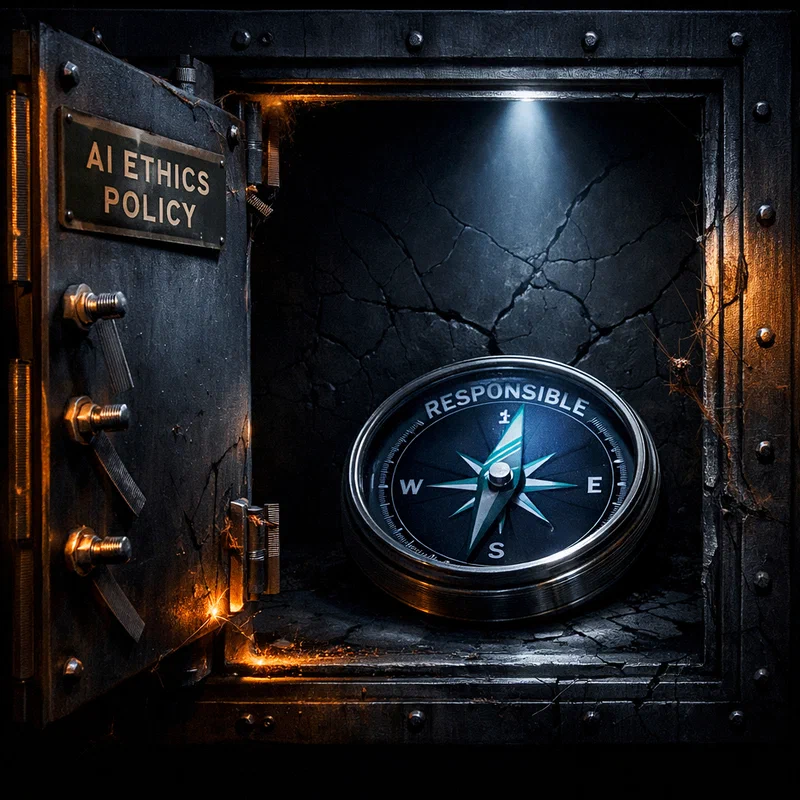
This is a critical distinction. When a company’s ethics policy is the only thing standing between a powerful AI system and uses that could cause mass harm, that is not responsible governance—it is a systemic failure. The existing legal framework for autonomous weapons—DoD Directive 3000.09, which requires rigorous testing before deployment—exists only as internal Pentagon policy, not statute. It can be changed with a memo, not an act of Congress. There is no binding law preventing the U.S. military from deploying AI systems that select and fire at targets without human authorization.
In that legal vacuum, Anthropic’s usage policy was one of the few barriers that existed. The Pentagon’s response was to designate the existence of that barrier as a national security threat.
International legal scholars writing for OpinioJuris on February 26, 2026 emphasize that AI decision-support systems in military contexts remain “understudied, under-addressed and unregulated” in international frameworks, creating a governance terrain where private company policies—however well-intentioned—fill a structural void they were never designed to occupy.
The Chilling Effect #
The broader consequences extend far beyond Anthropic’s balance sheet. The signal sent to every other AI company considering how to structure their own government contracts is unmistakable: maintain strong ethical restrictions at your own existential risk.
Grantedai.com detailed the implications in a March 2026 analysis: the “supply chain risk” designation creates cascading financial pressure that could force Anthropic’s commercial clients and investors to reconsider their relationships with the company—not because they disagree with its ethics, but because the business risk is too high. This is how ethical standards get eroded in practice: not through direct attacks on the values themselves, but through economic incentive structures that make maintaining those values too costly.
For those of us working in AI ethics and governance, this is the nightmare scenario. We have spent years arguing that safety commitments must be embedded in company culture, not just regulatory compliance. The Anthropic case demonstrates what happens when that argument succeeds at the company level but fails at the governance level: the company gets punished.
There are also significant international implications. As Dr. Rosen’s Oxford analysis notes, NATO and Five Eyes partners that had integrated Anthropic models into shared platforms face new legal and financial uncertainty. And the episode did not go unnoticed by strategic competitors: Chinese state-affiliated commentary framed it as evidence of structural instability in the American AI ecosystem, and as confirmation that China’s military-civil fusion model—which requires no such negotiations between defense and commercial AI—holds a structural advantage.
The only clear winner in this dispute may be China.
What Responsible AI Governance Actually Requires #
None of this means Anthropic was perfect or that its usage policy was the right instrument for the problem. The more important lesson is about what responsible governance actually requires.
First, voluntary company policies and contractual restrictions will never be sufficient substitutes for statutory frameworks. The fact that Anthropic’s redlines against autonomous weapons were implemented as contractual restrictions rather than enshrined in law made them vulnerable to exactly the kind of economic coercion that destroyed them. Congress needs to pass actual legislation governing the use of AI in weapons systems, the same way it has legislated other weapons categories.
Second, the “responsible AI” movement needs to move beyond company-level commitments to sector-wide standards and third-party enforcement mechanisms. A commitment that an individual company can walk away from—or be forced to abandon—is not a safeguard. It is a risk disclosure.
Third, this dispute exposes a particular danger in the current U.S. regulatory environment, where the federal government has pulled back from AI oversight while aggressively seeking to control AI’s most powerful capabilities for military advantage. The EU AI Act, whatever its limitations, at least creates a binding legal framework. The absence of a comparable American framework means these conflicts will continue to be fought out in contract negotiations behind closed doors.
A Profession at a Crossroads #
For professionals in AI ethics, this dispute represents something we need to reckon with honestly. The tools of our trade—ethics review boards, responsible use policies, usage restrictions in contracts—are not sufficient for the environments in which AI is now operating. They were designed for a world where companies could reasonably expect their government partners to act in good faith. The Anthropic-Pentagon dispute indicates that assumption needs revisiting.
CNBC’s reporting on March 9, 2026 captures the unease felt across the AI policy community. Experts who spent years building the frameworks Anthropic used are now watching those frameworks being systematically dismantled—not by rogue actors but by official government policy.
What Anthropic did—drawing clear lines and holding them even at enormous cost—was right. What happened as a result of that stance is a warning. The warning is not that AI companies should stop maintaining ethical standards. The warning is that those standards are not enough, and the governance infrastructure that should underpin them does not yet exist.
Building that infrastructure—through legislation, international agreement, and genuinely enforceable third-party oversight—is the most important work in AI ethics right now. Not because it will prevent every harm, but because it is the only way to ensure that holding a principled position does not become an act of corporate self-destruction.
References:
- CNBC (March 9, 2026). “Anthropic was the Pentagon’s choice for AI. Now it’s banned and experts are worried.” https://www.cnbc.com/2026/03/09/anthropic-was-the-pentagons-choice-for-ai-now-its-banned-and-experts-are-worried.html (Accessed March 15, 2026)
- DefenseScoop (February 27, 2026). “Experts raise questions and concerns about Pentagon’s threat to blacklist Anthropic AI.” https://defensescoop.com/2026/02/27/pentagon-threat-blacklist-anthropic-ai-experts-raise-concerns/ (Accessed March 15, 2026)
- University of Oxford (March 6, 2026). “Expert Comment: The Pentagon-Anthropic dispute reflects governance failures—with consequences that extend well beyond Washington.” https://www.ox.ac.uk/news/2026-03-06-expert-comment-pentagon-anthropic-dispute-reflects-governance-failures-consequences (Accessed March 15, 2026)
- OpinioJuris (February 26, 2026). “The Pentagon/Anthropic Clash Over Military AI Guardrails.” https://opiniojuris.org/2026/02/26/the-pentagon-anthropic-clash-over-military-ai-guardrails/ (Accessed March 15, 2026)
- Council on Foreign Relations (March 2026). “Anthropic’s Standoff With the Pentagon Is a Test of U.S. Credibility.” https://www.cfr.org/articles/anthropics-standoff-with-the-pentagon-is-a-test-of-u-s-credibility (Accessed March 16, 2026)
- USA Today (March 9, 2026). “Anthropic sues to block Pentagon blacklisting over AI use restrictions.” https://www.usatoday.com/story/news/politics/2026/03/09/anthropic-sues-pentagon-over-ai-restrictions/89069058007/ (Accessed March 15, 2026)
- Anthropic (February 26, 2026). “Statement on our relationship with the Department of War.” https://www.anthropic.com/news/statement-department-of-war (Accessed March 15, 2026)
- GrantedAI (March 2026). “Anthropic Just Got Blacklisted by the Pentagon. Every Defense AI Company Should Be Worried.” https://grantedai.com/blog/anthropic-pentagon-blacklist-defense-ai-research-implications-2026 (Accessed March 16, 2026)
AI-Generated Content Notice
This article was created using artificial intelligence technology. While we strive for accuracy and provide valuable insights, readers should independently verify information and use their own judgment when making business decisions. The content may not reflect real-time market conditions or personal circumstances.
Related Articles
The AI Workplace Ethics Crisis: Why Trust and Transparency Must Lead the Way Forward
As AI reshapes the modern workplace, new ethical challenges around trust, transparency, and human …
The Invisible Gatekeeper: AI Hiring Bias Is Reaching Its Legal Breaking Point
Three converging legal cases and a looming EU AI Act deadline are forcing the reckoning over AI …
The Deepfake Reckoning: Why Yesterday's New Rules Mark a Turning Point in AI Governance
The world crossed a regulatory threshold yesterday: mandatory AI content labeling and three-hour …