From Reddit Post to $120M ARR: The Grassroots Marketing Revolution That VCs Missed

If someone had told me back when I was selling chai at Mumbai railway station that a simple Reddit post could eventually lead to a $120 million business, I would have laughed until I spilled tea all over them. But here we are in 2026, and that’s exactly what happened to two guys from New Jersey who started with nothing but basement mining rigs and a Reddit account.
This story hits different for me. Not because it’s another Silicon Valley fairy tale—quite the opposite. It’s proof that the old playbook I’ve always believed in still works: solve a real problem, build genuine relationships, and let your community become your marketing engine. No fancy PR firms, no influencer campaigns, just authentic value and word-of-mouth.
Last week, TechCrunch reported that RunPod, an AI cloud hosting platform, has reached $120 million in annual recurring revenue—and it all started with a Reddit post in early 2022. Let that sink in for a moment. While countless startups were burning millions on customer acquisition, these founders built a nine-figure business by offering free GPU access to a subreddit in exchange for feedback.
The Accidental Entrepreneurs #
Zhen Lu and Pardeep Singh weren’t setting out to build a unicorn. They were just two Comcast developers trying to salvage their marriage harmony after spending $50,000 on Ethereum mining rigs that were about to become obsolete.
Picture this: It’s late 2021. These guys have basements full of expensive GPUs in New Jersey. Ethereum’s “The Merge” is coming, which would end GPU-based mining. Their wives are probably giving them that look—you know the one. The “you spent how much on what?” look. I’ve been there, trust me. Seven jobs fired, remember?
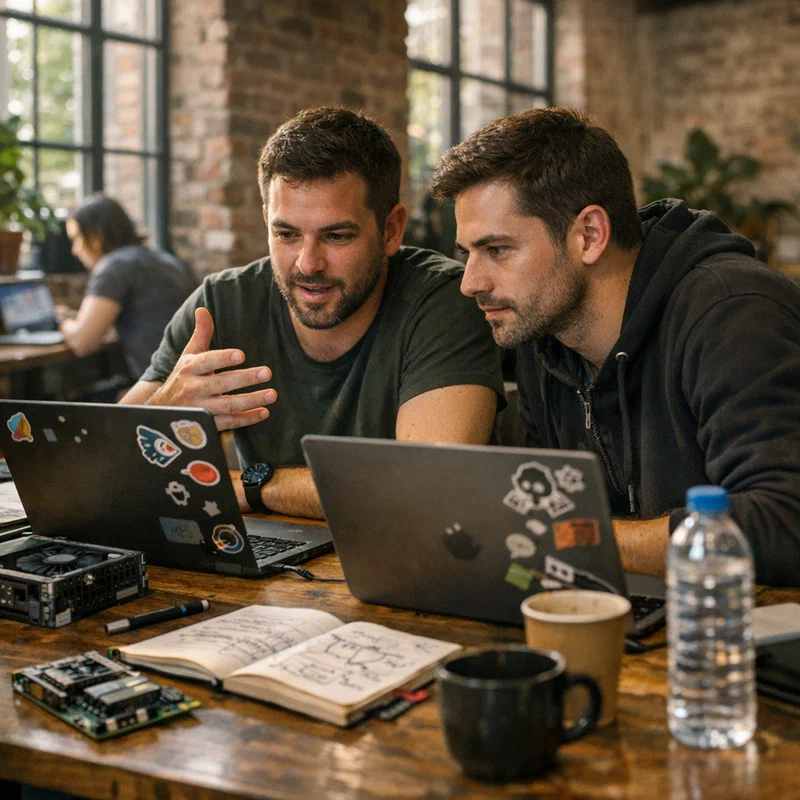
But here’s where the jugaad kicks in. Instead of accepting defeat, they repurposed those mining rigs into AI servers. This was before ChatGPT existed, even before DALL-E 2. And as developers themselves, they immediately hit a pain point: the software stack for working with GPUs was, in Lu’s memorable words, “hot garbage.”
So they built RunPod—a platform that made it actually pleasant for developers to work with AI infrastructure. Fast configuration, serverless options, developer-friendly APIs. All the things that seem obvious in hindsight but weren’t being done well at the time.
The Reddit Post That Changed Everything #
Here’s where the story gets interesting for anyone in digital marketing. In early 2022, Lu and Singh had a functional product but zero marketing expertise. They weren’t connected to Silicon Valley networks. They didn’t know any VCs. They didn’t even know how to market.
Lu’s solution? “All right, let’s just post on Reddit.”
They went to a couple of AI-focused subreddits and made a simple offer: free GPU time in exchange for feedback. No fancy landing page. No slick pitch deck. Just honest developers offering something valuable to a community that needed it.
It worked. Beta testers signed up. Those beta testers became paying customers. Within nine months, both founders had quit their day jobs and hit $1 million in revenue. All bootstrapped. All organic. All because they showed up authentically in a community and provided real value.
This is exactly the kind of grassroots marketing I talk about in my digital marketing agency. The best marketing doesn’t feel like marketing—it feels like helpful people solving problems in communities they’re actually part of. RunPod’s founders weren’t using Reddit as a marketing channel; they were using it as a place to connect with fellow developers who understood their pain points.
The Bootstrapping Gauntlet #
The journey from that first Reddit post to $1 million revenue wasn’t the end—it was just the beginning of what turned out to be a grueling two-year bootstrapping marathon.
Six months in, enterprise customers started showing up with a reasonable concern: “Hey, we can’t run production workloads on servers in someone’s basement.” Fair point.
Instead of immediately running to VCs—the typical Silicon Valley move—Lu and Singh did something different. They formed revenue-share partnerships with data centers to expand capacity. Every dollar the business earned went back into growing infrastructure. They never offered a free tier because they couldn’t afford to. The business had to pay for itself, month by month.
The stress was real. “If we don’t have the GPUs, user sentiment changes,” Singh told TechCrunch. They had to stay ahead, constantly reinvesting revenue. One capacity shortage and customers would go elsewhere.
This is the part of bootstrapping stories that often gets glossed over. It’s not romantic or fun—it’s terrifying. You’re building the plane while flying it. But refusing debt meant they kept control and avoided pressure to grow unsustainably.
When The VCs Finally Noticed #
Meanwhile, something interesting was happening. As ChatGPT launched and AI fever spread in 2023, RunPod’s user base exploded. Their Reddit community grew. Their Discord became active. Developers were talking about them organically.
Radhika Malik, a partner at Dell Technologies Capital, noticed them on Reddit and reached out. Lu admits he didn’t even know how to pitch to a VC. “Radhika was super helpful, even at the first conversation,” he said. She explained how VCs think and stayed in touch.
But here’s the crucial part: Lu didn’t chase the funding. He kept building the business. It wasn’t until May 2024—nearly two years after that first Reddit post and with 100,000 developers already using the platform—that they closed a $20 million seed round co-led by Intel Capital and Dell Technologies Capital.
Think about that timing. They raised venture capital from a position of strength, with proven revenue, product-market fit, and a thriving community. They weren’t desperate founders begging for runway. They were profitable operators choosing to accelerate growth.
The investor roster tells the story: Dell and Intel’s VC arms, Nat Friedman (former GitHub CEO), and Julien Chaumond (Hugging Face co-founder). That last one is particularly telling—Chaumond became an investor because he was using RunPod as a customer and reached out through the support chat. Your best investors might already be in your customer base.
The Grassroots Marketing Playbook #
What RunPod demonstrates—and what I’ve seen work time and again with my own agency’s clients—is that grassroots marketing isn’t just about being scrappy. It’s about building a fundamentally different kind of business advantage.
Community as competitive moat: By the time RunPod raised funding, they had 100,000 developers building on their platform. That’s an army of advocates. Today they serve 500,000 developers, including teams from Replit, Cursor, OpenAI, Perplexity, Wix, and Zillow.
Authenticity at scale: The Reddit post worked because it was genuine—two developers offering something valuable to fellow developers. That authenticity can’t be faked.
Revenue validates everything: Bootstrapping to $1 million in nine months, then growing to $120 million ARR, meant every customer validated product-market fit. No vanity metrics, just sustainable organic growth.
This isn’t unique to RunPod. Last November, BrightAI bootstrapped to $80 million in revenue before raising capital. They proved the model through revenue, not pitch decks.
The Shift to Community-Led Growth #
What RunPod’s story reveals is a fundamental shift in tech entrepreneurship. The old playbook—raise big, spend big on customer acquisition, scale fast—is being challenged by bootstrappers who build profitable businesses first and raise capital second.
This shift is accelerated by platforms like Reddit and Discord where peer recommendations carry more weight than advertising. In January 2026, Kevin Rose and Alexis Ohanian relaunched Digg as a Reddit rival with explicit focus on community trust and authenticity, using “little signals of trust” rather than simple verification badges.
The Indian Connection: Jugaad Goes Global #
As someone who built my business using pure jugaad—finding creative solutions with limited resources—I see RunPod’s story as validation of resourcefulness over resources. Lu and Singh had mining rigs to salvage, no marketing budgets, and Reddit. They made it work.
This is exactly the mindset that took me from washing dishes to running a digital marketing agency. When I couldn’t afford computer access, I convinced a cybercafe owner to let me use his machines during off-peak hours in exchange for tech support. That same hustle is what makes grassroots marketing so powerful.
What This Means for Founders #
If you’re building a startup in 2026, RunPod’s playbook offers critical lessons:
Start with community: Build relationships in communities where your target customers hang out. Provide value first.
Bootstrap as long as you can: Every month profitable and growing proves your model works. Raise from strength, not desperation.
Revenue is your north star: Vanity metrics mean nothing compared to customers willing to pay.
Customers are your marketers: RunPod had 100,000 developers who loved the product and told their friends.
Human trust beats algorithms: Nothing replaces genuine recommendations from real users in trusted communities.
The Uncomfortable Truth #
RunPod’s story reveals an uncomfortable truth: many founders raise capital not because they need it, but because they don’t know how to do organic growth. Lu admitted he didn’t know how to market, so he posted on Reddit. That “ignorance” turned out to be genius.
How many founders pitch complex “go-to-market strategies” involving burning investor cash on paid ads, while they haven’t spent a single hour in communities where their target customers actually hang out?
The VC model has its place—RunPod’s $20 million helped them expand faster. But they raised after proving the model, not before. That changes everything.
Looking Forward #
As we move deeper into 2026, I believe we’ll see more RunPod-style success stories. AI tools make it easier to fake engagement and bot accounts flood social platforms, making authentic human communities more valuable than ever.
The founders who win will understand that marketing isn’t about reaching people—it’s about connecting with them. It’s about showing up consistently in communities, providing value without immediate expectation of return, and building trust through actions.
The Final Lesson #
RunPod succeeded not despite their lack of marketing expertise, but because of it. They couldn’t afford fancy campaigns, so they did the only thing they could: show up honestly in a community and offer something valuable.
That authenticity cuts through noise in 2026’s oversaturated digital landscape. I started selling chai at a railway station. These guys started with basement mining rigs and a Reddit post. We all found success by staying true to ourselves and our communities.
The VCs eventually noticed RunPod. But by then, 100,000 developers had already voted with their wallets. That’s grassroots marketing power: when you build genuine community trust, business opportunity becomes inevitable.
Before you spend money on ads, find three communities where your potential customers hang out. Spend a month just participating and providing value. Don’t sell anything. Just be helpful. You’ll learn more than any consultant could teach you.
That’s the beautiful thing about grassroots marketing: it rewards hustle, authenticity, and genuine value over everything else. Just like selling chai taught me—the best marketing is just good service, consistently delivered, one customer at a time.
References #
- TechCrunch (January 16, 2026). “AI cloud startup Runpod hits $120M in ARR — and it started with a Reddit post.” https://techcrunch.com/2026/01/16/ai-cloud-startup-runpod-hits-120m-in-arr-and-it-started-with-a-reddit-post/ (Accessed January 20, 2026)
- TechCrunch (November 19, 2024). “Physical AI startup BrightAI bootstraps to $80M in revenue.” https://techcrunch.com/2024/11/19/physical-ai-startup-brightai-bootstraps-to-80m-in-revenue/ (Accessed January 20, 2026)
- TechCrunch (January 14, 2026). “Digg launches its new Reddit rival to the public.” https://techcrunch.com/2026/01/14/digg-launches-its-new-reddit-rival-to-the-public/ (Accessed January 20, 2026)
AI-Generated Content Notice
This article was created using artificial intelligence technology. While we strive for accuracy and provide valuable insights, readers should independently verify information and use their own judgment when making business decisions. The content may not reflect real-time market conditions or personal circumstances.
Related Articles
The AI Marketing Revolution: How Small Businesses Are Finally Leveling the Playing Field
AI-powered marketing tools are finally giving small businesses the weapons to compete with …
Why Zepto's $450M Raise Proves Quick Commerce Won—And What Digital Marketers Must Learn
Zepto just raised $450M at a $7B valuation while expanding ESOPs by $170M—the real story isn’t …
The AI Automation Revolution: A Small Business Survival Guide for 2025
AI automation is no longer just for tech giants—discover how small businesses can leverage …