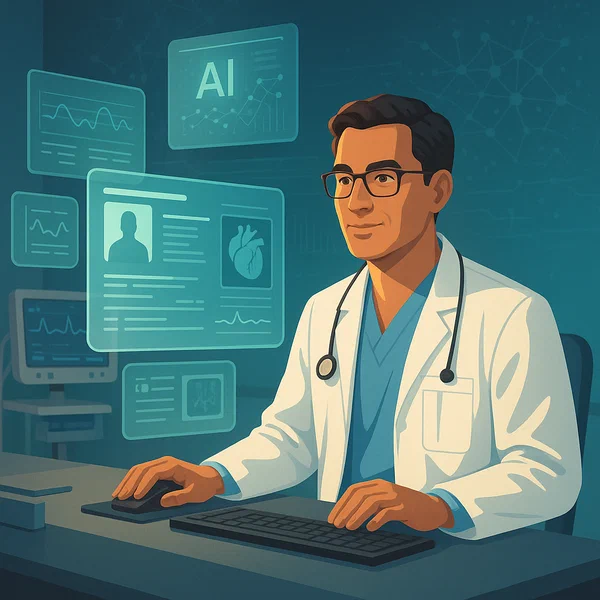
Epic’s AI agents and foundational models represent a pivotal moment in healthcare technology, potentially revolutionizing clinical workflows while raising critical questions about AI governance and patient care standards.
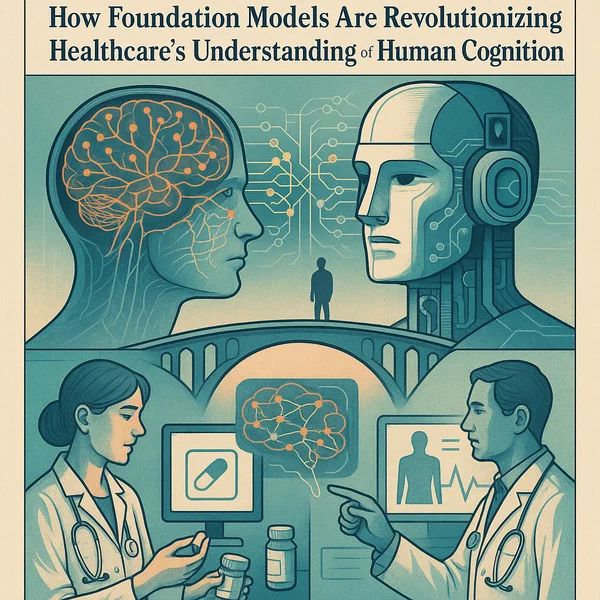
Meta’s Llama 3.1 transforms into ‘Centaur’—an AI foundation model predicting human behavior across 160 psychological experiments with unprecedented accuracy. This breakthrough opens doors to personalized healthcare systems that adapt to how patients actually think and behave, not just what they report.
AI-driven personalization is transforming healthcare from one-size-fits-all to individualized care by analyzing patient data, genetic factors, and lifestyle information to create tailored treatment plans that improve adherence and reduce readmissions.
AI-powered early disease detection systems are improving patient outcomes through superior accuracy and accessibility, with successful implementation requiring collaboration between AI technology and human medical expertise to address diverse populations.
AI revolutionizes healthcare through machine learning models that detect diseases earlier and more accurately, but success requires diverse training datasets, clinician involvement, patient privacy protection, and collaboration between doctors, data scientists, and patients for ethical implementation.
AI diagnostic systems transform medical decision-making by enhancing accuracy across radiology, pathology, and dermatology, demonstrating 73% faster critical case diagnosis while achieving diagnostic accuracy comparable to board-certified specialists through validated clinical implementations.
Healthcare AI adoption has accelerated dramatically with 78% of organizations implementing AI technologies, but only 31% have comprehensive ethical frameworks governing patient data privacy, diagnostic transparency, and responsible innovation practices.
AI in healthcare revolutionizes patient care through enhanced diagnostic imaging, personalized treatment plans based on genetic and lifestyle data, virtual assistants for patient support, and improved efficiency while empowering medical professionals.
Explore how AI revolutionizes healthcare through predictive analytics, personalized medicine, and improved diagnostic accuracy while addressing implementation challenges.
Navigate AI healthcare ethics by addressing patient privacy, algorithmic bias, informed consent, data security, and establishing accountability frameworks for medical AI decision-making.
Experience AI’s healthcare revolution through diagnostic imaging, drug discovery, personalized treatment plans, predictive health analytics, and improved patient outcomes with reduced costs.