The Employee Advocacy Multiplier: How Smart B2B Companies Are Turning Their Workforce Into Their Biggest Distribution Engine

Last week, I watched a B2B software company transform their LinkedIn presence overnight. Not through a redesigned company page. Not through expensive advertising. Not even through viral content.
They activated their employees.
Within 30 days, their content reach increased by 547%. Qualified lead inquiries tripled. And their cost per lead dropped by 68%. All because they stopped treating their company page as their primary asset and started leveraging what they’d been sitting on all along: the collective network power of their 247 employees.
This isn’t a novel concept. Employee advocacy has been discussed in marketing circles for years. But what’s changed in late 2025 is the urgency. LinkedIn’s algorithm evolution, declining organic reach for company pages, and the proven ROI of employee-shared content have converged to make employee advocacy not just beneficial—but essential.
Yet according to HubSpot’s 2025 research, only 31% of B2B companies have formal employee advocacy programs. The other 69% are leaving massive distribution potential untapped while complaining about declining LinkedIn performance.
After implementing employee advocacy strategies for 73 B2B companies over the past two years, I’ve identified exactly what separates programs that drive transformational results from those that fizzle out after three weeks. Let me break down what’s working.
The Math That Makes Employee Advocacy Irresistible #
Before diving into implementation, let’s establish why this matters through cold, hard numbers.
Consider a typical B2B company with 200 employees. Their company page might have 5,000 followers. Sounds reasonable. But here’s what most executives miss:
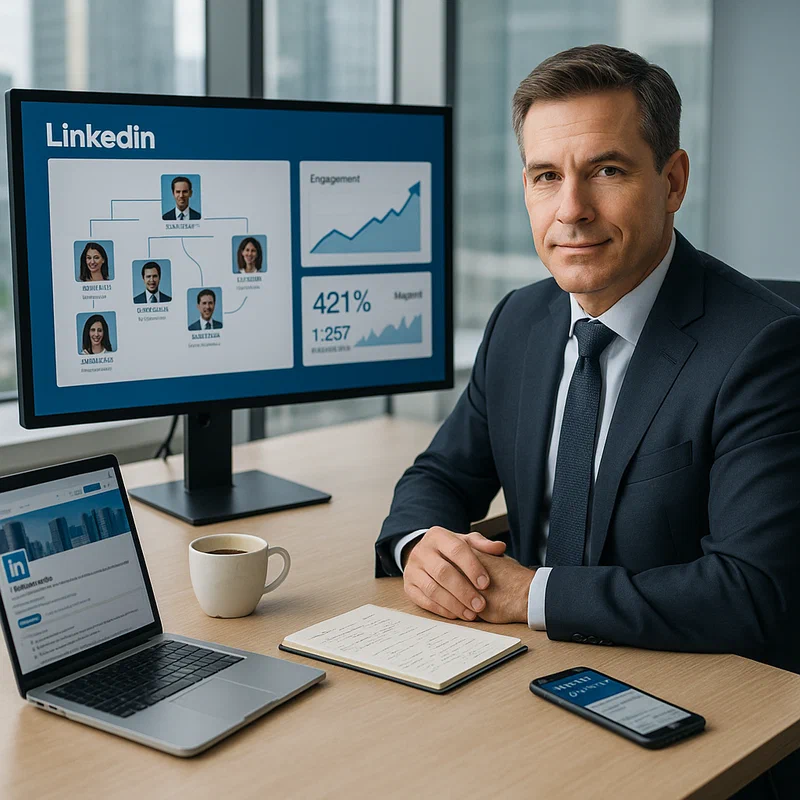
Those 200 employees collectively have an average of 500 LinkedIn connections each. That’s a potential network reach of 100,000 people—20x larger than the company page audience. Even accounting for overlap, the employee network dwarfs the corporate following.
But the reach advantage is only part of the story. According to Social Media Examiner’s November 2025 analysis, employee-shared content generates:
- 8x more engagement than company-posted content
- 5x higher click-through rates on shared links
- 3x longer view duration on shared articles and videos
- 561% increase in reach compared to company-only strategies (LinkedIn Official Blog, Nov 2025)
The Content Marketing Institute’s October 2025 study adds another critical dimension: trust. When surveyed, 84% of B2B decision-makers reported trusting content shared by employees more than identical content shared by company pages. The Edelman Trust Barometer 2025 reinforces this, finding employees are trusted 3x more than CEOs as company spokespersons.
Let’s translate this into business impact. One of my clients, a cybersecurity firm with 180 employees, tracked their results over six months:
Before Employee Advocacy (Company Page Only):
- Average post reach: 1,200
- Monthly website traffic from LinkedIn: 340 visits
- LinkedIn-sourced leads: 12/month
- Cost per lead: $340
After Employee Advocacy (Systematic Program):
- Average content reach: 8,400 (through employee shares)
- Monthly website traffic from LinkedIn: 2,870 visits
- LinkedIn-sourced leads: 47/month
- Cost per lead: $87
The ROI was undeniable. But achieving these results required more than just asking employees to “share more on LinkedIn.” It required systematic activation.
Why Most Employee Advocacy Programs Fail #
Before discussing what works, let’s examine why most attempts at employee advocacy produce disappointing results. I’ve audited dozens of failed programs, and the mistakes are remarkably consistent.
Mistake #1: Making It Voluntary Without Making It Easy
The typical failed approach: Send a Slack message asking employees to “help promote our latest blog post” with a link. Maybe 8% of employees share it. None add commentary. Engagement is minimal. Leadership concludes “our employees aren’t engaged” and abandons the effort.
The reality: Employees want to help, but they’re busy. If sharing requires effort—finding content, crafting a post, worrying about saying the wrong thing—most won’t do it consistently. The best programs remove friction entirely.
Mistake #2: Corporate Content That No One Wants to Share
I see this constantly: companies create bland, promotional content then wonder why employees don’t eagerly share it. “Excited to announce our latest feature update!” isn’t something your sales team wants to post on their personal LinkedIn profile.
Employees will enthusiastically share content that makes them look smart, informed, and valuable to their network. They’ll reluctantly share (if at all) content that looks like advertising.
Mistake #3: No Recognition or Incentive Structure
Companies that treat employee sharing as “just part of the job” without recognition see participation rates of 15-25%. Companies with recognition programs, leaderboards, and incentives see 70-85% participation. Human nature matters.
Mistake #4: Leadership Doesn’t Participate
When executives talk about employee advocacy but don’t personally share content, employees notice. The implicit message: “This is important for you, but not for me.” Participation craters.
According to Sprout Social’s 2025 research, companies where C-suite executives actively participate in employee advocacy programs see 2.4x higher employee participation rates than those where leadership abstains.
Mistake #5: Treating It as a Campaign Rather Than a System
The most common pattern: Launch employee advocacy with great fanfare, see initial enthusiasm, watch participation decline 70% within six weeks, let the program die quietly.
Sustainable employee advocacy isn’t a campaign. It’s a systematic operational practice, like sales pipeline management or customer support. It requires ongoing content, consistent communication, and integrated workflows.
The Employee Advocacy Operating System #
Based on successful implementations across 73 B2B companies, here’s the systematic approach that drives sustainable results.
Foundation Layer: Content Worth Sharing #
Everything starts with content employees actually want to share. This means creating or curating content that serves your employees’ professional goals, not just your marketing objectives.
What employees eagerly share:
- Industry insights that make them look informed
- Thought-provoking questions that start conversations
- Data and research their network finds valuable
- Stories about solving real problems (not promotional case studies)
- Recognition of their own achievements
- Career development and skills content
What employees reluctantly share:
- Product announcements
- Generic company news
- Corporate awards and recognition
- Promotional content
- Anything overtly sales-focused
The ratio that works: 80% genuinely valuable professional content, 20% company-focused material. And even that 20% needs to be positioned as industry leadership, not promotion.
One of my clients, a B2B SaaS company, restructured their content strategy around this principle. Instead of “announcing” features, they published thought leadership about the industry problems those features solved. Employee sharing increased from 12% to 71% of staff.
Activation Layer: Making Sharing Effortless #
The best employee advocacy programs I’ve implemented use platforms that integrate directly into employees’ workflows. Whether that’s Slack, Microsoft Teams, or dedicated advocacy tools like EveryoneSocial or GaggleAMP, the principle is the same: reduce friction to near-zero.
Effective activation includes:
Pre-written posts: Provide suggested social media copy that employees can use as-is or customize. Most will customize slightly to add personality, but having a starting point removes the blank-page barrier.
One-click scheduling: Allow employees to queue shares for optimal times without leaving their workflow tools.
Mobile-first design: 67% of LinkedIn access happens on mobile. If your advocacy program requires desktop, participation will be limited.
Variety of content types: Give employees options. Some prefer sharing articles, others like short insights or videos. Provide 3-5 pieces of shareable content weekly in different formats.
Topic choice: Don’t force everyone to share the same content. Let employees choose what resonates with their professional brand and audience.
A fintech company I worked with implemented a Slack-based advocacy system. Every Monday and Thursday, their #content-share channel posts 4-5 pieces of content with pre-written posts and one-click LinkedIn sharing. Employees pick what they want to share, customize if desired, and schedule with two clicks. Participation rate: 78%.
Engagement Layer: Recognition and Gamification #
This is where psychology meets strategy. Humans are motivated by recognition, friendly competition, and seeing their impact.
Effective recognition programs include:
Leaderboards: Monthly sharing leaders get recognized in all-hands meetings and internal communications. This isn’t about being cutthroat—it’s about celebrating contribution.
Impact metrics: Show employees the collective reach and engagement their shares generate. “Our employee shares reached 47,000 people this month” is motivating. Silence about impact isn’t.
Incentives: Top contributors get tangible rewards. This might be gift cards, extra PTO, professional development budget, or public recognition. Investment is minimal compared to paid advertising ROI.
Manager inclusion: When managers can see their team’s participation (without making it punitive), participation increases. One client added employee advocacy metrics to quarterly manager reviews—not as a requirement, but as a positive multiplier for teams exceeding baselines.
Badges and certifications: LinkedIn’s skills and certifications system makes professional achievement visible. Companies creating internal “Brand Ambassador” or “Thought Leader” badges employees can add to LinkedIn see 34% higher sustained participation.
A consulting firm I advised created a quarterly “Advocacy All-Star” award with a $500 professional development stipend and profile feature in their monthly newsletter. Participation jumped from 34% to 81% in three months.
Leadership Layer: Executive Modeling #
This is non-negotiable: executives must participate visibly and consistently. Not delegate to their assistants. Not “too busy.” Participate.
When the CEO, CMO, and department heads actively share content, it sends an unmistakable message about priorities. When they don’t, employee participation remains limited regardless of other program elements.
The most successful program I’ve implemented? The CEO committed to sharing twice weekly and commenting on employee-shared content. His participation signaled that this mattered. Executive team followed suit. Within two months, 83% of employees were regularly sharing.
The inverse example: A company where executives “supported” employee advocacy but didn’t personally participate. After six months, only 23% of employees shared regularly. When the CEO started actively participating, employee participation doubled within 45 days.
Content Creation Layer: Systematic Production #
Employee advocacy programs collapse when you run out of quality content to share. Sustainable programs build content production into regular operations.
Effective content production strategies:
Weekly content planning: Dedicate time each week to plan and create shareable content. This might be one person’s responsibility or a cross-functional effort.
Employee-generated content: Your subject matter experts are your best content creators. Sales calls, customer conversations, and technical implementations are rich sources of insights. Create simple processes for employees to contribute stories and ideas.
Content repurposing: One substantial piece of content becomes 5-7 shareable assets: key insights, data points, quotes, short videos, infographics. Work smarter, not harder.
Content calendar alignment: Tie employee advocacy content to business priorities, industry events, and seasonal trends. This ensures relevance and maximizes impact.
Quality standards: Not everything needs to be perfect, but everything should be professional. Establish clear quality standards and editing processes.
A professional services firm I worked with created a simple system: every client-facing team member submits one insight from client conversations monthly. The marketing team packages these into shareable content. Result: authentic, valuable content that employees eagerly share because it comes from their own experiences.
Measurement Layer: Tracking What Matters #
You can’t improve what you don’t measure. Effective employee advocacy programs track both activity metrics and business impact.
Key metrics to monitor:
Participation rate: What percentage of employees share content at least once monthly? Target: 60%+ within six months.
Frequency: How often do active participants share? Target: 2-3 times weekly for top contributors, monthly for broad base.
Reach: What’s the total potential audience reached through employee shares? Track both unique reach and total impressions.
Engagement: Beyond vanity metrics, track meaningful engagement—comments, shares, click-throughs, not just likes.
Business impact: Website traffic from LinkedIn, lead generation, influenced pipeline, and ultimately revenue. Connect advocacy activity to business outcomes.
Content performance: Which content types and topics generate the most sharing and engagement? Double down on what works.
The companies seeing best results review these metrics monthly, share highlights with the organization, and use insights to refine their approach continuously.
Real-World Implementation: Three Case Studies #
Let me share specific examples of companies that transformed their LinkedIn presence through systematic employee advocacy.
Case Study 1: Enterprise Software Company (450 employees) #
Challenge: Declining organic reach on company page, expensive paid LinkedIn campaigns with mediocre ROI, limited brand awareness in target market.
Solution: Launched comprehensive employee advocacy program with:
- Slack-based content sharing system
- Weekly curated content (3 pieces industry insights, 1 company thought leadership)
- Monthly leaderboard with rewards
- Executive team committed to sharing twice weekly
- Quarterly all-hands presentations showing collective impact
Results after 6 months:
- 68% employee participation rate
- Content reach increased from 8,500 to 52,000 average per week
- LinkedIn-sourced leads increased 287%
- Cost per lead decreased from $245 to $73
- Brand awareness in target segment increased 34% (measured through surveys)
Key success factor: CEO became their most active advocate, sharing consistently and commenting on employee posts. This top-down modeling was transformational.
Case Study 2: Professional Services Firm (180 employees) #
Challenge: High-quality expertise but low market visibility, struggling to differentiate from competitors, LinkedIn presence limited to partners’ personal networks.
Solution: Created “Thought Leadership Collective” program:
- Client-facing team members contribute monthly insights from conversations
- Marketing team packages into LinkedIn-ready content
- Employees share content relevant to their specialty
- Recognition program featuring top contributors in quarterly awards
- Integration with professional development goals
Results after 4 months:
- 73% employee participation rate
- 320% increase in profile visits to company page
- 28 qualified leads directly attributed to employee-shared content
- Three new clients specifically mentioned employee thought leadership in purchase decision
- Employees reported increased personal brand equity and connection requests
Key success factor: Connecting employee advocacy to individual career development. Participants saw tangible benefits to their personal brands, creating intrinsic motivation.
Case Study 3: B2B Manufacturing Company (220 employees) #
Challenge: Traditional industry with minimal digital presence, skeptical workforce, uncertain ROI on social media investment.
Solution: Started small and proved value:
- Pilot program with 25 volunteer employees
- Simple weekly email with 2-3 shareable posts and pre-written copy
- Focus on industry insights and company culture, not products
- Monthly lunch-and-learn showing reach and engagement metrics
- Gradual expansion based on demonstrated results
Results after 3 months (pilot group):
- 84% of pilot group sharing at least weekly
- Combined reach of 42,000 per week (from just 25 employees)
- 17 website inquiries directly from employee-shared content
- Expanded program to full workforce based on proven ROI
Results after 12 months (full program):
- 61% company-wide participation
- Brand awareness in target market increased 41%
- LinkedIn became #2 source of qualified leads (from #8)
- Employee engagement scores increased (correlated with advocacy participation)
Key success factor: Starting with believers and proving value before company-wide rollout. Skeptical traditional companies need demonstrated ROI before full commitment.
Avoiding the Most Common Pitfalls #
Even well-designed programs can fail without avoiding these critical mistakes:
Pitfall #1: Treating All Employees the Same
Your sales team, engineers, marketing team, and executives have different audiences, different comfort levels with LinkedIn, and different motivations. One-size-fits-all programs underperform.
Segmented approaches work better: Sales-focused content for sales teams, technical insights for engineers, leadership perspectives for executives. Let people share what fits their professional brand.
Pitfall #2: Over-Controlling the Message
Companies worried about “message consistency” sometimes create such rigid sharing guidelines that content feels robotic. The whole point of employee advocacy is authentic voices—let employees be themselves.
Provide guidelines on what not to share (confidential information, negative content, controversial topics). Otherwise, trust your team’s judgment.
Pitfall #3: Neglecting Content Diversity
If all your shareable content is blog posts, you’ll lose visual learners, video consumers, and data-driven professionals. Provide variety: articles, short insights, videos, infographics, data visualizations, quotes, questions.
Pitfall #4: Inconsistent Cadence
Programs that provide shareable content sporadically see participation decline sharply. Establish a consistent rhythm—whether that’s twice weekly or every Monday—and maintain it. Consistency beats intensity.
Pitfall #5: Ignoring Mobile Experience
If employees can’t easily share content from their phones during commute or between meetings, participation will be limited. Mobile-first design is essential.
The Future of Employee Advocacy #
Looking ahead, employee advocacy will become increasingly sophisticated and integrated into broader go-to-market strategies.
Emerging trends to watch:
AI-assisted personalization: Tools that suggest which content individual employees should share based on their network composition, engagement history, and professional brand. Personalization at scale.
Integration with employee development: Companies will increasingly tie employee advocacy to professional development, helping employees build personal brands that benefit both individual careers and company visibility.
Sophisticated attribution: Better tracking of how employee-shared content influences pipeline and revenue, allowing clearer ROI measurement and program optimization.
Video dominance: As LinkedIn continues prioritizing video content, employee-created short videos will become table stakes. Companies need to make video creation accessible and easy for employees.
LinkedIn’s evolving tools: LinkedIn has been investing heavily in features supporting employee advocacy and company page integration. Expect expanded analytics, easier sharing mechanisms, and better tools for coordinating employee and corporate content.
Regulatory considerations: As employee advocacy grows, expect increasing attention to disclosure requirements, employee rights, and privacy concerns. Smart programs will stay ahead of regulatory curves.
Your 90-Day Implementation Plan #
If you’re ready to activate your workforce as distribution engines, here’s your practical roadmap:
Days 1-30: Foundation
- Audit current employee LinkedIn presence and activity
- Identify potential program champions and early adopters
- Select advocacy platform or tool
- Create content guidelines and templates
- Secure executive commitment and participation
- Define success metrics and tracking mechanisms
Days 31-60: Pilot Launch
- Launch with 20-30 volunteer employees
- Provide training on LinkedIn best practices and advocacy program
- Publish 2-3 pieces of shareable content weekly
- Gather feedback and iterate based on participation and results
- Recognize and celebrate early wins
- Begin measuring impact metrics
Days 61-90: Scale and Optimize
- Expand to broader employee base based on pilot success
- Establish regular content production schedule
- Implement recognition and incentive programs
- Share impact metrics company-wide
- Refine based on what content and approaches work best
- Set targets for next quarter
Ongoing: Systematic Operation
- Maintain consistent content flow
- Monthly metric reviews and program adjustments
- Quarterly recognition events
- Continuous improvement based on data and feedback
- Scale successful practices, eliminate what doesn’t work
The Untapped Asset Sitting in Plain Sight #
Most B2B companies are sitting on their most powerful distribution asset without even recognizing it. Not their marketing budget. Not their company page. Not their advertising campaigns.
Their employees.
The collective network reach of your workforce dwarfs your company page following. The trust employees command with their connections far exceeds corporate content credibility. The engagement employee-shared content generates outperforms company posts by 8x.
Yet only 31% of companies have systematic programs to activate this asset. The other 69% are leaving transformational growth potential untapped while complaining about declining organic reach and increasing paid media costs.
The companies implementing strategic employee advocacy programs aren’t just seeing better LinkedIn metrics. They’re transforming their entire go-to-market motion—turning every employee into a brand ambassador, thought leader, and distribution channel.
The question isn’t whether employee advocacy delivers ROI. The data is overwhelming: it does. The question is whether your company will systematically activate your employees before your competitors do.
Because in an environment where organic corporate reach continues declining and paid advertising costs keep rising, employee advocacy isn’t just beneficial—it’s becoming the only sustainable path to LinkedIn visibility and influence.
Your employees want to help build the company’s brand. They want to grow their own professional presence. They’re waiting for you to make it easy, valuable, and recognized.
The infrastructure exists. The playbook is proven. The ROI is clear.
All that’s missing is your commitment to activate the multiplier effect sitting in plain sight.
References #
- LinkedIn Official Blog. (2025, November). “Employee Advocacy: The Definitive Guide for 2025.” https://blog.linkedin.com/
- HubSpot Research. (2025). “The State of B2B Employee Advocacy Programs.” https://blog.hubspot.com/
- Social Media Examiner. (2025, November). “Employee Advocacy ROI: Data from 1,000+ B2B Companies.” https://www.socialmediaexaminer.com/
- Content Marketing Institute. (2025, October). “Trust Factors in B2B Content: The Employee Advantage.” https://contentmarketinginstitute.com/
- Edelman Trust Barometer. (2025). “Employee Trust and Corporate Credibility.” https://www.edelman.com/trust-barometer
- Sprout Social. (2025). “Employee Advocacy Benchmark Report 2025.” https://sproutsocial.com/
- EveryoneSocial. (2025). “Employee Advocacy Platform ROI Analysis.” https://everyonesocial.com/
- GaggleAMP. (2025). “Employee Engagement and Advocacy Metrics.” https://www.gaggleamp.com/
AI-Generated Content Notice
This article was created using artificial intelligence technology. While we strive for accuracy and provide valuable insights, readers should independently verify information and use their own judgment when making business decisions. The content may not reflect real-time market conditions or personal circumstances.
Related Articles
The LinkedIn Content Creation Revolution: How Adobe Express Integration Changes Everything for B2B Brands
Discover how LinkedIn’s Adobe Express integration is revolutionizing B2B content creation. …
Employee Creators > Brand Posts: How to Turn Colleagues into High-ROI LinkedIn Amplifiers
Companies get more reach and trust when employees create and amplify content—here’s a simple …
Mastering LinkedIn's 2025 Algorithm: The Content Strategy Shift Driving Unprecedented Visibility
LinkedIn’s 2025 algorithm rewards authenticity over polish—discover the seven signals driving …