The Verification Imperative: Why LinkedIn's 100M Milestone Matters in the Age of AI-Generated Deception

When LinkedIn quietly announced last month that over 100 million users had added verification to their profiles, it might have seemed like just another platform milestone. But happening alongside global investigations into AI-generated deepfakes on competing platforms, this number tells a more urgent story: in 2026, proving you’re real isn’t optional anymore—it’s essential.
I’ve spent the last decade helping professionals build their LinkedIn presence, and I’ve never seen the platform’s verification features matter as much as they do right now. The convergence of AI-generated content, sophisticated scams, and the professionalization of remote work has fundamentally changed what it means to establish trust in digital professional spaces.
The Trust Crisis Nobody Saw Coming #
Three weeks ago, authorities in France, Malaysia, and India began investigating Elon Musk’s AI chatbot Grok for generating sexualized deepfakes, including images of minors. While that investigation focused on a different platform, the implications rippled across every digital space where identity matters.
The technology that creates convincing fake images has become trivially easy to access. The same AI capabilities that help us write better content and generate illustrations can also create entirely fabricated professional personas—complete with realistic headshots, detailed work histories, and perfectly polished recommendations.
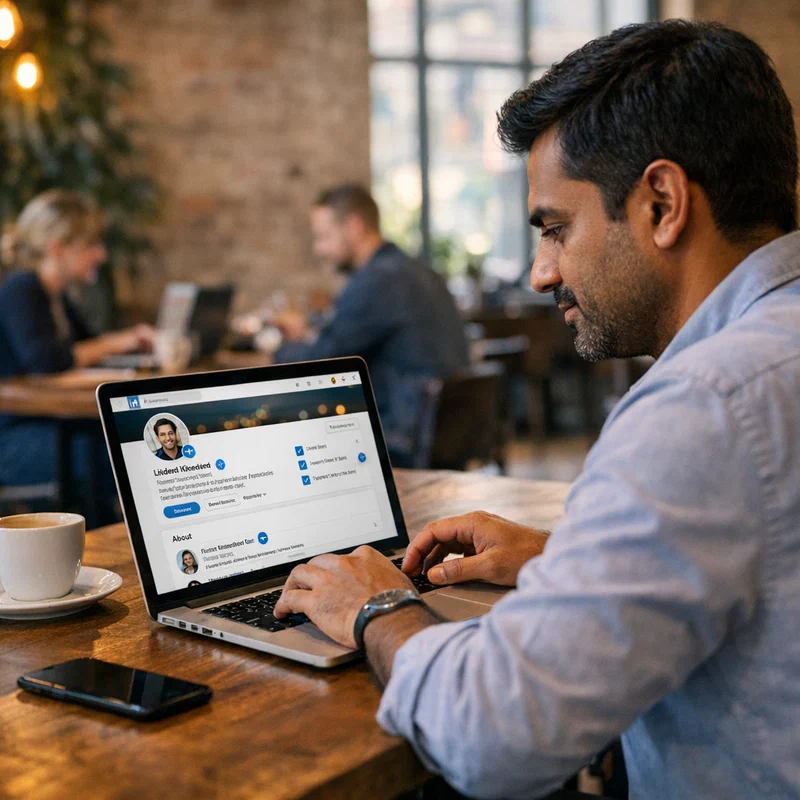
For professionals who’ve built their careers on relationship-based networking, this represents an existential challenge. How do you know the “senior recruiter” reaching out about that dream job is actually who they claim to be? How can hiring managers trust that candidates’ credentials are legitimate when AI can fabricate everything from university transcripts to reference letters?
LinkedIn’s response has been to accelerate verification adoption, and the numbers suggest professionals are getting the message. According to Oscar Rodriguez, LinkedIn’s vice president of trust products, the platform is adding around 30 million verifications annually, with adoption up more than 38% year-over-year.
Two Paths to Verification (And Why Both Matter) #
LinkedIn offers two primary verification methods, each serving different trust signals:
Workplace verification accounts for about 60% of verified profiles, typically using company email addresses or similar credentials. This confirms you actually work where you claim to work—a basic but crucial trust signal when someone’s pitching you services “from inside your industry” or claiming shared professional context.
Identity verification through government-issued IDs represents roughly 27% of verifications. This proves the person behind the profile matches their stated identity, critical for roles involving sensitive information, financial transactions, or executive-level connections.
The distinction matters. I’ve had clients ask why they should bother with verification when their extensive network and years of content already establish credibility. My answer: because your network can’t be algorithmically verified by someone who’s never heard of you.
When a potential client evaluates two consultants with similar credentials, the verified profile automatically carries more weight. When a recruiter filters hundreds of applications, verification badges become quick heuristics for legitimate candidates. In an attention economy where professionals make snap judgments, these signals directly impact opportunities.
The India Story: Verification as Competitive Advantage #
Perhaps the most revealing trend in LinkedIn’s verification data is geographical. While the United States accounts for about 40% of verified users overall, India has emerged as the fastest-growing verification market, with adoption rising about 80% over the past 12 months.
This isn’t accidental. India’s professional class—now exceeding 160 million LinkedIn users—increasingly competes in a global marketplace where establishing credibility across geographical and cultural boundaries presents unique challenges. Verification provides a universal trust signal that transcends these barriers.
I’ve noticed this dynamic with my own international clients. Professionals from markets less familiar to Western hiring managers often face implicit skepticism about credentials or experience. Verification doesn’t solve deeper biases, but it removes one layer of friction from establishing legitimacy.
More broadly, India’s verification adoption reveals how professionals in competitive markets recognize trust signals as career accelerants. The data shows verified members receive up to 60% more profile views and around 50% more engagement on their posts. In crowded talent pools, these advantages compound quickly.
Verification Extends Beyond LinkedIn #
LinkedIn isn’t keeping these trust signals to itself. The platform recently launched a self-serve API through its Verified on LinkedIn program, allowing partners like Zoom, Adobe, and G2 to display LinkedIn verification badges on their own platforms.
This moves verification from a platform-specific feature to something closer to a portable professional identity. When you join a Zoom call, participants can see you’re verified on LinkedIn. When you write a review on G2 or leave feedback on Adobe products, your verification status travels with you.
For professionals building presence across multiple platforms, this interoperability matters. Rather than establishing credibility separately in each space, LinkedIn verification becomes a master key that unlocks trust across digital professional contexts.
The strategic implication: verification transforms from a nice-to-have profile enhancement into foundational infrastructure for digital professional identity. If you’re serious about maintaining professional presence online, getting verified is no longer optional.
The Practical Path Forward #
After helping thousands of professionals optimize their LinkedIn presence, I’ve developed specific recommendations for approaching verification strategically:
Start with workplace verification. It’s free, quick, and establishes basic legitimacy. If you’re self-employed or run your own business, use your company domain email. If you’re between roles, wait until you land your next position—verification from a previous employer while you’re job-seeking can create confusion.
Consider identity verification for high-stakes profiles. If you’re in executive search, consulting, financial services, or any role involving sensitive client relationships, the extra trust signal justifies the modest effort. It’s particularly valuable for freelancers and solopreneurs who lack the inherent credibility of a recognizable company affiliation.
Don’t stop with verification. The badge helps you stand out, but it won’t compensate for a thin profile or lack of engagement. Think of verification as table stakes—it gets you into consideration, but winning still requires substance.
Update your verification status. If you change roles or companies, reverify with your new workplace. Outdated verification signals can actually undermine trust by suggesting your profile isn’t actively maintained.
Mention verification in your profile. A simple note in your About section like “Verified professional with X years in [industry]” helps visitors understand what your verification represents. Many people still don’t fully grasp the feature’s meaning.
The Bigger Picture: Trust as Professional Currency #
LinkedIn’s verification milestone marks a broader shift in how professional credibility operates in digital spaces. We’re moving from a world where trust accumulated through slow relationship-building to one where it must be immediately demonstrable through verifiable signals.
This creates both opportunity and obligation. The opportunity: early adopters of strong verification practices build trust advantages that compound over time. The obligation: maintaining professional credibility increasingly requires active management of digital trust signals, not just expertise and relationships.
For professionals who’ve built careers on personal connection and reputation, this can feel like an unfortunate bureaucratization of trust. I understand that resistance. But denying this shift doesn’t stop it—it just leaves you increasingly out of step with how modern professional networks operate.
The AI capabilities that make verification necessary aren’t going away. They’re accelerating. Six months from now, AI-generated professional personas will be even more convincing. A year from now, distinguishing real from synthetic online will be genuinely difficult without verification infrastructure.
In this environment, verified profiles won’t guarantee trust—but unverified ones will increasingly invite skepticism. The professionals who recognize this dynamic early and establish strong verification practices now will carry that advantage throughout their careers.
Taking Action #
If you haven’t verified your LinkedIn profile yet, make it a priority this month. The process takes minutes, and the credibility boost lasts indefinitely. If you’re already verified, check that your verification remains current and consider whether identity verification would strengthen your professional positioning.
More broadly, treat verification as one component of a comprehensive approach to digital trust. Strong profiles with substantive content, active engagement, meaningful recommendations, and consistent verification signals create trust that no individual element can achieve alone.
The professionals who thrive in 2026 and beyond won’t necessarily be those with the most impressive credentials or largest networks. They’ll be those who most effectively establish and maintain trust in increasingly digital professional contexts.
LinkedIn’s 100 million milestone isn’t the end of this story—it’s the beginning. The platforms, practices, and norms around professional verification will continue evolving rapidly. But the fundamental principle is established: in an age when AI can fake almost anything, proving you’re real has become the most valuable signal you can send.
References #
- LinkedIn News (December 2025). “Announcing 100M verified members: building trust on and beyond LinkedIn.” https://news.linkedin.com/2025/verified--linkedin-crosses-100m-member-milestone (Accessed January 9, 2026)
- TechCrunch (December 18, 2025). “LinkedIn’s profile verification push is accelerating — and India is leading the charge in 2025.” https://techcrunch.com/2025/12/18/linkedins-profile-verification-push-is-accelerating-and-india-is-leading-the-charge-in-2025/ (Accessed January 9, 2026)
- TechCrunch (January 4, 2026). “French and Malaysian authorities are investigating Grok for generating sexualized deepfakes.” https://techcrunch.com/2026/01/04/french-and-malaysian-authorities-are-investigating-grok-for-generating-sexualized-deepfakes/ (Accessed January 9, 2026)
AI-Generated Content Notice
This article was created using artificial intelligence technology. While we strive for accuracy and provide valuable insights, readers should independently verify information and use their own judgment when making business decisions. The content may not reflect real-time market conditions or personal circumstances.
Related Articles
The Professional Authenticity Crisis: When AI Deepfakes Meet LinkedIn
AI deepfakes are creating a professional authenticity crisis, forcing LinkedIn users to rethink how …
Mastering LinkedIn's 2025 Algorithm: The Content Strategy Shift Driving Unprecedented Visibility
LinkedIn’s 2025 algorithm rewards authenticity over polish—discover the seven signals driving …
Building a Personal Brand on LinkedIn: Lessons from Tokyo
Building a personal brand on LinkedIn in Japan requires balancing individual visibility with …